Achilles Tendon Pain: Why This Tendon Is a Different Problem
You rest it, it calms down, you run, it’s back. The adult Achilles renews very slowly, so it needs a loading plan measured in months, not another two-week break.
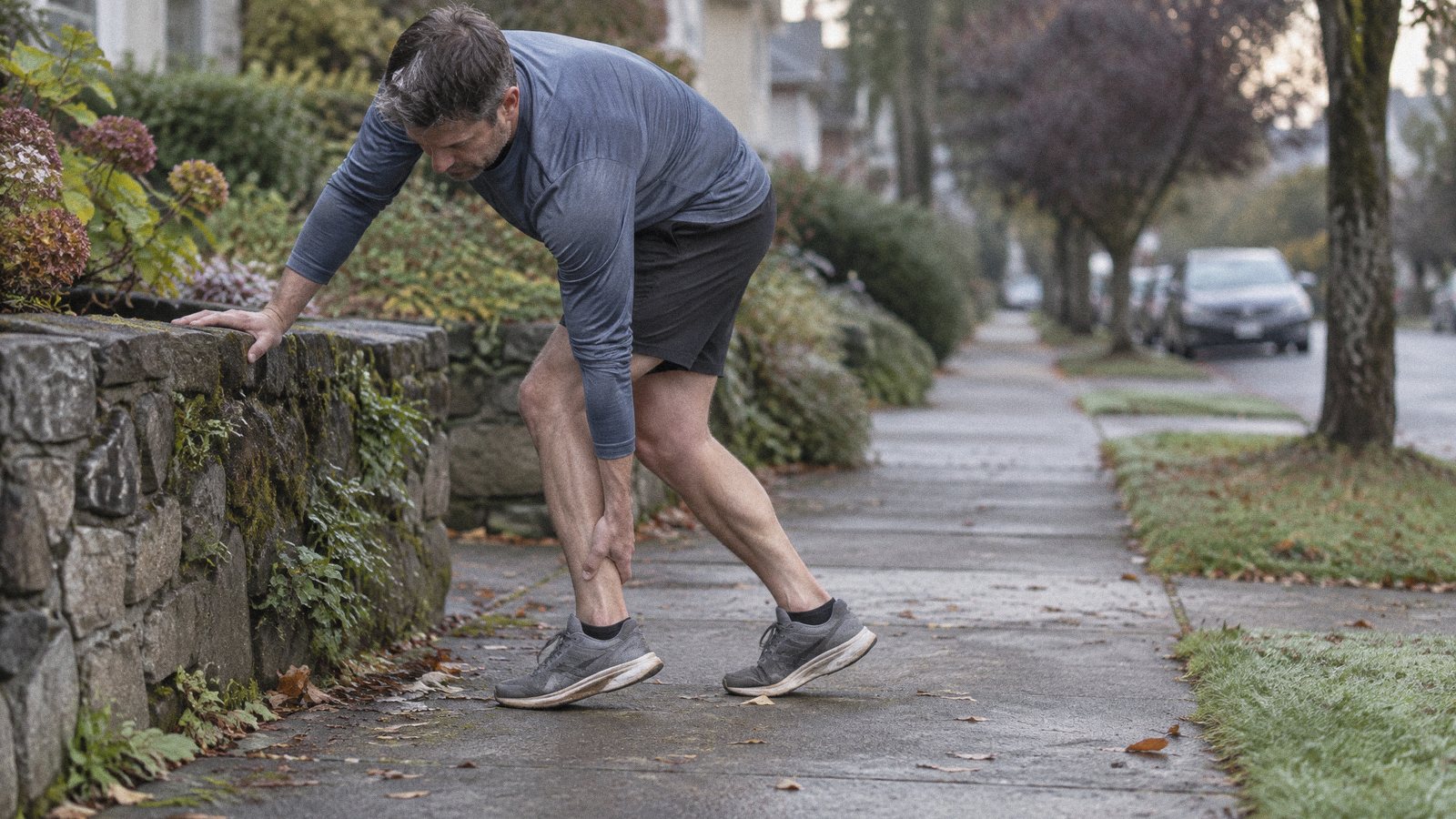
The story below is a composite of real experiences; details changed.
Every morning, Dave Novak’s first ten steps feel like walking on a board.
He’s 43, owns a flooring company and runs about 20 miles a week. His right Achilles has been stiff and sore for five months.
He’s rested it three times. Two weeks off, the pain fades, he runs again. Two weeks later, it’s back, and each time it’s harder to believe it will ever stay gone.
If that’s your Achilles, you’re not recovering wrong. You’re treating the wrong kind of problem.
Here’s why the Achilles plays by different rules, why rest alone keeps failing, and what to do instead.
Why the Achilles plays by different rules
Muscle rebuilds itself all the time. The Achilles mostly doesn’t.
Researchers used a clever tracer to show it: carbon left in the atmosphere by nuclear bomb tests in the 1950s and ’60s.
Muscle samples from adults showed constant renewal. The core of the Achilles tendon still carried carbon from when those people were growing up. (Heinemeier et al., FASEB Journal, 2013)
In plain terms, the main structure of your adult Achilles is largely the one you finished growing with. It can still get stronger and more tolerant of load. It just does it slowly.
The Achilles doesn’t heal on a calendar you’d choose. Plan in months, and measure what’s changing.
Two problems, two plans
| Tendon pain (tendinopathy) | Rupture | |
|---|---|---|
| How it starts | Gradually, over weeks or months | Suddenly, often with a pop or a “kicked” feeling |
| Typical feel | Stiff in the morning, sore with activity, in the middle of the tendon or where it meets the heel | Severe pain and swelling near the heel. Hard to walk or stand on your toes |
| Usual first plan | Activity changes and physical therapy | Urgent assessment, then a boot, cast or surgery |
| Timeline | Often longer than 3 months | About a year for a full recovery, sometimes closer to two |
Source: AAOS OrthoInfo on Achilles tendinitis and Achilles rupture.
Why rest alone keeps failing
Rest lowers the irritation. That’s why Dave feels better after two weeks off. But nothing about resting makes the tendon better at handling a run.
Orthopedic surgeons’ patient guidance pairs rest with physical therapy: calf stretching and eccentric exercises. In an eccentric exercise, the muscle works while it lengthens, like slowly lowering your heel off a step.
The guidance also warns that even with early treatment, the pain may last longer than three months. (AAOS OrthoInfo)
Surgery for tendon pain usually comes up only after about six months of nonsurgical care hasn’t helped. Most people never need it.
A good therapist sets the starting load, how fast it climbs and how running comes back. So at your first visit, ask exactly that:
- “What’s my starting load?”
- “How fast does it climb, and what tells us it’s time?”
- “How does running come back, and in what steps?”
If you feel stuck, read why tendons plateau and what to reassess.
What about supplements?
You’ll see collagen products marketed for tendons. The human evidence is small.
In one pilot trial, 20 people with long-lasting Achilles pain did a calf-strengthening program. Those who took specific collagen peptides first improved more in three months than those on a placebo. Everyone was doing the exercise. (Nutrients, 2019)
That’s a reason for bigger studies, not a replacement for the exercise. Anything you add sits on top of the loading plan, never instead of it.
The evidence, without the theater
What the research shows
- The adult Achilles core renews very little over a lifetime.
- Strengthening-based physical therapy is the standard first plan.
- Tendon pain often lasts longer than three months, even with good care.
What it doesn’t show
- That the tendon can’t improve. It can become stronger and less painful.
- One exercise dose that fits everyone.
- That any supplement replaces the loading work.
For the peptide side of tendon research, read what the tendon research on BPC-157 actually measured.
Keep an Achilles log
Four numbers, once a week
- First ten steps: Rate morning stiffness from 0 to 10.
- Your therapist’s strength test: Log whatever they measure, the same way each time.
- Weekly running or walking minutes.
- The next-morning check: Was it worse the day after your hardest session?
Watch the trend across weeks, not a single day. Our guide to what counts as progress has more on tracking.
When not to wait
Get seen the same day if:
- You felt a pop or a “kick” at the back of the ankle.
- You can’t push off, climb stairs normally or stand on your toes on that side.
- Sudden swelling or bruising appears above the heel.
Also call your prescriber if tendon pain starts while you’re taking a fluoroquinolone antibiotic, such as ciprofloxacin or levofloxacin. That drug class has been linked to tendon tears. (AAOS OrthoInfo)
The fourth time, done differently
Dave doesn’t take a fourth break. He books a physical therapist and starts the log.
Six weeks in, his first ten steps have gone from a 6 to a 3. He’s running shorter, slower and more often, and the next mornings are quiet.
The Achilles rewards patience you can measure.
Your next step: tomorrow morning, rate your first ten steps from 0 to 10 and write the number down. That’s week one of your log.
Dave is a composite, drawn from the kinds of stories runners and weekend athletes describe with Achilles pain. The details are illustrative.
Free · Your Before-You-Leave Card
Don’t leave your next appointment with “rest it.”
Get the questions for your injury in 8 taps.
Get my card →Questions readers ask
- Why does my Achilles pain keep coming back after rest?
- Rest lowers irritation, but it doesn’t make the tendon better at handling load. The adult Achilles also renews very slowly. Most plans pair activity changes with physical therapy that gradually strengthens the calf and tendon over months.
- How long does Achilles tendinitis take to heal?
- AAOS OrthoInfo notes the pain may last longer than three months even with early treatment. Surgery is usually considered only if pain hasn’t improved after about six months of nonsurgical care.
- How do I know if I ruptured my Achilles tendon?
- A rupture often comes with a pop or a feeling of being kicked, then severe pain and swelling near the heel and trouble walking or standing on your toes. That needs a same-day medical assessment.
Sources & references (4)
- Lack of tissue renewal in human adult Achilles tendon is revealed by nuclear bomb 14C · The FASEB Journal, 2013
- Achilles Tendinitis · AAOS OrthoInfo
- Achilles Tendon Rupture (Tear) · AAOS OrthoInfo
- Oral Supplementation of Specific Collagen Peptides Combined with Calf-Strengthening Exercises Enhances Function and Reduces Pain in Achilles Tendinopathy Patients · Nutrients, 2019
The Series
45 articlesPart 1: Understanding Your Injury (1 to 19)
- After the MRI: How to Read a Rotator Cuff Report Without Getting Sold a Surgery
- Told to “Just Rest It”? Five Questions to Ask Before You Leave
- When Shoulder Pain Keeps Waking You Up
- Meniscus Surgery Recovery: When Can You Return to Your Kind of Work?
- Rotator Cuff Surgery or More Physical Therapy? Questions That Clarify the Decision
- Achilles Tendon Pain: Why This Tendon Is a Different Problem
- Four Months After Rotator Cuff Repair and It Still Hurts: Normal, or a Retear?
- Your Knee Feels Worse After the Meniscus Scope. What Could Be Going On?
- Hip Flexor Pain After Hip Arthroscopy: Why It Shows Up and When It Settles
- Tennis Elbow That Won’t Go Away: Why Rest and Shots Stall, and What Helps
- Knee Swelling After Meniscus Surgery: How Long Is Normal, and When to Call
- Quad Won’t Fire After Knee Surgery? What Quad Shutdown Is and How to Get It Back
- Walking After Meniscus Surgery: When You Can, How Far, and When to Drop the Crutches
- How to Sleep After Rotator Cuff Surgery, and When Nights Get Easier
- Felt a Pop After Knee Surgery? Re-Tear or Setback, and When to Call
- Home After a Microdiscectomy: How Much to Walk and How Long to Sit
- Running After ACL Surgery: When Your First Jog Comes, and What It Tells You About Work
- When Can You Drive After Rotator Cuff Surgery and Get Back in the Work Truck?
- Knee Won’t Straighten After Meniscus Surgery? Why It Happens and What Helps
Part 2: Work and Real Life (20 to 29)
- You Can Still Work. But What Is Your Injury Costing You?
- Self-Employed and Injured: How to Plan for Time Away From Work
- Your Job and Your Workouts Are Loading the Same Injury
- How to Take Time to Recover When Everyone Depends on You
- What Do You Still Want to Be Able to Do in Ten Years?
- Microdiscectomy Recovery: When Can You Go Back to Heavy Work?
- Kneeling After Knee Surgery: Why It Comes Back Last and How to Retrain It
- Rotator Cuff Surgery Recovery: When Can You Go Back to Work?
- When Can You Drive After Knee Surgery and Get Back in the Work Van?
- When Can You Go Back to Physical Work After ACL Surgery?
Part 3: Back to Training (30 to 34)
Part 4: Reading the Evidence (35 to 45)
- Your Watch Says You’re Recovered. Your Shoulder Disagrees.
- Recovery Is Taking Longer Than You Expected. What Counts as Progress?
- Before You Buy Another Recovery Tool, Decide What You Need It to Do
- “It Worked for Me”: How to Evaluate a Recovery Claim
- BPC-157 After an Orthopedic Procedure: What Does the Research Actually Show?
- TB-500 vs. BPC-157: What the Research Actually Compares
- How to Read a Peptide COA: What It Proves and What It Doesn’t
- The Research Stack People Ask About After a Scope, and the Gaps in the Human Data
- What the Tendon Research on BPC-157 Actually Measured
- What’s in the Other 1%? Peptide Impurities, Explained
- Approved, Compounded or “Research Use Only”: What a Peptide’s Label Means in 2026
Free · 60-second recovery check
What’s really holding your recovery back?
Eight quick taps. Find the one thing stalling your recovery, then get the three moves to work on first, picked from 30 guides and 100+ cited sources.
- Your bottleneck, named in 60 seconds
- 3 moves for this week, fitted to your job
- Your Before-You-Leave Card: the questions for your next appointment
What got hurt?
Free. No sign-up to start. Not medical advice.
More in Understanding Your Injury
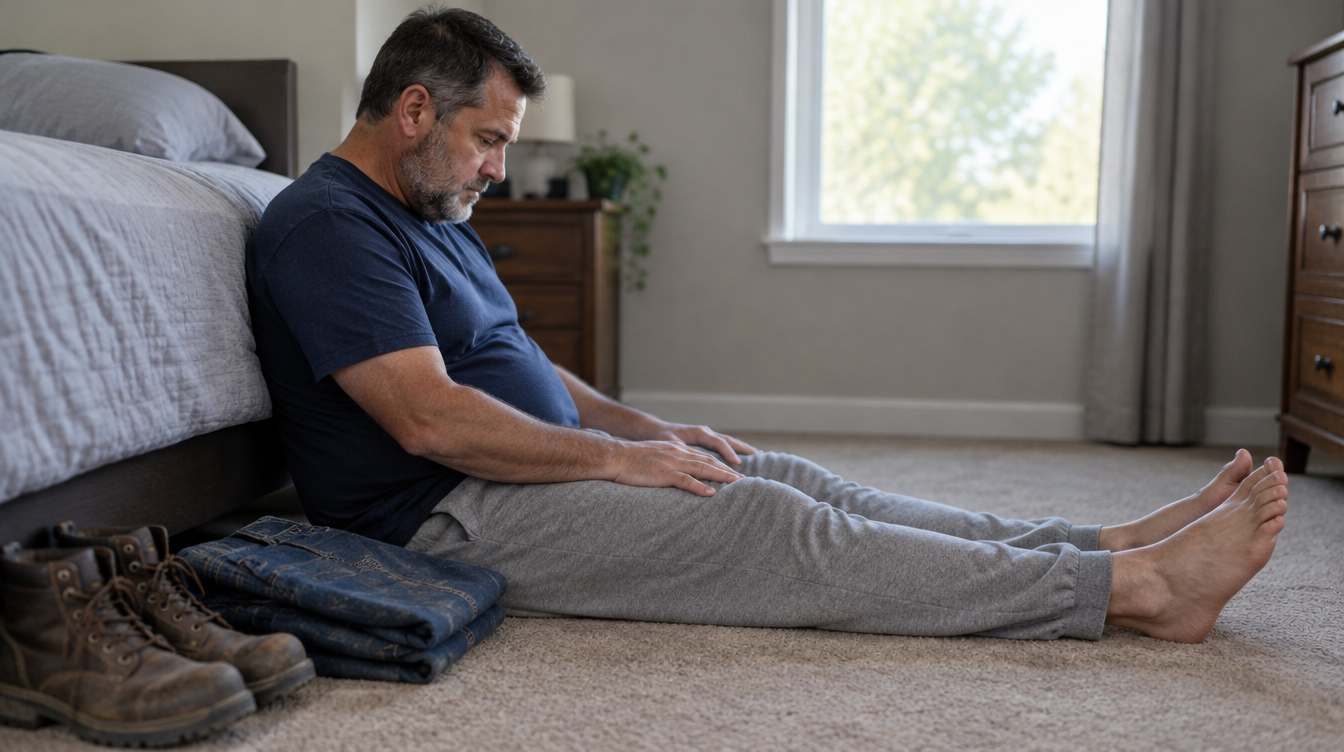
Knee Won’t Straighten After Meniscus Surgery? Why It Happens and What Helps
Three weeks out, the other knee lies flat and yours won’t. Why a knee stays bent after a meniscus trim or repair, when protocols expect it straight, what rehab teams use to get it back, and the signs that mean call to…
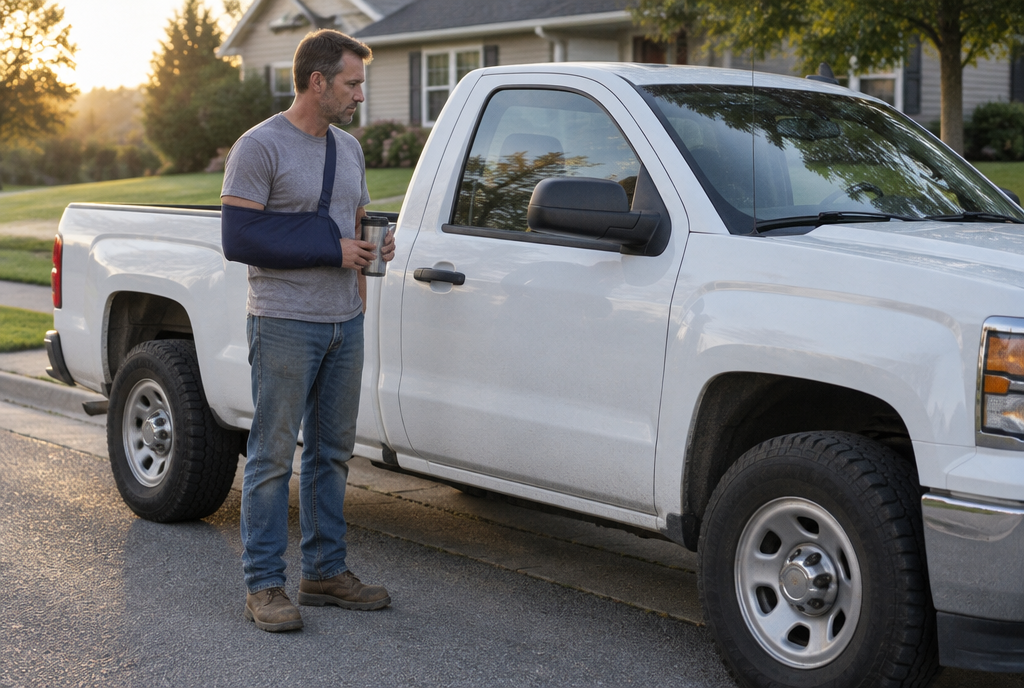
When Can You Drive After Rotator Cuff Surgery and Get Back in the Work Truck?
Dispatch wants you back on the road, and your arm is still strapped to your belly. What the sling means for driving after a rotator cuff repair, what the few driving studies found, and a check to run before your first…
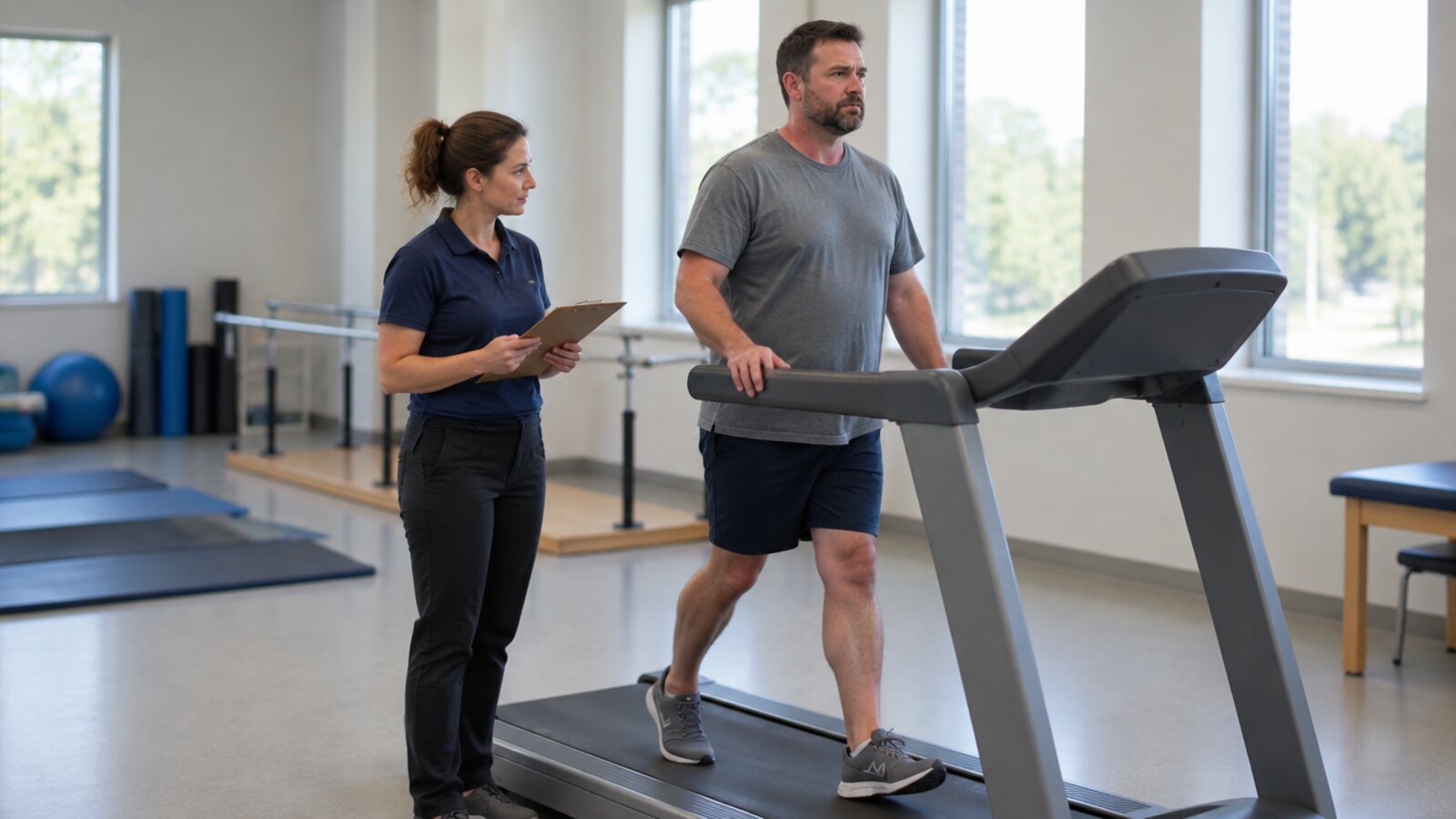
Running After ACL Surgery: When Your First Jog Comes, and What It Tells You About Work
Your PT says you can try a jog. You’re wondering if ladders are next. When the first run usually comes after ACL reconstruction, what clinics test first, what a first run-walk looks like, and what it does and doesn’t …