“It Worked for Me”: How to Evaluate a Recovery Claim
Your buddy swears it fixed his shoulder, and he isn’t lying. The question is what it proves. Six questions to ask before a recovery story turns into a purchase or a treatment decision.
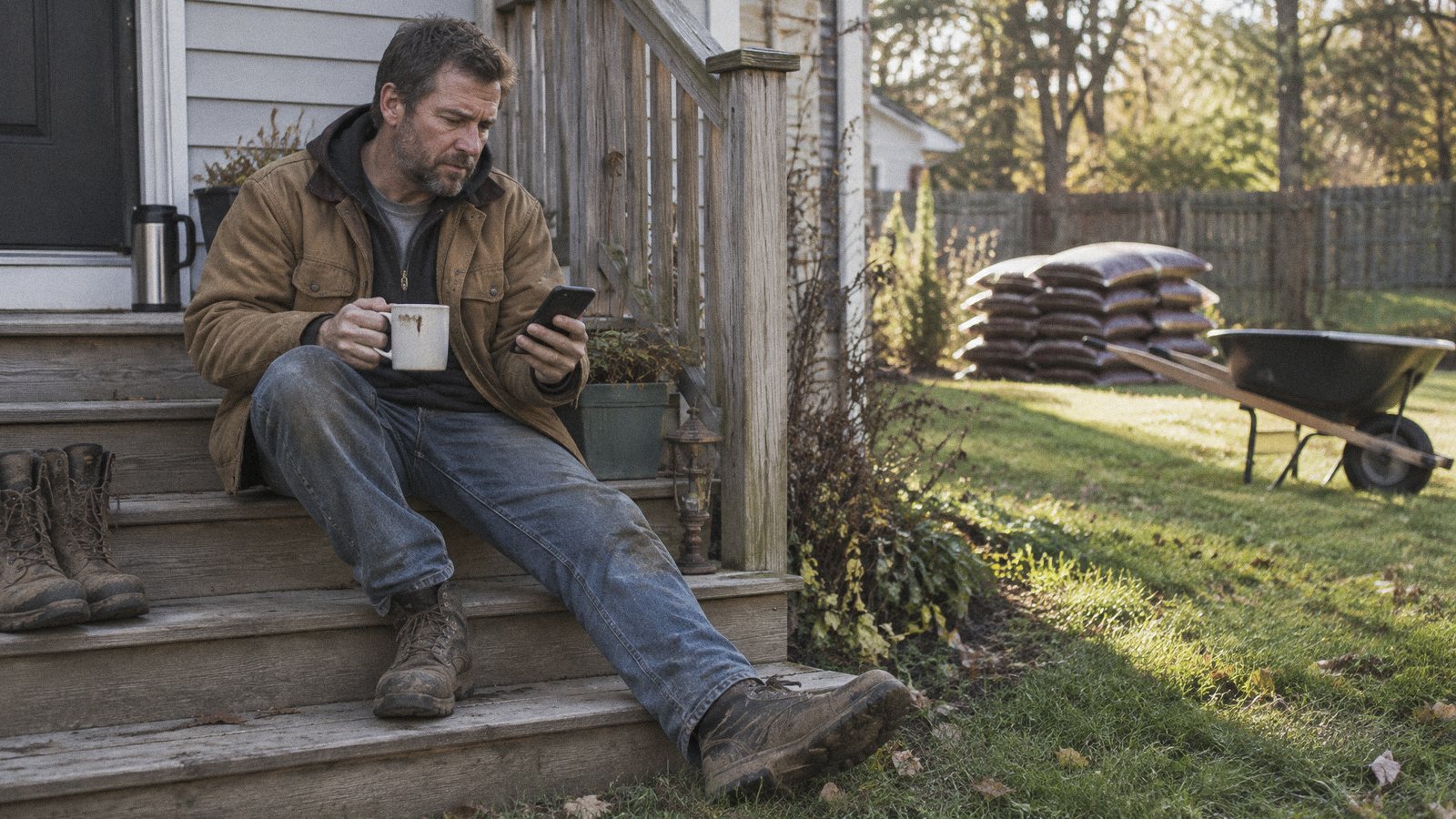
The story below is a composite of real experiences; details changed.
Saturday morning, Tom Walsh is on the back steps with his coffee and a sore left knee when his buddy Pete texts: “Dude. I did the supplement stack from that podcast. Six weeks. My shoulder is brand new.”
A link follows. $189 a month.
Tom is 46 and runs a landscaping company. His knee has been sore for four months. After that long working around it, he’d try almost anything.
And Tom believes Pete. He isn’t a liar, and his shoulder really is better. Tom watched him throw a softball last week.
The story is true. Here’s how to work out what it actually proves, before it costs you $189 a month.
Why a friend’s story feels like proof
A recovery story hits hard because the start sounds like yours: the injury, the missed workouts, the waiting. Then the teller skips to a happy ending you haven’t reached yet.
Respect the experience. Just don’t let it make the decision for you. Someone feeling better and something making them better are two different claims.
A hopeful ending is worth your attention. The missing pages are worth more.
Six questions for any recovery claim
Ask these before you buy, try or switch
- What improved, exactly? Less pain? Better sleep? Back to sport? “Brand new” isn’t a measurement.
- What was happening before? Many people start something new at their worst point. Some of the improvement after that would have happened anyway.
- What else changed? Rest, rehab, a lighter work month, a new pillow. People rarely change just one thing.
- Who’s missing? Stories come from people it worked for. What about everyone who tried it and quietly stopped?
- Compared with what? Would similar people have improved just as much doing nothing new?
- What does it cost, and what’s unknown? Money, time, side effects and whether it delays a better-tested plan.
Tom asks Pete a few of these. Pete’s shoulder started getting better in week two. He’d also started physical therapy that same month. And he took three weeks off softball.
None of that means the supplements did nothing. It means nobody can tell, including Pete.
The missing-people problem
This isn’t just a text-message issue. It shows up in research too.
A study posted online in September 2026 looked at health records for 1,039 people who had used BPC-157, an unapproved research compound.
For 685 of them, about two in three, the records didn’t say whether they got better or worse. About half were also on other treatments at the time. (2026 preprint, not peer reviewed)
So when a report says “most people improved,” check the denominator. Most of whom? The one-third with an answer, or everyone who tried it? If you want the full picture on that compound, read what the BPC-157 research actually shows.
The National Center for Complementary and Integrative Health suggests the same habits for any study. Look at the design, the sample size and the methods. Then check whether the conclusions match the results. (NCCIH)
The evidence, without the theater
What a story can show
- That something is worth a closer look.
- What real people hope for and struggle with.
- That a change happened, in one person.
What it can’t show
- That the product caused the change.
- How often it works, or for whom.
- Whether it’s safe over months or years.
Turn the story into a better question
You don’t have to argue with your friend. Bring the claim to your next appointment instead.
Don’t ask, “Can I have what he had?” Ask: “This sounds like my situation. What would have to be true for it to apply to my injury and where I am in recovery?”
Then decide what you’d measure if you tried anything new. Our guide to what counts as progress can help. So can the one-page purchase test before you spend.
When not to wait
Don’t test a friend’s fix first. Get checked if:
- The joint swells, locks, gives way or loses strength.
- Pain is steadily getting worse, or wakes you every night.
- A product causes new symptoms, like a rash, swelling or dizziness.
The text he sent back
Tom doesn’t buy the stack. He texts Pete: “Glad you’re throwing again. Did the PT help too?”
Pete’s answer: “Honestly? Probably. My PT was brutal.”
Tom books his own evaluation for the knee on Monday.
A good story deserves a second question, not a credit card.
Your next step: the next time someone tells you “it worked for me,” ask one question back: “What else changed?”
Tom and Pete are composites, drawn from the kinds of stories people describe during recovery. The details are illustrative.
Free · Your Before-You-Leave Card
Don’t leave your next appointment with “rest it.”
Get the questions for your injury in 8 taps.
Get my card →Questions readers ask
- How do I know if a recovery testimonial is trustworthy?
- The person may be completely honest. Ask what improved, what was happening before, what else changed, who is missing from the story, what it was compared with, and what it costs. A testimonial can’t show that a product caused the change, how often it works or whether it’s safe long term.
- Why do people feel better after trying something new even if it didn’t cause the change?
- Many injuries go up and down. People often start something new at their worst point, and rest, rehab or lighter work may change at the same time. Improvement that would have happened anyway can look like a treatment effect.
- What does “not peer reviewed” mean?
- A preprint is shared publicly before other experts have formally reviewed it for a journal. Its findings may change, so it deserves extra caution.
Sources & references (2)
The Series
45 articlesPart 1: Understanding Your Injury (1 to 19)
- After the MRI: How to Read a Rotator Cuff Report Without Getting Sold a Surgery
- Told to “Just Rest It”? Five Questions to Ask Before You Leave
- When Shoulder Pain Keeps Waking You Up
- Meniscus Surgery Recovery: When Can You Return to Your Kind of Work?
- Rotator Cuff Surgery or More Physical Therapy? Questions That Clarify the Decision
- Achilles Tendon Pain: Why This Tendon Is a Different Problem
- Four Months After Rotator Cuff Repair and It Still Hurts: Normal, or a Retear?
- Your Knee Feels Worse After the Meniscus Scope. What Could Be Going On?
- Hip Flexor Pain After Hip Arthroscopy: Why It Shows Up and When It Settles
- Tennis Elbow That Won’t Go Away: Why Rest and Shots Stall, and What Helps
- Knee Swelling After Meniscus Surgery: How Long Is Normal, and When to Call
- Quad Won’t Fire After Knee Surgery? What Quad Shutdown Is and How to Get It Back
- Walking After Meniscus Surgery: When You Can, How Far, and When to Drop the Crutches
- How to Sleep After Rotator Cuff Surgery, and When Nights Get Easier
- Felt a Pop After Knee Surgery? Re-Tear or Setback, and When to Call
- Home After a Microdiscectomy: How Much to Walk and How Long to Sit
- Running After ACL Surgery: When Your First Jog Comes, and What It Tells You About Work
- When Can You Drive After Rotator Cuff Surgery and Get Back in the Work Truck?
- Knee Won’t Straighten After Meniscus Surgery? Why It Happens and What Helps
Part 2: Work and Real Life (20 to 29)
- You Can Still Work. But What Is Your Injury Costing You?
- Self-Employed and Injured: How to Plan for Time Away From Work
- Your Job and Your Workouts Are Loading the Same Injury
- How to Take Time to Recover When Everyone Depends on You
- What Do You Still Want to Be Able to Do in Ten Years?
- Microdiscectomy Recovery: When Can You Go Back to Heavy Work?
- Kneeling After Knee Surgery: Why It Comes Back Last and How to Retrain It
- Rotator Cuff Surgery Recovery: When Can You Go Back to Work?
- When Can You Drive After Knee Surgery and Get Back in the Work Van?
- When Can You Go Back to Physical Work After ACL Surgery?
Part 3: Back to Training (30 to 34)
Part 4: Reading the Evidence (35 to 45)
- Your Watch Says You’re Recovered. Your Shoulder Disagrees.
- Recovery Is Taking Longer Than You Expected. What Counts as Progress?
- Before You Buy Another Recovery Tool, Decide What You Need It to Do
- “It Worked for Me”: How to Evaluate a Recovery Claim
- BPC-157 After an Orthopedic Procedure: What Does the Research Actually Show?
- TB-500 vs. BPC-157: What the Research Actually Compares
- How to Read a Peptide COA: What It Proves and What It Doesn’t
- The Research Stack People Ask About After a Scope, and the Gaps in the Human Data
- What the Tendon Research on BPC-157 Actually Measured
- What’s in the Other 1%? Peptide Impurities, Explained
- Approved, Compounded or “Research Use Only”: What a Peptide’s Label Means in 2026
Free · 60-second recovery check
What’s really holding your recovery back?
Eight quick taps. Find the one thing stalling your recovery, then get the three moves to work on first, picked from 30 guides and 100+ cited sources.
- Your bottleneck, named in 60 seconds
- 3 moves for this week, fitted to your job
- Your Before-You-Leave Card: the questions for your next appointment
What got hurt?
Free. No sign-up to start. Not medical advice.
More in Reading the Evidence
Approved, Compounded or “Research Use Only”: What a Peptide’s Label Means in 2026
Heard FDA “approved” BPC-157? It didn’t. A panel voted in July to let pharmacies compound six peptides, and nothing has legally changed yet. The three lanes a peptide can sit in, and where BPC-157 and TB-500 stand as …
What’s in the Other 1%? Peptide Impurities, Explained
The badge says “99% pure.” That’s one number from one test. What else is in a synthetic peptide, why regulators flag it, and what a complete certificate of analysis should list.

What the Tendon Research on BPC-157 Actually Measured
Seen BPC-157 pitched for tendon pain that won’t quit? More than two decades of rat studies, a 2026 head-to-head with TB-500 and a 2025 review of 36 studies: what was measured, what was found and where the evidence stops.