Four Months After Rotator Cuff Repair and It Still Hurts: Normal, or a Retear?
Night pain is back, something “gave” reaching overhead, and your boss wants a date. What’s normal at month four, how often repairs tear again, the signs worth getting checked, and what the peptide research has and hasn’t measured.
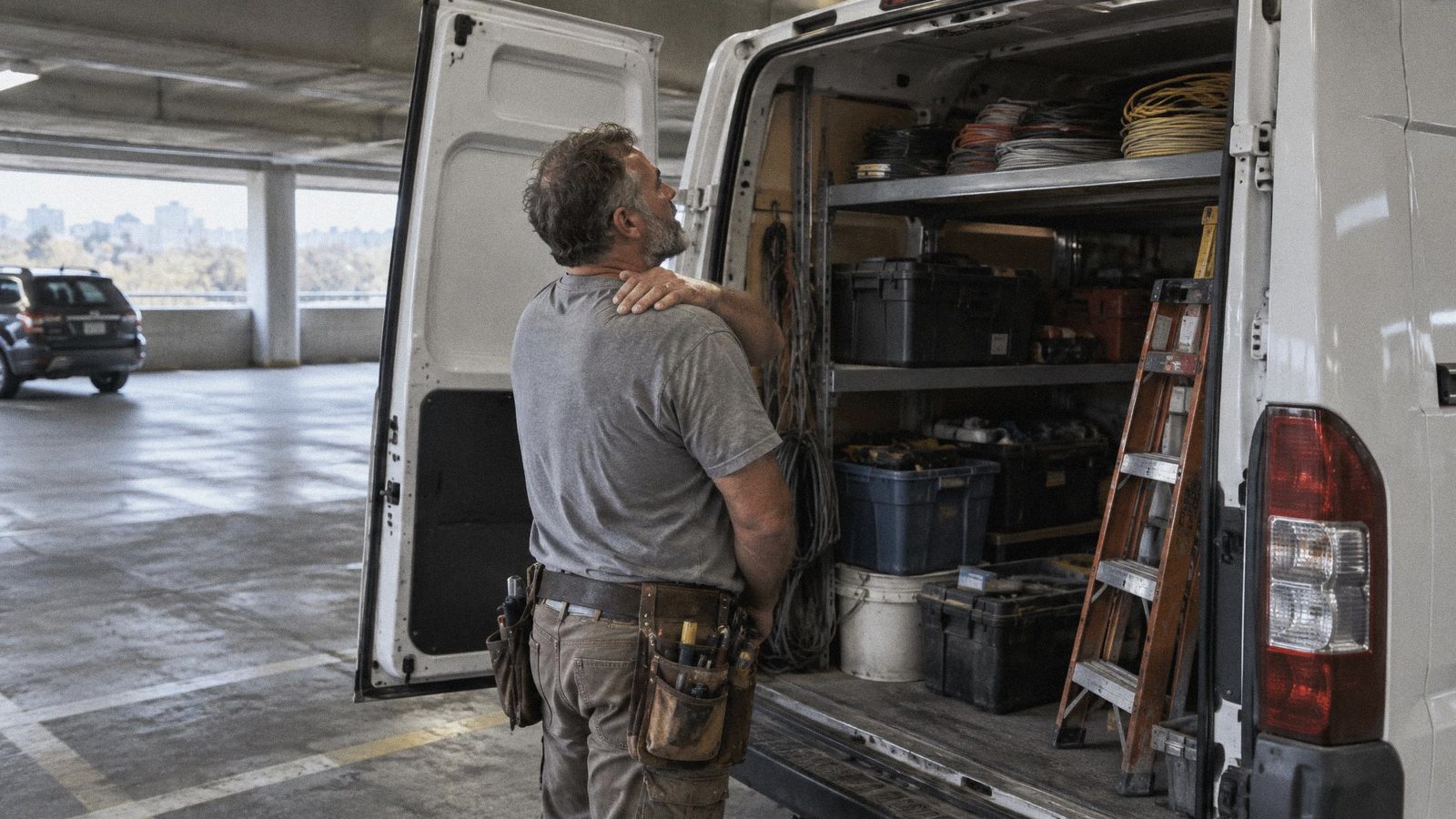
The story below is a composite of real experiences; details changed.
Four months after rotator cuff repair, you reach for something, feel a pull, and one question takes over: Did I just tear it again?
That’s Rick Salazar’s week. He’s 51 and has pulled wire through commercial buildings for 30 years. Four months ago, a surgeon used a scope to stitch the torn tendon in his right shoulder back to the bone.
Second week of light duty, he reached for a coil of wire on the van’s top shelf, above head height. Something at the front of his shoulder gave. A hot pull, then an ache that rode home with him.
At 2 a.m. he was awake again. At 7 a.m. his foreman texted: “Need a date for full duty.”
Here’s what’s normal at month four, how often repairs really tear again, and what to do before you answer that text.
What month four is supposed to feel like
After a cuff repair, the tendon has to grow back onto the bone. That takes about three months. Good strength typically takes another two to three. (Washington University Orthopedics)
In Rick’s terms, month four is rough-in, not trim-out. Strengthening usually starts at 8 to 12 weeks. Most people have useful motion and decent strength by 4 to 6 months. (AAOS OrthoInfo)
Sleep lags too. In one study of 56 people, 38% still slept poorly six months after repair, about 4 in 10. (Am J Sports Med, 2015) If nights are the worst part, read when shoulder pain keeps waking you up.
Aching and a weak reach at month four are common. On their own, they don’t answer the retear question.
How often repairs tear again, and when
The honest part: retears happen, and month four sits inside the window.
A 2021 meta-analysis pooled 31 higher-quality studies and more than 2,500 repairs, counting only full-thickness gaps on imaging. (BMC Musculoskelet Disord, 2021)
- At 3 to 6 months: 21% of scans showed a retear, about 1 in 5. Each time point pooled different studies, so these numbers aren’t a timeline.
- By age: 14.4% under 60 and 24.3% over 60. About 1 in 7 versus 1 in 4.
- By tear size: 12.5% for small or medium tears and 37% for large or massive ones. About 1 in 8 versus more than 1 in 3.
Those are pooled averages, not your personal odds.
A Japanese study that scanned 638 repairs at set points found 41 retears. They peaked between 6 weeks and 3 months. Only 2 appeared after month six. (J Shoulder Elbow Surg, 2023)
Most retears happen early. Four months still counts as early.
A retear usually isn’t the end of the road
A 2023 meta-analysis pooled 3,350 people. At a median of 18 months, 1 in 4 repairs were torn again on imaging. (J Shoulder Elbow Surg, 2023)
Healed or not, people were on average “substantially improved” from before surgery. Healed repairs did better, most of all on strength. But the average gap on shoulder scores was 6 to 7 points out of 100, generally below what patients notice.
Most retears don’t need another operation, a 2019 review adds. (Orthop Traumatol Surg Res)
A retear on a scan and a failed shoulder aren’t the same thing.
Twinge, stiffness or retear?
You can’t sort this out at home. You can describe it well for whoever examines you.
| What you notice | What it often points to | Next step |
|---|---|---|
| A twinge or pull, then soreness that settles within days | Common in PT. Johns Hopkins says it “typically does not mean” the repair failed. | Tell your therapist. |
| You can’t lift the arm far, and neither can someone moving it for you | Stiffness. Reported after about 6% to 17% of repairs, depending on how it’s defined. Most cases tend to ease by six months after surgery. | An exam of active versus passive motion. |
| You can’t lift it overhead or away from your body, but someone else can move it fully | The weakness pattern seen with cuff tears. | An exam, then ultrasound or MRI. |
| A pop or snap, then sudden weakness | How sudden tears show up. | Call your surgeon now. |
Sources: Johns Hopkins Medicine; Am Fam Physician; Cureus; BMC Musculoskelet Disord, 2026; AAOS OrthoInfo.
Scans after repair are tricky. On MRI, anchors and stitches can blur the picture, and an intact repair can look thick and uneven for years. Ultrasound has fewer metal artifacts and has done about as well as MRI at spotting retears. (J Ultrason, 2023) If you get a report, here’s how to read a rotator cuff report.
The scan shows the tendon. The exam decides whether it explains your pain.
Your boss wants a date
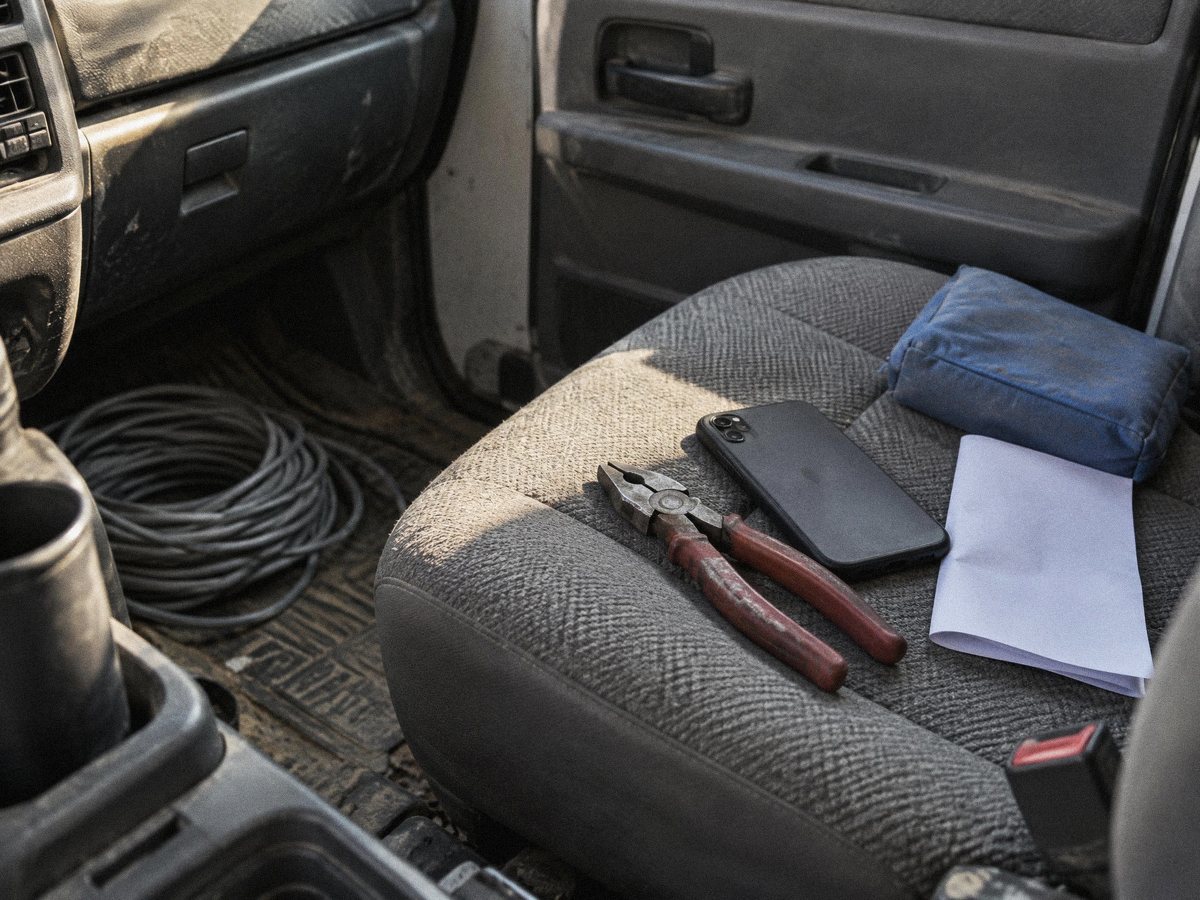
- The restriction. Oxford’s university hospital tells patients to avoid lifting, overhead and manual work for 4 to 6 months. (Oxford University Hospitals)
- The average. A 2021 review of 13 studies (1,224 people) found about 6 in 10 back at their previous work, at around 8 months. Heavier jobs did worse. (Am J Sports Med, 2021)
- Manual workers over 50. In one small series, 43 of 48 manual laborers aged 50 to 60 went back to manual work, about 9 in 10. (Am J Sports Med, 2022)
For overhead work, a full-duty date at month four is early. To stage the return with your boss, see going back to work after rotator cuff surgery.
Give your boss written restrictions and a recheck date, not a guess.
Questions for your follow-up
Take these to the appointment
- How big was my tear, and how good was the tissue?
- Is my problem active lifting, passive motion or both?
- Does my exam point to a retear, stiffness or normal healing?
- Would a scan change the plan? If it’s a retear, what are my options?
- What restrictions can you put in writing, and when do we recheck?
When not to wait
Call your surgeon now if you have:
- A pop or snap, then sudden weakness.
- A temperature over 101°F (38.3°C).
- Redness, swelling or yellowish drainage at an incision.
- Numbness or tingling in your hand, or a hand that looks darker or feels cool.
- New swelling in your arm, or pain your medicine doesn’t touch.
Sources: MedlinePlus; AAOS OrthoInfo.
If you’ve seen BPC-157 come up after cuff repair
Plenty of people have. Here’s what’s actually been studied.
- The cuff study. In a 2014 meeting abstract, 48 rats had two cuff tendons detached, then got BPC-157 or saline. Over up to 12 weeks, researchers tracked walking, limb strength, range of movement, muscle wasting and leg length. They reported recovery similar to healthy rats. (FASEB J, 2014) We found no full paper, and it describes detached tendons, not a surgical repair.
- Tendon to bone. A 2006 rat study cut the Achilles tendon off the heel bone and followed it for three weeks. Its title reports “promoted tendon-to-bone healing.” (J Orthop Res, 2006)
- The wider evidence. A 2025 review found 36 BPC-157 studies in orthopedic sports medicine. Thirty-five were animal or lab studies. It found “no clinical safety data.” (HSS Journal, 2025)
- In people. We found no human trial with published results after rotator cuff repair. (ClinicalTrials.gov)
The animal work is why researchers keep looking. It isn’t a human result.
For legal status, see what a peptide’s label means. For the rat-tendon details, read what the tendon research on BPC-157 actually measured.
The evidence, without the theater
What the research shows
- Better function in rats after cuff tendons were detached, in one meeting abstract.
- Better tendon-to-bone healing reported in rats.
- Enough animal signal to keep researchers studying it.
What it doesn’t show
- Any result in people after cuff repair.
- Any effect on retear rates.
- Whether it’s safe in humans.
The text Rick sends instead
Rick doesn’t send a date. He calls the surgeon’s office and asks to be seen sooner. Then he texts back: “Restrictions after my appointment. Recheck date too.”
At the top of his question list, he writes the exact reach that caused the pull.
Your next step: call, describe the moment, and let the exam answer the question.
Rick is a composite, drawn from the kinds of questions tradespeople ask after rotator cuff repair. The details are illustrative. Nothing here is medical advice. Research compounds are sold for laboratory research only.
Free · Your Before-You-Leave Card
Don’t leave your next appointment with “rest it.”
Get the questions for your injury in 8 taps.
Get my card →Questions readers ask
- Is it normal to still have pain four months after rotator cuff repair?
- Often, yes. The tendon takes about three months to grow back onto the bone, and good strength typically takes another two to three months. In one study of 56 people, 38% still slept poorly six months after repair.
- How common is a retear after rotator cuff repair?
- A 2021 meta-analysis of more than 2,500 repairs found retears on 21% of scans at 3 to 6 months. Rates were higher over age 60 (24.3% vs 14.4%) and after large or massive tears (37% vs 12.5%). Most retears happen in the first few months.
- Do people with a retear still do better than before surgery?
- On average, yes. A 2023 meta-analysis of 3,350 people found patients were substantially improved from before surgery whether or not the repair healed. Healed repairs did better, most of all on strength.
Sources & references (10)
- Retear rates after rotator cuff surgery: a systematic review and meta-analysis · BMC Musculoskeletal Disorders, 2021
- Timing of retears after arthroscopic rotator cuff repair and associated factors: a retrospective analysis · Journal of Shoulder and Elbow Surgery, 2023
- The clinical impact of retears after repair of posterosuperior rotator cuff tears: a systematic review and meta-analysis · Journal of Shoulder and Elbow Surgery, 2023
- Rotator Cuff Tears: Surgical Treatment Options · AAOS OrthoInfo
- Sleep Disturbance Associated With Rotator Cuff Tear · American Journal of Sports Medicine, 2015
- Return to Work After Primary Rotator Cuff Repair: A Systematic Review and Meta-analysis · American Journal of Sports Medicine, 2021
- Rates of Return to Manual Labor After Arthroscopic Rotator Cuff Repair · American Journal of Sports Medicine, 2022
- Effect of pentadecapeptide BPC 157 on rotator cuff tear injury in rat (844.9) · The FASEB Journal (meeting abstract), 2014
- Achilles Detachment in Rat and Stable Gastric Pentadecapeptide BPC 157: Promoted Tendon-to-Bone Healing and Opposed Corticosteroid Aggravation · Journal of Orthopaedic Research, 2006
- Emerging Use of BPC-157 in Orthopaedic Sports Medicine: A Systematic Review · HSS Journal, 2025
The Series
45 articlesPart 1: Understanding Your Injury (1 to 19)
- After the MRI: How to Read a Rotator Cuff Report Without Getting Sold a Surgery
- Told to “Just Rest It”? Five Questions to Ask Before You Leave
- When Shoulder Pain Keeps Waking You Up
- Meniscus Surgery Recovery: When Can You Return to Your Kind of Work?
- Rotator Cuff Surgery or More Physical Therapy? Questions That Clarify the Decision
- Achilles Tendon Pain: Why This Tendon Is a Different Problem
- Four Months After Rotator Cuff Repair and It Still Hurts: Normal, or a Retear?
- Your Knee Feels Worse After the Meniscus Scope. What Could Be Going On?
- Hip Flexor Pain After Hip Arthroscopy: Why It Shows Up and When It Settles
- Tennis Elbow That Won’t Go Away: Why Rest and Shots Stall, and What Helps
- Knee Swelling After Meniscus Surgery: How Long Is Normal, and When to Call
- Quad Won’t Fire After Knee Surgery? What Quad Shutdown Is and How to Get It Back
- Walking After Meniscus Surgery: When You Can, How Far, and When to Drop the Crutches
- How to Sleep After Rotator Cuff Surgery, and When Nights Get Easier
- Felt a Pop After Knee Surgery? Re-Tear or Setback, and When to Call
- Home After a Microdiscectomy: How Much to Walk and How Long to Sit
- Running After ACL Surgery: When Your First Jog Comes, and What It Tells You About Work
- When Can You Drive After Rotator Cuff Surgery and Get Back in the Work Truck?
- Knee Won’t Straighten After Meniscus Surgery? Why It Happens and What Helps
Part 2: Work and Real Life (20 to 29)
- You Can Still Work. But What Is Your Injury Costing You?
- Self-Employed and Injured: How to Plan for Time Away From Work
- Your Job and Your Workouts Are Loading the Same Injury
- How to Take Time to Recover When Everyone Depends on You
- What Do You Still Want to Be Able to Do in Ten Years?
- Microdiscectomy Recovery: When Can You Go Back to Heavy Work?
- Kneeling After Knee Surgery: Why It Comes Back Last and How to Retrain It
- Rotator Cuff Surgery Recovery: When Can You Go Back to Work?
- When Can You Drive After Knee Surgery and Get Back in the Work Van?
- When Can You Go Back to Physical Work After ACL Surgery?
Part 3: Back to Training (30 to 34)
Part 4: Reading the Evidence (35 to 45)
- Your Watch Says You’re Recovered. Your Shoulder Disagrees.
- Recovery Is Taking Longer Than You Expected. What Counts as Progress?
- Before You Buy Another Recovery Tool, Decide What You Need It to Do
- “It Worked for Me”: How to Evaluate a Recovery Claim
- BPC-157 After an Orthopedic Procedure: What Does the Research Actually Show?
- TB-500 vs. BPC-157: What the Research Actually Compares
- How to Read a Peptide COA: What It Proves and What It Doesn’t
- The Research Stack People Ask About After a Scope, and the Gaps in the Human Data
- What the Tendon Research on BPC-157 Actually Measured
- What’s in the Other 1%? Peptide Impurities, Explained
- Approved, Compounded or “Research Use Only”: What a Peptide’s Label Means in 2026
Free · 60-second recovery check
What’s really holding your recovery back?
Eight quick taps. Find the one thing stalling your recovery, then get the three moves to work on first, picked from 30 guides and 100+ cited sources.
- Your bottleneck, named in 60 seconds
- 3 moves for this week, fitted to your job
- Your Before-You-Leave Card: the questions for your next appointment
What got hurt?
Free. No sign-up to start. Not medical advice.
More in Understanding Your Injury
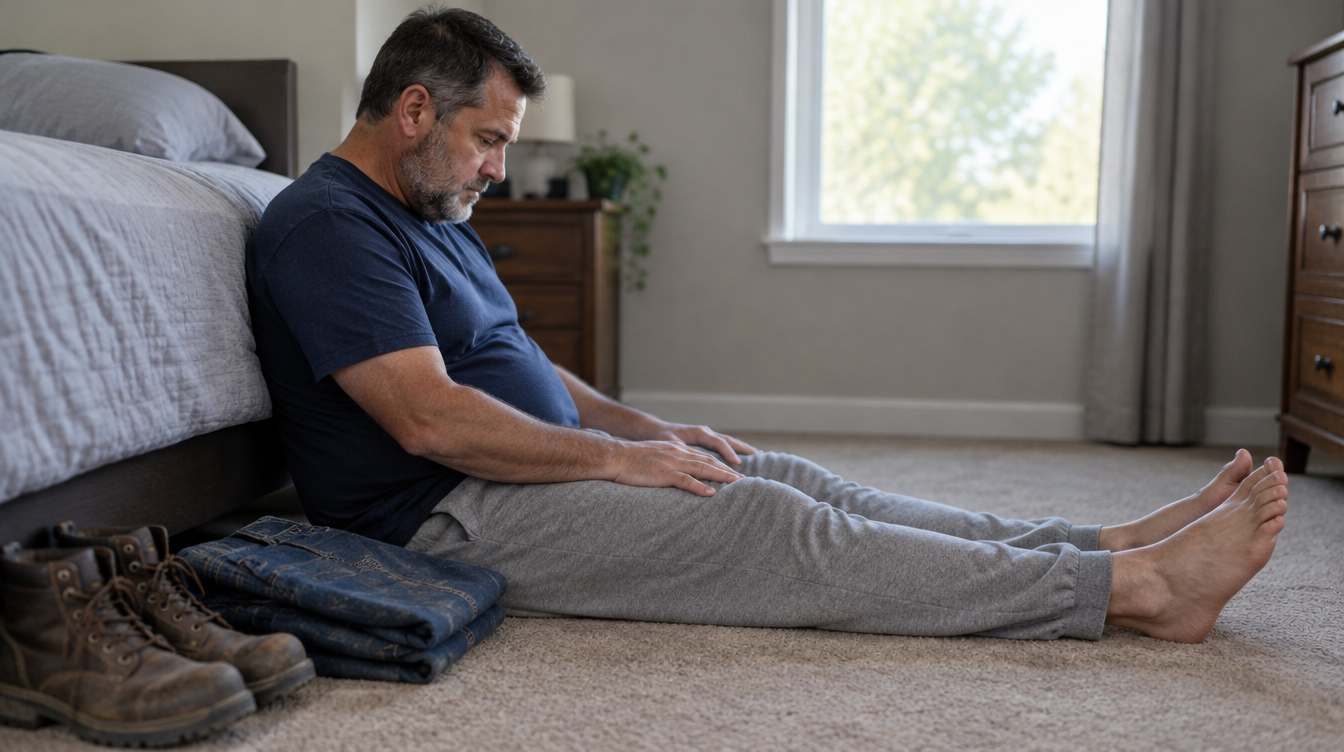
Knee Won’t Straighten After Meniscus Surgery? Why It Happens and What Helps
Three weeks out, the other knee lies flat and yours won’t. Why a knee stays bent after a meniscus trim or repair, when protocols expect it straight, what rehab teams use to get it back, and the signs that mean call to…
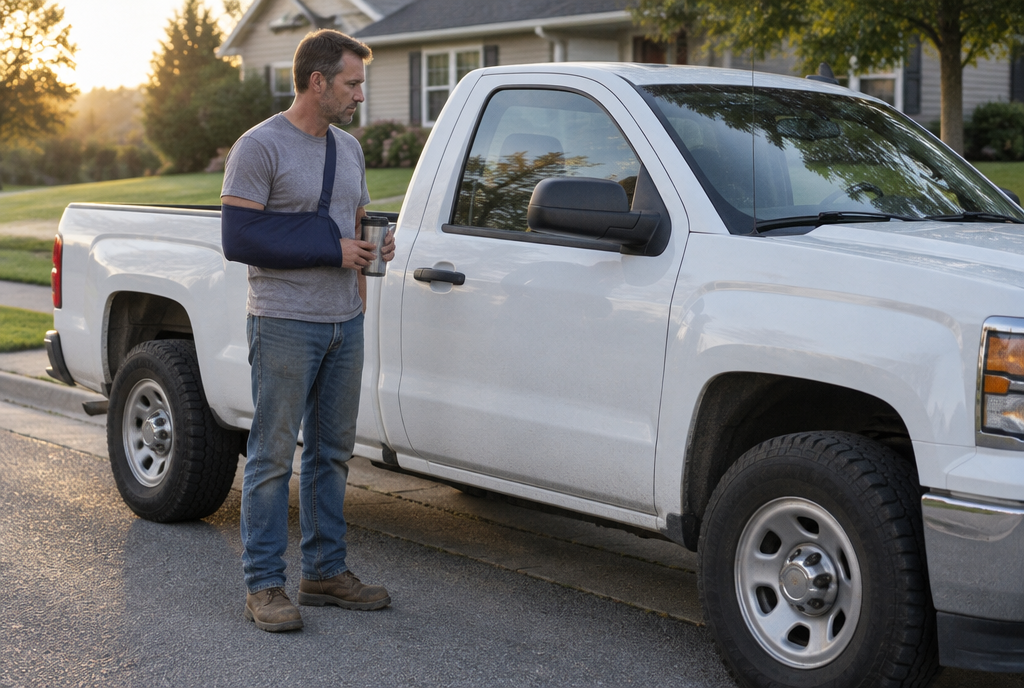
When Can You Drive After Rotator Cuff Surgery and Get Back in the Work Truck?
Dispatch wants you back on the road, and your arm is still strapped to your belly. What the sling means for driving after a rotator cuff repair, what the few driving studies found, and a check to run before your first…
Running After ACL Surgery: When Your First Jog Comes, and What It Tells You About Work
Your PT says you can try a jog. You’re wondering if ladders are next. When the first run usually comes after ACL reconstruction, what clinics test first, what a first run-walk looks like, and what it does and doesn’t …