Home After a Microdiscectomy: How Much to Walk and How Long to Sit
The leg pain is nearly gone, the back aches, and every twinge feels like you undid the surgery. How much to walk and sit in the first six weeks, which aches are normal, and a ladder to start tomorrow.
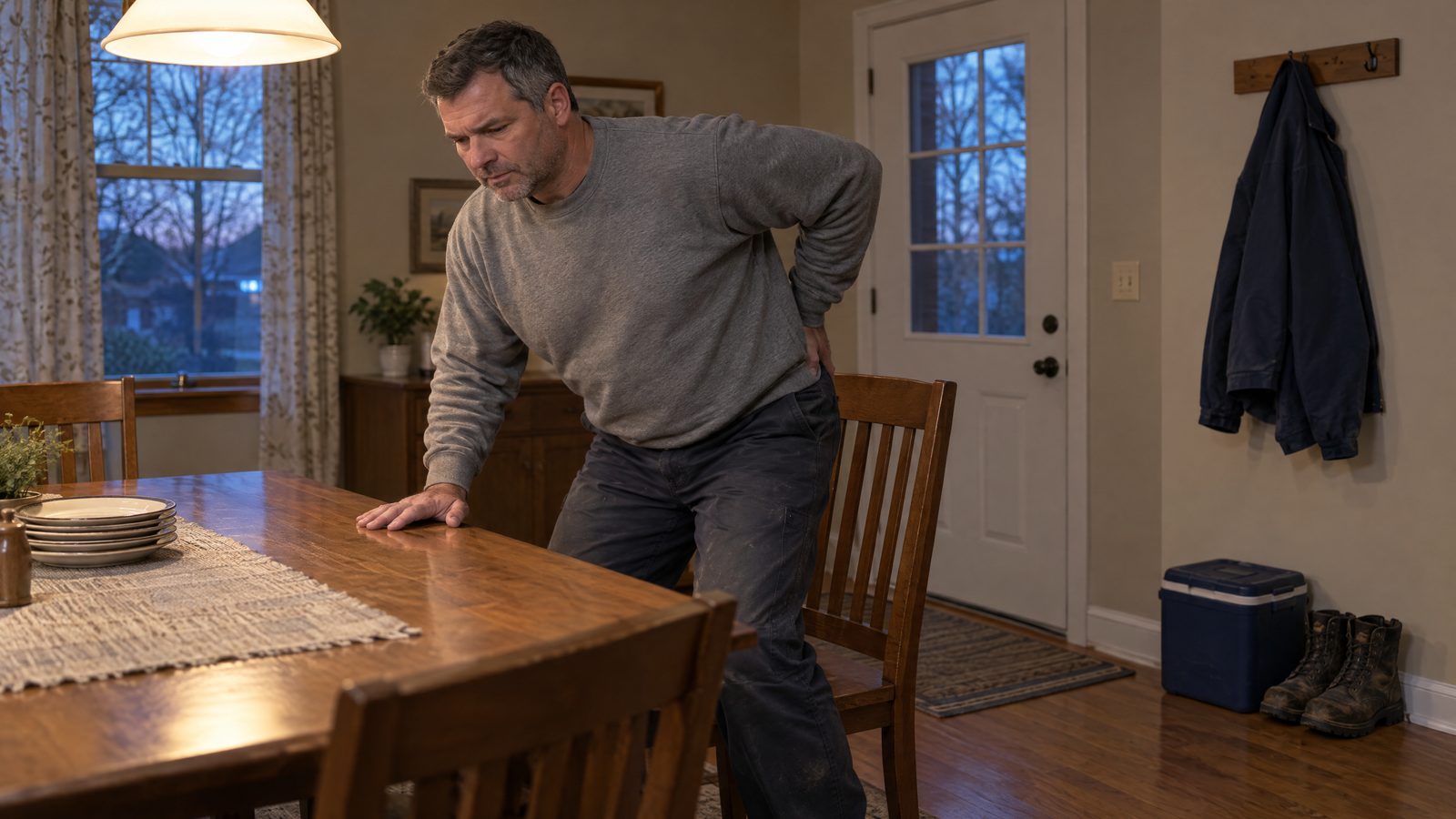
The story below is a composite of real experiences; details changed.
Nine days after his microdiscectomy, Ray sits through a whole dinner for the first time. By the time the plates are cleared, his low back aches.
He gets out of the chair in stages, one hand on the table. “I’m fine,” he tells his wife. He isn’t sure.
The leg pain that sent him to surgery is nearly gone. That afternoon he walked 40 minutes, because it felt good. Was that too much?
Every twinge asks the same question: did I just undo the surgery?
He’s 47 and drives a delivery route, in and out of the cab all day. The truck is waiting. So is the paycheck.
Here’s how much to walk, how long to sit, which aches are normal, and what the research says about undoing it.
How much to walk: short and often
Walking early helps prevent blood clots, one NHS hospital says. (Robert Jones and Agnes Hunt NHS, 2024)
One hospital’s plan for lower-back surgery starts small and steps up:
- Weeks 1 to 2. 5 to 10 minutes, 3 to 5 times a day. (Singapore General Hospital, 2019)
- Weeks 3 to 4. 10 to 20 minutes, 3 to 5 times a day. (Singapore General Hospital, 2019)
At home, one NHS leaflet recommends “regular short walks.” (Royal Berkshire NHS, 2025)
Two small microdiscectomy trials found that exercise started within 2 hours of surgery, or a walking program, didn’t worsen pain. In the walking trial (67 people), a monitored step-counter program meant less pain at 1 and 2 months than none. (Physiotherapy, 2009; International Journal of Nursing Practice, 2021)
Walk short and often. Split one long walk into three or four short ones.
How long to sit, and why the leaflets disagree
Sitting may be the least comfortable position, one NHS hospital warns. (University College London Hospitals, 2025)
The leaflets differ:
| Source | One stretch of sitting |
|---|---|
| NHS Greater Glasgow and Clyde | 15 minutes for the first few days |
| MedlinePlus (US) | 20 or 30 minutes |
| A Colorado spine practice | A 10-minute break about every 45 minutes |
That’s 15 to 45 minutes. (NHS Greater Glasgow and Clyde, 2025; MedlinePlus, 2025; Boulder Neurosurgical and Spine Associates)
Leaflets cite disc pressure, stiffness and an irritated nerve. (Robert Jones and Agnes Hunt NHS, 2024; Walton Centre NHS, 2024; West Hertfordshire NHS, 2024)
Driving advice runs from 2 to 6 weeks, though one Colorado practice says once you’re comfortable. The cab is a bigger question: see going back to heavy work after a microdiscectomy. (MedlinePlus, 2025; Royal Orthopaedic Hospital; Boulder Neurosurgical and Spine Associates)
Time your sitting, not just your walking. Stand and move before the ache builds.
Which aches are normal at day nine
A sore back is expected. Surgery tends to ease leg pain right away, but it leaves the back muscles sore. (Royal Berkshire NHS, 2025; Kaiser Permanente, 2026)
A review of 87 studies (31,034 people) found the same: leg pain improved a lot, right away, and back pain less. None of the studies was at low risk of bias. (European Spine Journal, 2020)
One NHS hospital says up to 15% of patients, about 1 in 7, find their back more troublesome after surgery. It says this often takes the form of a nuisance-level ache, not a disabling one, and it names no study. (Robert Jones and Agnes Hunt NHS, 2024)
Some people get a leg pain flare about 7 to 10 days after surgery, another NHS hospital says. It “usually settles over time”: allow at least 6 to 8 weeks. (Walton Centre NHS, 2024)
Nerves typically recover in order: pain, then strength, then feeling. Numbness takes longer than pain, and sometimes doesn’t fully clear. (AAOS OrthoInfo; Royal Berkshire NHS, 2025)
A back ache that settles is expected. Leg symptoms that build are the ones to report.
Did you just undo the surgery?
In 733 people at one UK spine unit, an estimated 1 in 8 (12.1%) had the same disc herniate again within five years. (Bone & Joint Journal, 2023)
Half of those came within about 10 months, and current smokers had about twice the risk. It’s one hospital’s records, analyzed after the fact, and many were followed for less than five years. (Bone & Joint Journal, 2023)
Does being careful prevent it? A 2026 trial randomly assigned 200 adults to two weeks of limits on sitting, lifting and hard activity, or to normal activity as tolerated. (Spine, 2026)
Its main measure at one year combined less pain, better function and no further treatment. It was met by 41.6% with limits (about 2 in 5) and 36.4% without (a bit over 1 in 3). (Spine, 2026)
The disc had gone again in 10.1% with limits and 14.1% without (about 1 in 10 vs 1 in 7). Both gaps could be chance. Back pain and repeat surgery were similar. (Spine, 2026)
The catches: only about 1 in 10 kept to the limits, and both groups sat about the same. As we read it, the trial tested the advice more than the behavior. We could read only its published summary. (Spine, 2026)
If every twinge sets off an alarm, read how to trust your body again.
The risk is real, but it’s the minority. Smoking went with about twice the risk, and it’s a habit you can change.
Why your surgeon may still set limits
In 213 people in China, those who chose two weeks mostly in bed had fewer recurrences at one year. (Frontiers in Surgery, 2022)
That was about 1 in 20 vs 1 in 8. But people picked their own group, and it was a different (endoscopic) operation. (Frontiers in Surgery, 2022)
In a survey of 703 spine surgeons, about 4 in 5 (79%) recommended limits. (Neurospine, 2026)
In an earlier trial of 112 adults, two weeks of limits worked about as well as six for pain and disability. (Mass General, 2018)
Before your follow-up, read the five questions to ask before you leave.
Follow your sheet. Ask what each limit protects, and when it ends.
The evidence, without the theater
What the research shows
- In two small trials, early exercise or a walking program didn’t worsen pain. The walking program eased it.
- In two randomized trials, stricter or longer limits brought no clear gain.
- Leg pain improves fast. Back pain improves less.
- In one UK series, an estimated 1 in 8 herniated again at the same level within five years.
What it doesn’t show
- A tested walking schedule or sitting limit. Leaflet minutes are expert advice.
- Whether limits lower re-herniation. One study without random groups favored bed rest.
- Your personal risk.
Build week by week
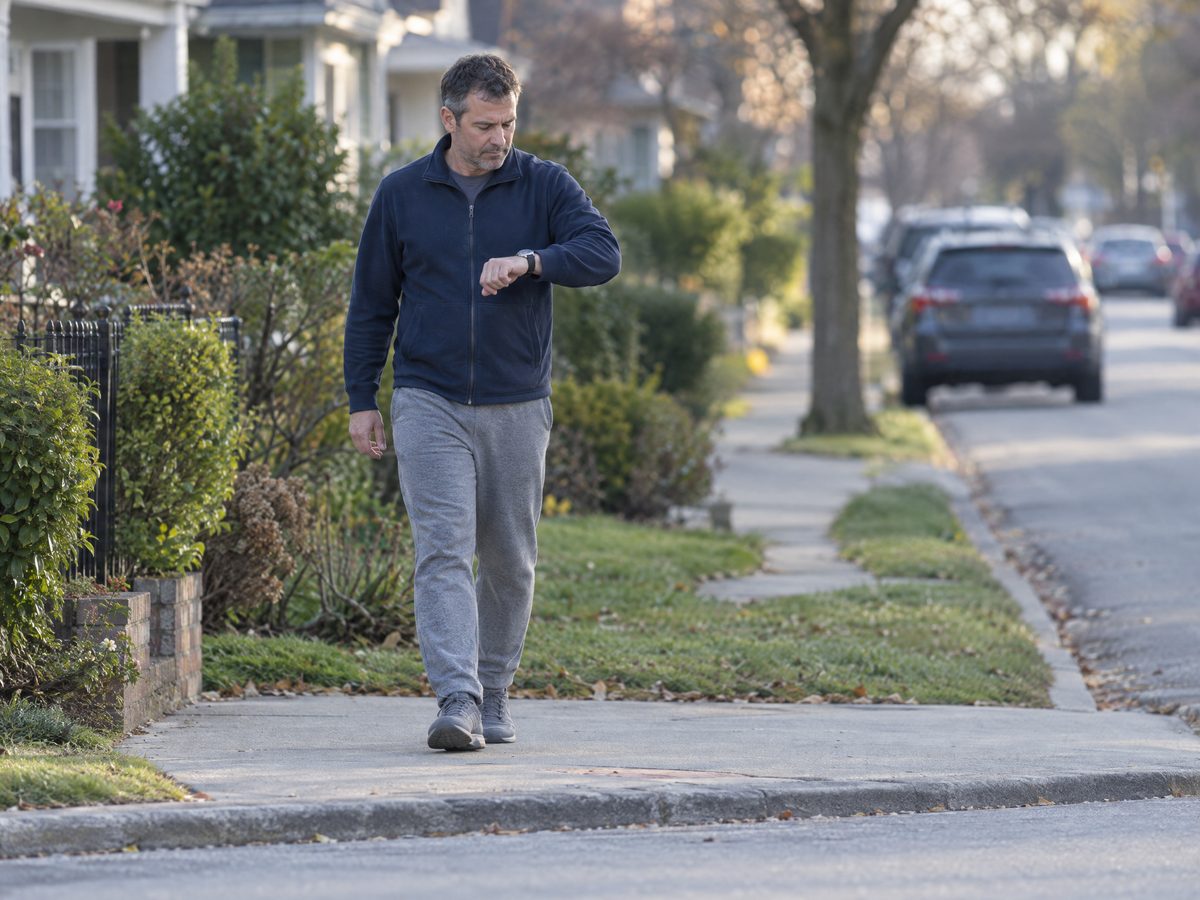
The first six weeks: a walking and sitting ladder
Built from hospital leaflets and patient guides, not a tested protocol. Your surgeon’s sheet comes first. (Singapore General Hospital, 2019; MedlinePlus, 2025; NHS Greater Glasgow and Clyde, 2025; Walton Centre NHS, 2024; Kaiser Permanente, 2026)
| Weeks | Walks | One stretch of sitting | In the car |
|---|---|---|---|
| 1 to 2 | 5 to 10 minutes, 3 to 5 times a day | 15 to 20 minutes | Short trips, as a passenger |
| 3 to 4 | 10 to 20 minutes, 3 to 5 times a day | Up to about 30 minutes | Passenger rides up to about 30 minutes |
| 5 to 6 | Keep building, as comfort allows | 30 to 45 minutes | Drive once your surgeon clears it |
The next-morning rule (ours, built on the leaflets’ weeks): stay in your week’s row. Within it, add a few minutes only after two mornings in a row with back and leg no worse than the day before.
A mild ache after a new activity is fine, but severe pain is not. After exercises, any ache should settle within about 15 minutes. (Royal Berkshire NHS, 2025; NHS Greater Glasgow and Clyde, 2025)
If an exercise brings on leg pain or tingling, stop it. Call your surgeon if that lasts more than a few days. Pain that keeps getting worse, or new or worsening numbness or weakness: call right away (see below). (Royal Orthopaedic Hospital)
The daily log: each morning, before you get up, rate your back and leg from 0 to 10. Add your walks, longest sit, and any numb patch: smaller, same or bigger.
Here’s what counts as progress.
Do more when two mornings say yes, not when one afternoon feels good.
When to call, or go to the ER
Know this list before you need it.
When not to wait
Go to the ER or call 911 right away for any of these. Don’t drive yourself.
- Numbness or pins and needles around your genitals, bottom or inner thighs, or a strange feeling when you wipe.
- New trouble starting to pee, or you can’t pee.
- You can’t control, or can’t feel, when you pee or poo.
- New loss of feeling in your genitals, or new trouble getting an erection or ejaculating.
- Leg pain in both legs, or weakness or numbness in both legs that’s severe or getting worse.
- You suddenly can’t move a leg at all.
- Chest pain, shortness of breath or coughing up blood.
Call your surgeon’s office right away, day or night, for any of these. Can’t reach them? Go to the ER.
- New or worsening weakness in a leg, like a foot that starts to drag.
- New numbness, or numbness that’s spreading or getting worse.
- Feeling unsteady on your feet.
- A fever of 101°F (38.3°C) or higher.
- An incision that’s redder, swollen, warm, opening or draining.
- Bleeding that soaks through the dressing.
- Pain that keeps getting worse, or isn’t eased by rest and pain medicine.
- Throbbing pain or swelling in one leg, usually the calf or thigh, or red or darkened skin there.
- A severe headache or dizziness, especially when you sit up after lying down.
Sources: NHS on sciatica and DVT; King’s College Hospital; MedlinePlus; Kaiser Permanente; leaflets from Norfolk and Norwich, James Paget, Walton Centre, Michigan and Singapore General.
Back at the dinner table
Next morning, before he gets up, Ray rates his back a 2 and his leg a 1. The dinner ache is gone. That’s one pass.
He trades one 40-minute walk for four 10-minute loops. At dinner he sets a 20-minute timer, then stands and clears the plates himself.
The twinges still come. Now he lets the next morning answer.
By his six-week visit, he has a month of numbers, and the talk turns to the truck.
Your next step: tomorrow, before you get up, rate your back and your leg from 0 to 10. Write both down: day one of your log.
Ray is a composite, drawn from the kinds of stories drivers and tradesmen describe in the first weeks after back surgery. The details are illustrative.
Free · Your Before-You-Leave Card
Don’t leave your next appointment with “rest it.”
Get the questions for your injury in 8 taps.
Get my card →Questions readers ask
- How much should I walk after a microdiscectomy?
- Start small and build over weeks. One hospital’s plan for lower-back surgery is 5 to 10 minutes, 3 to 5 times a day, in weeks 1 to 2. In weeks 3 to 4, it’s 10 to 20 minutes, 3 to 5 times a day. AAOS says a doctor or physical therapist may recommend a simple walking program, such as 30 minutes each day. One NHS leaflet advises regular short walks once you’re home. Your surgeon’s plan comes first.
- How long can I sit after a microdiscectomy?
- Leaflets disagree, from 15 to 45 minutes at a stretch. NHS Greater Glasgow and Clyde says 15 minutes for the first few days. MedlinePlus says 20 or 30 minutes, and one Colorado spine practice allows about 45 before a 10-minute break. Two hospitals advise starting low and building up. Follow your surgeon’s sheet.
- Is back pain normal after a microdiscectomy?
- A sore back is expected, because the operation leaves the back muscles sore. In a review of 87 studies, leg pain improved right away and back pain improved less. One NHS hospital says up to 15% of patients find their back more troublesome after surgery, often as a nuisance-level ache. Call your surgeon right away, day or night, for new leg weakness or new or spreading numbness. If you can’t reach them, go to the ER. Numbness around the genitals or bottom, or new bladder or bowel trouble, means the ER or 911 right away.
Sources & references (26)
- Herniated Disk in the Lower Back · AAOS OrthoInfo
- Spine surgery: discharge · MedlinePlus, 2025
- Microdiscectomy in the Low Back: What to Expect at Home · Kaiser Permanente Health Encyclopedia (Healthwise), 2026
- Information and exercises following microdiscectomy · Royal Berkshire NHS Foundation Trust, 2025
- Lumbar discectomy · Robert Jones and Agnes Hunt Orthopaedic Hospital NHS Foundation Trust, 2024
- Lumbar microdiscectomy · The Walton Centre NHS Foundation Trust, 2024
- Physiotherapy following your spinal discectomy · West Hertfordshire Teaching Hospitals NHS Trust, 2024
- Post-op spinal surgery (discectomy/decompression) · NHS Greater Glasgow and Clyde, 2025
- Lumbar spine surgery (physiotherapy patient resource) · Singapore General Hospital, 2019
- Multi-level lumbar microdiscectomy · University College London Hospitals NHS Foundation Trust, 2025
- Microdiscectomy · Royal Orthopaedic Hospital NHS Foundation Trust, Birmingham
- Posterior Lumbar Microdiscectomy · Boulder Neurosurgical and Spine Associates
- Caring for Myself after Lumbar Microdiscectomy · University of Michigan Department of Neurosurgery, 2012
- Lumbar discectomy / decompression advice · James Paget University Hospitals NHS Foundation Trust, 2018
- Lumbar spine micro-discectomy or decompression · Norfolk and Norwich University Hospitals NHS Foundation Trust, 2023
- A prospective, randomised trial of immediate exercise following lumbar microdiscectomy: a preliminary study · Physiotherapy, 2009
- The effect of pedometer-supported walking and telemonitoring after disc hernia surgery on pain and disability levels and quality of life · International Journal of Nursing Practice, 2021
- Lumbar Microdiscectomy and Post-operative Activity Restrictions: A Randomised Controlled Trial · Spine, 2026
- Length of Activity Restriction After Lumbar Discectomy Does Not Affect Recovery · Massachusetts General Hospital, Advances in Motion, 2018
- Whether Out-of-Bed Activity Restriction in the Early Postoperative Period of PELD Is Beneficial to Therapeutic Efficacy or Reduce Recurrence · Frontiers in Surgery, 2022
- Bracing and Activity Restriction After Lumbar Discectomy Surgery: An International Survey of AO Spine Members · Neurospine, 2026
- Incidence and risk factors for five-year recurrent disc herniation after primary single-level lumbar discectomy: analysis of 733 patients · Bone & Joint Journal, 2023
- Clinical course of pain and disability following primary lumbar discectomy: systematic review and meta-analysis · European Spine Journal, 2020
- Sciatica · NHS, 2024
- Deep vein thrombosis (DVT) · NHS, 2026
- Cauda equina syndrome: patient information · King’s College Hospital NHS Foundation Trust, 2024
The Series
45 articlesPart 1: Understanding Your Injury (1 to 19)
- After the MRI: How to Read a Rotator Cuff Report Without Getting Sold a Surgery
- Told to “Just Rest It”? Five Questions to Ask Before You Leave
- When Shoulder Pain Keeps Waking You Up
- Meniscus Surgery Recovery: When Can You Return to Your Kind of Work?
- Rotator Cuff Surgery or More Physical Therapy? Questions That Clarify the Decision
- Achilles Tendon Pain: Why This Tendon Is a Different Problem
- Four Months After Rotator Cuff Repair and It Still Hurts: Normal, or a Retear?
- Your Knee Feels Worse After the Meniscus Scope. What Could Be Going On?
- Hip Flexor Pain After Hip Arthroscopy: Why It Shows Up and When It Settles
- Tennis Elbow That Won’t Go Away: Why Rest and Shots Stall, and What Helps
- Knee Swelling After Meniscus Surgery: How Long Is Normal, and When to Call
- Quad Won’t Fire After Knee Surgery? What Quad Shutdown Is and How to Get It Back
- Walking After Meniscus Surgery: When You Can, How Far, and When to Drop the Crutches
- How to Sleep After Rotator Cuff Surgery, and When Nights Get Easier
- Felt a Pop After Knee Surgery? Re-Tear or Setback, and When to Call
- Home After a Microdiscectomy: How Much to Walk and How Long to Sit
- Running After ACL Surgery: When Your First Jog Comes, and What It Tells You About Work
- When Can You Drive After Rotator Cuff Surgery and Get Back in the Work Truck?
- Knee Won’t Straighten After Meniscus Surgery? Why It Happens and What Helps
Part 2: Work and Real Life (20 to 29)
- You Can Still Work. But What Is Your Injury Costing You?
- Self-Employed and Injured: How to Plan for Time Away From Work
- Your Job and Your Workouts Are Loading the Same Injury
- How to Take Time to Recover When Everyone Depends on You
- What Do You Still Want to Be Able to Do in Ten Years?
- Microdiscectomy Recovery: When Can You Go Back to Heavy Work?
- Kneeling After Knee Surgery: Why It Comes Back Last and How to Retrain It
- Rotator Cuff Surgery Recovery: When Can You Go Back to Work?
- When Can You Drive After Knee Surgery and Get Back in the Work Van?
- When Can You Go Back to Physical Work After ACL Surgery?
Part 3: Back to Training (30 to 34)
Part 4: Reading the Evidence (35 to 45)
- Your Watch Says You’re Recovered. Your Shoulder Disagrees.
- Recovery Is Taking Longer Than You Expected. What Counts as Progress?
- Before You Buy Another Recovery Tool, Decide What You Need It to Do
- “It Worked for Me”: How to Evaluate a Recovery Claim
- BPC-157 After an Orthopedic Procedure: What Does the Research Actually Show?
- TB-500 vs. BPC-157: What the Research Actually Compares
- How to Read a Peptide COA: What It Proves and What It Doesn’t
- The Research Stack People Ask About After a Scope, and the Gaps in the Human Data
- What the Tendon Research on BPC-157 Actually Measured
- What’s in the Other 1%? Peptide Impurities, Explained
- Approved, Compounded or “Research Use Only”: What a Peptide’s Label Means in 2026
Free · 60-second recovery check
What’s really holding your recovery back?
Eight quick taps. Find the one thing stalling your recovery, then get the three moves to work on first, picked from 30 guides and 100+ cited sources.
- Your bottleneck, named in 60 seconds
- 3 moves for this week, fitted to your job
- Your Before-You-Leave Card: the questions for your next appointment
What got hurt?
Free. No sign-up to start. Not medical advice.
Keep reading
Knee Won’t Straighten After Meniscus Surgery? Why It Happens and What Helps
Three weeks out, the other knee lies flat and yours won’t. Why a knee stays bent after a meniscus trim or repair, when protocols expect it straight, what rehab teams use to get it back, and the signs that mean call to…
When Can You Drive After Rotator Cuff Surgery and Get Back in the Work Truck?
Dispatch wants you back on the road, and your arm is still strapped to your belly. What the sling means for driving after a rotator cuff repair, what the few driving studies found, and a check to run before your first…
Running After ACL Surgery: When Your First Jog Comes, and What It Tells You About Work
Your PT says you can try a jog. You’re wondering if ladders are next. When the first run usually comes after ACL reconstruction, what clinics test first, what a first run-walk looks like, and what it does and doesn’t …