Meniscus Surgery Recovery: When Can You Return to Your Kind of Work?
Your brother-in-law was back at his desk in five days. You kneel on concrete for a living, and a crew is waiting on you. Why the procedure and your job both set the timeline, and how to plan a staged return.
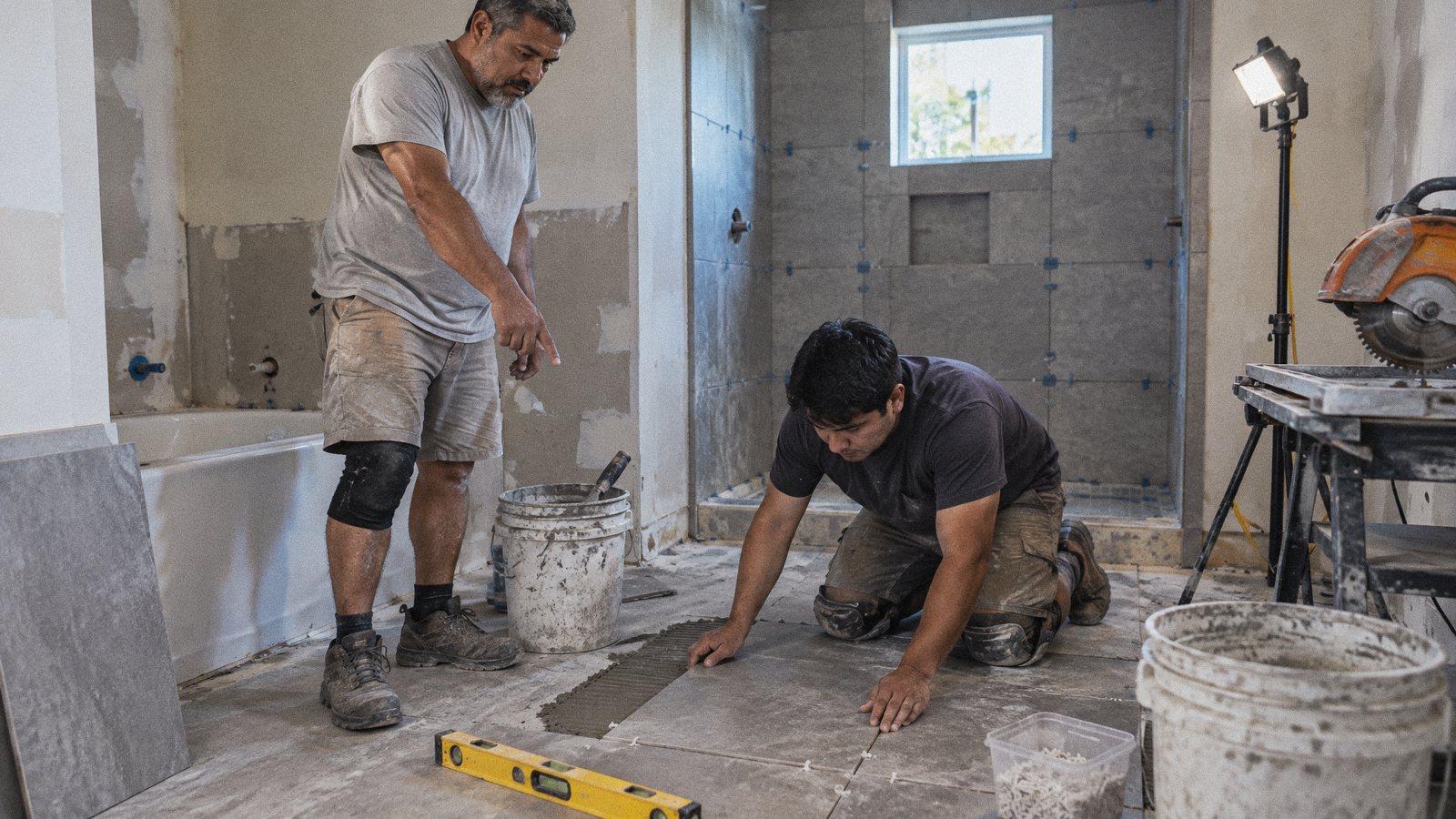
The story below is a composite of real experiences; details changed.
His brother-in-law had the “same surgery” and was back at his desk in five days. Jorge Silva kneels on concrete for a living.
Jorge, 48, has laid tile for 26 years and owns a crew of four. Four paychecks ride on his knees. He asked his surgeon “How long until I’m back?” and got the answer most people get before a knee scope: “It depends.”
Online, he found everything from “back in a week” to “six months.” His brother-in-law sells insurance. That night Jorge can’t stop doing the math.
“It depends” comes down to two things you can find out this week: which surgery you had, and what your job asks of your knee. Here’s how to turn them into a plan.
First, which surgery did you have?
This is the most important question, and many people don’t know the answer.
| Partial meniscectomy | Meniscus repair | |
|---|---|---|
| What happens | Damaged tissue is trimmed away | Torn pieces are stitched together to heal |
| Weight bearing | Usually right away | Varies; often protected at first |
| Rehab time | About 3 to 6 weeks | About 3 to 6 months |
Source: AAOS OrthoInfo. These are broad rehab ranges, not return-to-work promises. Some repairs, like root repairs, or surgeries with extra procedures, can take longer.
Ask for your operative report, or ask your surgeon directly: “Did you trim it or repair it?” The whole timeline hangs on that answer.
“Back to work” isn’t a date. It’s a match between your knee and your job.
If your knee feels worse three months after a trim, read what can make a knee worse after a meniscus scope. Felt a pop after a repair? Read signs you re-tore your knee after surgery.
Still on crutches? Start with walking after meniscus surgery. Knee puffing up after every shift? See knee swelling after meniscus surgery.
Your job is the other half of the answer
Two people can have the same surgery and very different return dates. The difference is what the job asks of the knee.
NIOSH, the federal workplace-safety agency, points to force, repetition, awkward postures and duration as the main loads on joints at work. (NIOSH) For the knee, awkward posture often means kneeling, squatting and pivoting.
| Job demand | Desk job | Driving job | Jorge (tile) |
|---|---|---|---|
| Sitting long periods | Yes | Yes | Rarely |
| Driving | Commute | All day | Job sites |
| Stairs and ladders | Some | Some | Daily |
| Kneeling and squatting | No | No | Hours a day |
| Carrying loads | No | Some | Boxes of tile, mortar |
Kneeling and deep squatting are usually the last things cleared, especially after a repair. That’s exactly what Jorge’s job is made of.
So if desk workers bounce back in a week and you’re still on the sidelines, you’re not slow. You’re comparing different jobs.
The evidence, without the theater
What the research shows
- Trimming usually has a much shorter rehab than repair.
- Job demands like kneeling, force and duration drive how hard work is on a joint.
What it doesn’t show
- Your personal return date.
- When you can drive. That depends on the knee, the medicine and the car. Your surgeon decides. See when you can drive after knee surgery.
- That sitting at a desk means the commute is safe.
Build a staged return
Instead of one return date, plan three.
Your job-demand sheet
- List your job’s top five physical demands. Be specific. “Kneel 3 to 4 hours” beats “physical work.”
- Bring the list to your surgeon or PT. Ask when each one is likely to be cleared, and what test you’ll need to pass.
- Plan three phases:
- Phase 1: Office, phone, estimates, supervising.
- Phase 2: Standing work, layout, cutting, light carrying.
- Phase 3: Kneeling, squatting, full loads.
- Put a review date on each phase.
If you own the business, the bigger question is covering the work while you heal. Here’s how to plan for time away from work when you’re self-employed.
And if you’re worried about losing strength while the knee heals, start with a plan for losing muscle while injured.
When not to wait
Call your surgeon if:
- Calf pain, swelling or warmth appears. This can signal a blood clot.
- You have chest pain or shortness of breath. Call 911.
- The incision is red, hot or draining, or you have a fever.
- The knee locks, gives way or suddenly swells.
Phase two
Jorge’s surgeon confirms it: a repair, not a trim. Nothing kneeling for at least three months.
So Jorge changes the question. Not “When can I work?” but “What work can I do?”
Weeks 2 to 6, he runs estimates and supervises from a stool. Weeks 6 to 12, he does layout and cuts standing up. His lead sets the tile.
Month four, he kneels on a thick pad for twenty minutes. Then forty.
He never had one return date. He had three, and he hit all of them.
Your next step: tomorrow, call your surgeon’s office and ask, “Did you trim it or repair it?”
Jorge is a composite, drawn from the kinds of stories tradespeople describe after knee surgery. The details are illustrative. The pattern is real.
Free · Your Before-You-Leave Card
Don’t leave your next appointment with “rest it.”
Get the questions for your injury in 8 taps.
Get my card →Questions readers ask
- How long is recovery after meniscus surgery?
- It depends on the procedure. According to AAOS OrthoInfo, rehabilitation after a partial meniscectomy (trimming) is about 3 to 6 weeks, while rehabilitation after a meniscus repair (stitching) is about 3 to 6 months.
- When can I kneel after meniscus surgery?
- Kneeling and deep squatting are usually among the last activities cleared, especially after a repair. Ask your surgeon when each demand of your job is likely to be cleared and what you need to show first.
- How do I know if I had a repair or a meniscectomy?
- Ask your surgeon directly or request your operative report. The difference changes your whole recovery timeline.
Sources & references (2)
- Meniscus Tears · AAOS OrthoInfo
- Ergonomics and Work-Related Musculoskeletal Disorders · NIOSH / CDC, 2024
The Series
45 articlesPart 1: Understanding Your Injury (1 to 19)
- After the MRI: How to Read a Rotator Cuff Report Without Getting Sold a Surgery
- Told to “Just Rest It”? Five Questions to Ask Before You Leave
- When Shoulder Pain Keeps Waking You Up
- Meniscus Surgery Recovery: When Can You Return to Your Kind of Work?
- Rotator Cuff Surgery or More Physical Therapy? Questions That Clarify the Decision
- Achilles Tendon Pain: Why This Tendon Is a Different Problem
- Four Months After Rotator Cuff Repair and It Still Hurts: Normal, or a Retear?
- Your Knee Feels Worse After the Meniscus Scope. What Could Be Going On?
- Hip Flexor Pain After Hip Arthroscopy: Why It Shows Up and When It Settles
- Tennis Elbow That Won’t Go Away: Why Rest and Shots Stall, and What Helps
- Knee Swelling After Meniscus Surgery: How Long Is Normal, and When to Call
- Quad Won’t Fire After Knee Surgery? What Quad Shutdown Is and How to Get It Back
- Walking After Meniscus Surgery: When You Can, How Far, and When to Drop the Crutches
- How to Sleep After Rotator Cuff Surgery, and When Nights Get Easier
- Felt a Pop After Knee Surgery? Re-Tear or Setback, and When to Call
- Home After a Microdiscectomy: How Much to Walk and How Long to Sit
- Running After ACL Surgery: When Your First Jog Comes, and What It Tells You About Work
- When Can You Drive After Rotator Cuff Surgery and Get Back in the Work Truck?
- Knee Won’t Straighten After Meniscus Surgery? Why It Happens and What Helps
Part 2: Work and Real Life (20 to 29)
- You Can Still Work. But What Is Your Injury Costing You?
- Self-Employed and Injured: How to Plan for Time Away From Work
- Your Job and Your Workouts Are Loading the Same Injury
- How to Take Time to Recover When Everyone Depends on You
- What Do You Still Want to Be Able to Do in Ten Years?
- Microdiscectomy Recovery: When Can You Go Back to Heavy Work?
- Kneeling After Knee Surgery: Why It Comes Back Last and How to Retrain It
- Rotator Cuff Surgery Recovery: When Can You Go Back to Work?
- When Can You Drive After Knee Surgery and Get Back in the Work Van?
- When Can You Go Back to Physical Work After ACL Surgery?
Part 3: Back to Training (30 to 34)
Part 4: Reading the Evidence (35 to 45)
- Your Watch Says You’re Recovered. Your Shoulder Disagrees.
- Recovery Is Taking Longer Than You Expected. What Counts as Progress?
- Before You Buy Another Recovery Tool, Decide What You Need It to Do
- “It Worked for Me”: How to Evaluate a Recovery Claim
- BPC-157 After an Orthopedic Procedure: What Does the Research Actually Show?
- TB-500 vs. BPC-157: What the Research Actually Compares
- How to Read a Peptide COA: What It Proves and What It Doesn’t
- The Research Stack People Ask About After a Scope, and the Gaps in the Human Data
- What the Tendon Research on BPC-157 Actually Measured
- What’s in the Other 1%? Peptide Impurities, Explained
- Approved, Compounded or “Research Use Only”: What a Peptide’s Label Means in 2026
Free · 60-second recovery check
What’s really holding your recovery back?
Eight quick taps. Find the one thing stalling your recovery, then get the three moves to work on first, picked from 30 guides and 100+ cited sources.
- Your bottleneck, named in 60 seconds
- 3 moves for this week, fitted to your job
- Your Before-You-Leave Card: the questions for your next appointment
What got hurt?
Free. No sign-up to start. Not medical advice.
Keep reading

Knee Won’t Straighten After Meniscus Surgery? Why It Happens and What Helps
Three weeks out, the other knee lies flat and yours won’t. Why a knee stays bent after a meniscus trim or repair, when protocols expect it straight, what rehab teams use to get it back, and the signs that mean call to…
When Can You Drive After Rotator Cuff Surgery and Get Back in the Work Truck?
Dispatch wants you back on the road, and your arm is still strapped to your belly. What the sling means for driving after a rotator cuff repair, what the few driving studies found, and a check to run before your first…
Running After ACL Surgery: When Your First Jog Comes, and What It Tells You About Work
Your PT says you can try a jog. You’re wondering if ladders are next. When the first run usually comes after ACL reconstruction, what clinics test first, what a first run-walk looks like, and what it does and doesn’t …