BPC-157 After an Orthopedic Procedure: What Does the Research Actually Show?
Forums say it cuts recovery in half. Here’s every rung of the evidence, what the FDA and its July 2026 advisory vote actually mean, and the questions to bring your surgeon.

The story below is a composite of real experiences; details changed.
It’s 11 p.m. You’re three weeks into a sling, and a forum post says, “BPC-157 cut my recovery in half.” Forty replies agree.
That’s where Dan Mercer is tonight. He’s 49, an electrician, three weeks out from a rotator cuff repair. Every week off the job costs him. So he can’t sleep, and he’s scrolling.
Dan doesn’t want a miracle. He wants his time back.
That’s exactly why the claim deserves a careful look: what was studied, in whom, and what it actually found.
Two questions, not one
Any recovery claim has to answer two separate questions:
- Does it work in people like you, after your kind of surgery?
- Is it safe enough, for long enough, to be worth it?
A good answer to one doesn’t answer the other. A small safety study can’t prove benefit. A striking animal result can’t prove safety in people.
“Promising in rats” and “proven after your surgery” are different sentences.
The evidence ladder
Here’s what has actually been studied, from furthest to closest to Dan’s situation.
| Study | What they did | What they found | What it can’t tell you |
|---|---|---|---|
| Rat surgery study (2025) | Surgically detached a thigh muscle in rats | Better reattachment and walking in treated rats | Whether people heal faster |
| Human tissue in the lab (2026) | Tested artery tissue from 12 heart-surgery donors | Blood vessels relaxed | Anything about tendon repair in patients |
| Small human studies in other conditions (2002 to 2024) | Bowel disease, bladder pain and healthy volunteers, as enemas or bladder injections | No serious side effects reported | Anything about surgery recovery. Small and short |
| Knee-pain chart review (2021) | Looked back at 17 patients’ records | 11 of 12 who got BPC-157 alone reported relief | Cause and effect. No comparison group, not after surgery |
| Safety pilot (2025) | Gave IV infusions to 2 adults | No harms seen over a short window | Rare or long-term harms, or any benefit |
| Health-record preprint (2026) | Reviewed 1,039 users’ records | No outcome recorded for 685; about half on other treatments | Whether BPC-157 caused any improvement |
| Trial after orthopedic surgery | None published | No results yet | Anything, until results are published |
Sources: rat study, Pharmaceutics; artery tissue, Journal of Clinical Medicine; knee-pain review and safety pilot, Alternative Therapies in Health and Medicine; 2026 preprint, not peer reviewed; other human studies as summarized by the FDA’s July 2026 briefing.
Want the short version first? The BPC-157 profile in the Peptides Made Simple peptide library (written by the team behind After the Scope) covers what it is, what’s been studied and the side effects reported, in plain English.
Every rung is a reason to keep studying it. None of them shows faster healing after surgery in people. That’s a finding from our review through September 22, 2026, not proof that no such study exists anywhere.
For how TB-500 and BPC-157 compare, see the side-by-side.
What the FDA actually says
BPC-157 sits on an FDA list of bulk substances with possible safety risks, in a section for nominations that were withdrawn. The agency’s wording is blunt: it “lacks sufficient information to know whether the drug would cause harm when administered to humans.” (FDA)
The FDA also flags possible immune reactions for some routes, and problems with impurities and confirming what’s actually in the product.
In July 2026, BPC-157 came up for a vote on whether pharmacies may compound it. FDA staff recommended against it. They pointed to immune-reaction risk, missing impurity testing, and clotting and liver changes in animal studies. (FDA briefing)
The FDA’s outside advisory panel voted the other way and recommended adding it. That vote isn’t binding. Pharmacies can’t compound BPC-157 until the FDA writes a final rule, and as of mid-September 2026 it hadn’t. (NCPA; Frier Levitt)
Available isn’t approved. “Research use only” means exactly that. It’s a label for lab work, not a green light for people.
What’s coming next
A rotator cuff repair study was first posted on ClinicalTrials.gov on September 3, 2026. It plans to enroll about 30 people, hadn’t started recruiting when we checked, and has no results. (NCT07803250)
Other registered studies don’t answer Dan’s question. One covers acute hamstring strains, not surgery (NCT07437547). One is a completed 40-person oral-product study with no comparison group and no posted results (NCT07752381). An older record lists its status as unknown (NCT02637284).
A registered trial is a plan, not a result. Check back when the data is posted.
The evidence, without the theater
What the research shows
- Animal and lab findings interesting enough to study further.
- Small, short human studies, mostly in other conditions.
- Real researchers are now registering trials.
What it doesn’t show
- Faster tendon or joint healing after surgery in people.
- Long-term or rare side effects.
- That forum success stories reflect everyone who tried it.
For a quick way to size up those forum stories, read how to evaluate a recovery claim.
If you’re months out and worried the repair didn’t hold, start with how often rotator cuff repairs tear again.
Questions for your surgeon
If you’re tempted to add anything to your recovery, bring it to your surgeon first. Start with what’s actually holding you back.
Take this list to your next visit
- What’s the main thing limiting my next stage: tissue protection, motion, strength or pain?
- What would speed that up that has real evidence behind it?
- Are there results in people after my type of repair for anything I’m reading about?
- Could any product interact with my medications or affect healing?
- Is there a clinical trial I could qualify for?
If rehab has stalled, read why tendons plateau and what to reassess.
When not to wait
After surgery, call your care team right away if you have:
- Fever or chills, or spreading redness, warmth or drainage at an incision.
- Calf pain or swelling. Call emergency services for chest pain or trouble breathing.
- A pop with sudden new weakness, or numbness that doesn’t settle.
- Started any new product or injection. Tell your surgeon, even if it feels awkward.
If friends are suggesting a whole stack, read about the research stack people ask about after a scope.
The list on the nightstand
Dan closes the forum. He opens his notes app instead and types five questions for his six-week visit.
At the top: What’s the one thing that would actually get me back to work sooner?
Wanting your time back is completely fair. Spend it on the questions with real answers first.
Your next step: tonight, put the five questions above in your phone, and ask the first one at your next visit.
Dan is a composite, drawn from the kinds of questions people ask after orthopedic surgery. The details are illustrative. This article is education, not medical advice.
Free · Your Before-You-Leave Card
Don’t leave your next appointment with “rest it.”
Get the questions for your injury in 8 taps.
Get my card →THE RESEARCH DESK
Looking into peptides beyond the exam room? Start with these three steps.
01 · READ
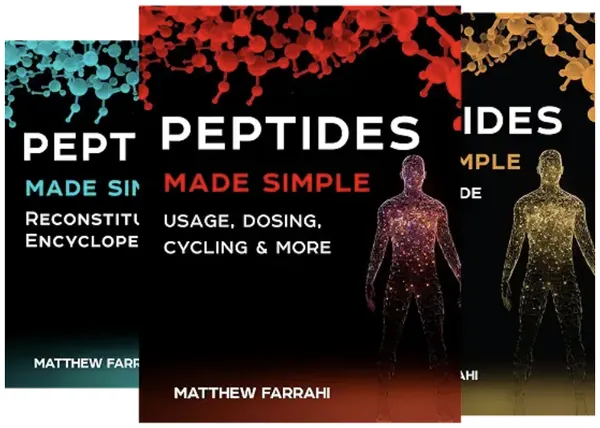
Peptides Made Simple
The three-book series our readers ask about most. Plain-English background for anyone reading peptide research: Kindle and print on Amazon, or all three ebooks together.
See the books →02 · VERIFY
How to Read a Peptide COA
Quick checks that show what a lab report proves, and what it doesn’t.
Read the guide →03 · SOURCE
SCSigma Compounds
The research supplier we point to
Third-party tested. The research supplier we trust.
Disclosure: Peptides Made Simple is written by the team behind After the Scope, and we earn money when you buy it. After the Scope is an affiliate of Sigma Compounds. Sigma Compounds products are sold strictly for laboratory research use, not for human consumption. Nothing on this site is medical advice.
Questions readers ask
- Is BPC-157 proven to speed up recovery after orthopedic surgery?
- Not in people. Our review through September 22, 2026 found no published randomized trial showing faster recovery after orthopedic surgery. The evidence so far comes from animal studies, lab tests on human tissue and small human reports without comparison groups.
- Is BPC-157 FDA approved?
- No. FDA staff have raised concerns about immune reactions, impurities and limited safety data. In July 2026 an FDA advisory committee voted to recommend letting pharmacies compound BPC-157, against FDA staff’s recommendation. That vote isn’t binding, compounding still requires a final FDA rule, and it would not make BPC-157 an approved drug.
- Are there clinical trials of BPC-157 after rotator cuff repair?
- One small study, planned for about 30 people, was first posted on ClinicalTrials.gov on September 3, 2026. It had not started recruiting when we checked and has no results yet.
Sources & references (13)
- Stable Gastric Pentadecapeptide BPC 157 as Therapy After Surgical Detachment of the Quadriceps Muscle from Its Attachments for Muscle-to-Bone Reattachment in Rats · Pharmaceutics, 2025
- Endothelium-Dependent Nitric Oxide-Mediated Vasorelaxant Effects of BPC 157 in Human Internal Mammary Artery · Journal of Clinical Medicine, 2026
- Intra-Articular Injection of BPC 157 for Multiple Types of Knee Pain · Alternative Therapies in Health and Medicine, 2021
- Safety of Intravenous Infusion of BPC157 in Humans: A Pilot Study · Alternative Therapies in Health and Medicine, 2025
- Rising Use of Unapproved BPC-157 and Outcomes Curated From Clinical Notes (preprint, not peer reviewed) · Preprints.org, 2026
- Certain Bulk Drug Substances for Use in Compounding that May Present Significant Safety Risks · U.S. Food and Drug Administration, 2026
- FDA Briefing Document: BPC-157, Pharmacy Compounding Advisory Committee, July 23–24, 2026 · U.S. Food and Drug Administration, 2026
- FDA advisory committee nominates six peptides for pharmacies to compound · National Community Pharmacists Association, 2026
- FDA PCAC Peptide Vote: What the 503A Recommendations Mean · Frier Levitt, 2026
- Registry record NCT07803250: BPC-157 after rotator cuff repair · ClinicalTrials.gov, 2026
- Registry record NCT07437547: BPC-157 for acute hamstring strain · ClinicalTrials.gov, 2026
- Registry record NCT07752381: oral peptide product study · ClinicalTrials.gov, 2026
- Registry record NCT02637284: PCO-02 safety and pharmacokinetics · ClinicalTrials.gov
The Series
45 articlesPart 1: Understanding Your Injury (1 to 19)
- After the MRI: How to Read a Rotator Cuff Report Without Getting Sold a Surgery
- Told to “Just Rest It”? Five Questions to Ask Before You Leave
- When Shoulder Pain Keeps Waking You Up
- Meniscus Surgery Recovery: When Can You Return to Your Kind of Work?
- Rotator Cuff Surgery or More Physical Therapy? Questions That Clarify the Decision
- Achilles Tendon Pain: Why This Tendon Is a Different Problem
- Four Months After Rotator Cuff Repair and It Still Hurts: Normal, or a Retear?
- Your Knee Feels Worse After the Meniscus Scope. What Could Be Going On?
- Hip Flexor Pain After Hip Arthroscopy: Why It Shows Up and When It Settles
- Tennis Elbow That Won’t Go Away: Why Rest and Shots Stall, and What Helps
- Knee Swelling After Meniscus Surgery: How Long Is Normal, and When to Call
- Quad Won’t Fire After Knee Surgery? What Quad Shutdown Is and How to Get It Back
- Walking After Meniscus Surgery: When You Can, How Far, and When to Drop the Crutches
- How to Sleep After Rotator Cuff Surgery, and When Nights Get Easier
- Felt a Pop After Knee Surgery? Re-Tear or Setback, and When to Call
- Home After a Microdiscectomy: How Much to Walk and How Long to Sit
- Running After ACL Surgery: When Your First Jog Comes, and What It Tells You About Work
- When Can You Drive After Rotator Cuff Surgery and Get Back in the Work Truck?
- Knee Won’t Straighten After Meniscus Surgery? Why It Happens and What Helps
Part 2: Work and Real Life (20 to 29)
- You Can Still Work. But What Is Your Injury Costing You?
- Self-Employed and Injured: How to Plan for Time Away From Work
- Your Job and Your Workouts Are Loading the Same Injury
- How to Take Time to Recover When Everyone Depends on You
- What Do You Still Want to Be Able to Do in Ten Years?
- Microdiscectomy Recovery: When Can You Go Back to Heavy Work?
- Kneeling After Knee Surgery: Why It Comes Back Last and How to Retrain It
- Rotator Cuff Surgery Recovery: When Can You Go Back to Work?
- When Can You Drive After Knee Surgery and Get Back in the Work Van?
- When Can You Go Back to Physical Work After ACL Surgery?
Part 3: Back to Training (30 to 34)
Part 4: Reading the Evidence (35 to 45)
- Your Watch Says You’re Recovered. Your Shoulder Disagrees.
- Recovery Is Taking Longer Than You Expected. What Counts as Progress?
- Before You Buy Another Recovery Tool, Decide What You Need It to Do
- “It Worked for Me”: How to Evaluate a Recovery Claim
- BPC-157 After an Orthopedic Procedure: What Does the Research Actually Show?
- TB-500 vs. BPC-157: What the Research Actually Compares
- How to Read a Peptide COA: What It Proves and What It Doesn’t
- The Research Stack People Ask About After a Scope, and the Gaps in the Human Data
- What the Tendon Research on BPC-157 Actually Measured
- What’s in the Other 1%? Peptide Impurities, Explained
- Approved, Compounded or “Research Use Only”: What a Peptide’s Label Means in 2026
Free · 60-second recovery check
What’s really holding your recovery back?
Eight quick taps. Find the one thing stalling your recovery, then get the three moves to work on first, picked from 30 guides and 100+ cited sources.
- Your bottleneck, named in 60 seconds
- 3 moves for this week, fitted to your job
- Your Before-You-Leave Card: the questions for your next appointment
What got hurt?
Free. No sign-up to start. Not medical advice.
More in Reading the Evidence

Approved, Compounded or “Research Use Only”: What a Peptide’s Label Means in 2026
Heard FDA “approved” BPC-157? It didn’t. A panel voted in July to let pharmacies compound six peptides, and nothing has legally changed yet. The three lanes a peptide can sit in, and where BPC-157 and TB-500 stand as …
What’s in the Other 1%? Peptide Impurities, Explained
The badge says “99% pure.” That’s one number from one test. What else is in a synthetic peptide, why regulators flag it, and what a complete certificate of analysis should list.

What the Tendon Research on BPC-157 Actually Measured
Seen BPC-157 pitched for tendon pain that won’t quit? More than two decades of rat studies, a 2026 head-to-head with TB-500 and a 2025 review of 36 studies: what was measured, what was found and where the evidence stops.