Hip Flexor Pain After Hip Arthroscopy: Why It Shows Up and When It Settles
Three months after a hip scope, the front of your hip catches on every stair, and you lie awake wondering if the surgery failed. What hip flexor tendonitis is, how often it shows up, how it usually ends, and what real failure looks like instead.

The story below is a composite of real experiences; details changed.
Three months after hip arthroscopy, the front of your hip catches on every stair. At 3 a.m., one question won’t let go: Is the surgery failing?
Megan Ruiz, 37, is an ICU nurse on 12-hour nights. She climbs four flights from the staff garage before every shift, and she ran half-marathons before surgery.
Three months ago she had hip arthroscopy to fix impingement and repair a torn labrum. Now the front of her hip snags like a zipper catching on the same tooth. It snags as she lifts her leg into the car, and on straight-leg raises at PT.
Her surgeon said recovery takes a year. She has read everything, twice.
The research is calmer than her search results. Here’s why the front of the hip flares after a scope, how often it settles, and what real failure looks like.
Why the front of your hip is complaining
Your iliopsoas is the main muscle that lifts your thigh toward your chest. Its tendon crosses the front of the hip joint. When that tendon gets irritated after a hip scope, it’s called iliopsoas, or hip flexor, tendonitis.
Why it happens isn’t settled. One study team’s shortlist: changed movement after surgery, bleeding near the tendon or scarring of it, and rehab that strays from the protocol. Their tests included pain on lifting the knee against resistance while seated. (Journal of Hip Preservation Surgery)
One academic surgeon’s post-op sheet says “NO STRAIGHT LEG RAISES!” for the first six weeks. The same section warns that tendonitis of the hip flexors and nearby muscles “can occur with too aggressive rehab.” (UW Medicine)
A sore hip flexor is a known detour, and a different problem from the repair itself.
How often it happens, and how it usually ends
Two studies give a range. (Journal of Hip Preservation Surgery; Hip International)
| 2018 study | 2021 study | |
|---|---|---|
| Got hip flexor tendonitis | 60 of 252 patients (24%, about 1 in 4) | 18 of 258 surgeries (7%, about 1 in 14) |
| When it was diagnosed | Six weeks or later (the study waited that long to tell it apart from surgical pain) | About 3 months after surgery, on average |
| Settled without an injection | 47%, with activity changes, PT and anti-inflammatories | Not tested. All 18 were treated with an injection |
| Needed another operation | 7 (12%) had the tendon released | None |
Read the bigger number with care: the 2018 study counted anyone with even one positive exam sign, and its patients averaged about 22. We found no figures specific to people in their 30s and 40s.
Women had it more often (27% vs 18%), but the gap could be chance.
In the 2021 study, 10 of 18 improved within three months of diagnosis. Two took three to six months, four took six to twelve, and two took over a year. At one year, that group scored lower on one hip-function questionnaire.
Most people get past it without another operation. Some need months. A few need a year.
Other things that can hurt at the front of the hip
A sore tendon isn’t the only suspect. A review of lingering pain after hip arthroscopy also lists these:
| Possible cause | What the research says |
|---|---|
| Nerve irritation from the portals | A small numb patch on the front-outer thigh. About 1 in 6 in one study of adults averaging 40. All cleared within a year |
| Adhesions or a capsule problem | Both are listed complications. An unrepaired capsule may leave the hip prone to instability |
| Leftover impingement | Top reason for revision surgery |
| Joint wear | Arthritis changes predict poorer results |
| Not enough time | “Inadequate rehabilitation or time” makes the list too |
Sources: review; nerve study; age-40-plus review.
Sorting them out starts with an exam. Bring good notes.
Slow isn’t the same as failing
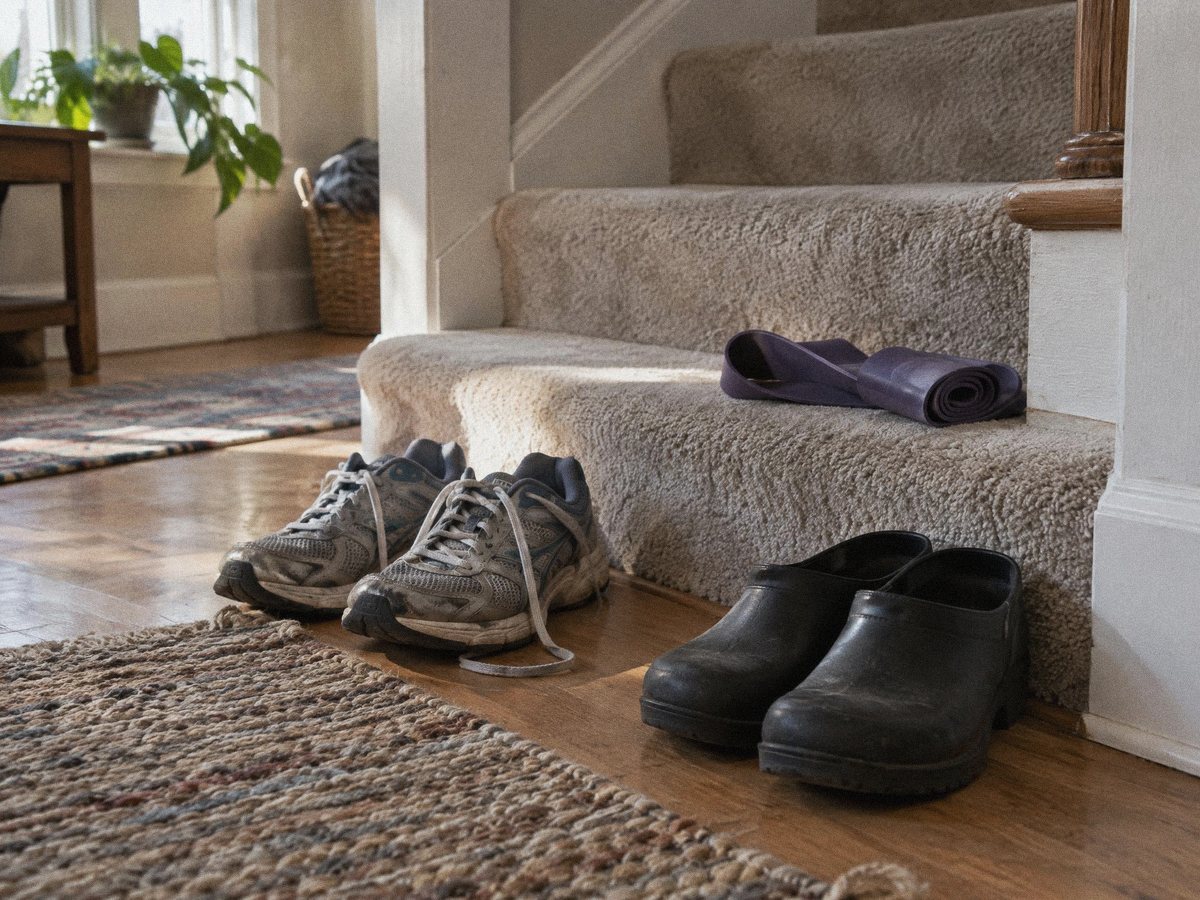
Hip scope recovery runs on a long clock. Of 719 people averaging 32, this share reached a noticeable improvement on a hip questionnaire:
- 76% by six months.
- 85% by one year.
- 94% by two years.
Women, younger people and hips without cartilage damage got there faster. (American Journal of Sports Medicine)
Failure looks different. In these studies, it means revision hip surgery or a hip replacement:
- Among people 40 and older, about 18% (nearly 1 in 5) had a replacement, on average about two years after the scope. Arthritis changes and obesity predicted poorer results. (Arthroscopy)
- Leftover impingement is the leading reason for a second hip-preservation surgery. (Journal of Hip Preservation Surgery)
Three months is the middle of this recovery, not the verdict.
The evidence, without the theater
What the research shows
- Hip flexor tendonitis is a known complication, in 7% to 24% of patients in two studies.
- Most cases settle with activity changes, PT or an injection.
- Noticeable improvement usually comes within six months, and gains can continue for two years.
What it doesn’t show
- How often it happens in people aged 30 to 45.
- Which treatment works best.
- Its effect beyond the first year.
Questions for your surgeon and PT
Take this to your next visit
First, a one-week snag log. Each evening, write down:
- Which moves caught today: stairs, lifting your leg into the car, straight-leg raises, or something else.
- How sharp the worst one was, 0 to 10.
- Any numb patch on the front or outer thigh.
Then ask:
- Does my exam point to the hip flexor tendon, the joint or something else?
- Should I pause straight-leg raises and other active hip-flexion work?
- If it hasn’t eased in six weeks, would an injection help confirm the source and treat it?
- Did you see cartilage wear, and does it change my timeline?
- Was my capsule repaired?
And for your PT: what’s my next milestone, and how will we know I’ve hit it?
The log is a practical structure, not a tested protocol.
Track it over weeks, not days. Here’s what counts as progress, and why tendons plateau when rehab stalls.
When not to wait
Call your surgeon’s office if you have any of these (UW Medicine):
- A fever over 101°F (38.3°C).
- An incision that opens, drains or turns red.
- New numbness, tingling or loss of function in your leg.
- Increasing pain or swelling in your calf.
Call 911 for chest pain or shortness of breath.
If you’ve seen BPC-157 come up after a hip scope
You’ll see it pitched for hip injuries and labral tears. Here’s what’s actually been studied.
- Mostly rats. A 2025 review in HSS Journal found 36 studies of BPC-157 in orthopedic sports medicine. Thirty-five were animal or lab studies.
- Freshly cut tissue. The tendon studies cut rat Achilles and quadriceps tendons. Three muscle studies cut or crushed rat muscle.
- One human study. A look back at people with unspecified knee pain. The review found no human safety data and urged caution.
- No hip trials. A September 2026 search for “BPC-157” found no registered human trial of the hip, hip arthroscopy or the hip flexor. (ClinicalTrials.gov) We found no animal study of the iliopsoas either.
Curiosity is reasonable. The research, so far, hasn’t reached the hip.
In a 2026 rat study, BPC-157 alone didn’t significantly beat untreated rats on strength. For the details, read what the tendon research on BPC-157 actually measured. For legal status, see what a peptide’s label actually means.
Back on the stairs
Before her next PT session, Megan types two lines into her notes: Is this my hip flexor? Should I drop the straight-leg raises for now?
Under them, she starts the snag log: stairs, car, straight-leg raises. She sets a reminder for six weeks out.
Then she takes the stairs, one snag at a time. Three months into a year, the snag is a checkpoint, not a verdict.
Your next step: tonight, start the snag log. Bring it and the five questions to your next appointment.
Megan is a composite, drawn from the kinds of questions active adults ask after hip arthroscopy. The details are illustrative. Nothing here is medical advice. Research compounds are sold for laboratory research only.
Free · Your Before-You-Leave Card
Don’t leave your next appointment with “rest it.”
Get the questions for your injury in 8 taps.
Get my card →Questions readers ask
- How common is hip flexor tendonitis after hip arthroscopy?
- Two studies found it in 7% and 24% of patients. The higher figure counted anyone with at least one positive exam sign, in patients who averaged about 22 years old. It was usually diagnosed six weeks or more after surgery.
- How long does hip flexor pain take to settle after hip arthroscopy?
- In a 2018 study, 47% settled within six weeks of activity changes, physical therapy and anti-inflammatories, and 88% got better without another operation. In a 2021 study, 10 of 18 improved within three months of diagnosis, two took more than a year, and none needed surgery.
- Does hip flexor pain mean my hip arthroscopy failed?
- It’s usually a separate problem. In the studies we reviewed, hip flexor tendonitis mostly got better without more surgery. Failure, meaning revision surgery or a hip replacement, was tied to arthritis, older age and leftover impingement. Your surgeon’s exam is how the causes get sorted out.
Sources & references (9)
- Iliopsoas tendonitis after hip arthroscopy: prevalence, risk factors and treatment algorithm · Journal of Hip Preservation Surgery, 2018
- The incidence and pattern of iliopsoas tendinitis following hip arthroscopy · Hip International, 2021
- Refractory pain following hip arthroscopy: evaluation and management · Journal of Hip Preservation Surgery, 2018
- A Characterization of Sensory and Motor Neural Dysfunction in Patients Undergoing Hip Arthroscopic Surgery: Traction- and Portal Placement–Related Nerve Injuries · Orthopaedic Journal of Sports Medicine, 2018
- Time Required to Achieve Minimal Clinically Important Difference and Substantial Clinical Benefit After Arthroscopic Treatment of Femoroacetabular Impingement · American Journal of Sports Medicine, 2018
- Hip Arthroscopy in Patients Age 40 or Older: A Systematic Review · Arthroscopy, 2017
- Initial Postoperative Instructions: Hip Arthroscopy · UW Medicine, Department of Orthopaedics and Sports Medicine
- Emerging Use of BPC-157 in Orthopaedic Sports Medicine: A Systematic Review · HSS Journal, 2025
- ClinicalTrials.gov search: BPC-157 · ClinicalTrials.gov, 2026
The Series
45 articlesPart 1: Understanding Your Injury (1 to 19)
- After the MRI: How to Read a Rotator Cuff Report Without Getting Sold a Surgery
- Told to “Just Rest It”? Five Questions to Ask Before You Leave
- When Shoulder Pain Keeps Waking You Up
- Meniscus Surgery Recovery: When Can You Return to Your Kind of Work?
- Rotator Cuff Surgery or More Physical Therapy? Questions That Clarify the Decision
- Achilles Tendon Pain: Why This Tendon Is a Different Problem
- Four Months After Rotator Cuff Repair and It Still Hurts: Normal, or a Retear?
- Your Knee Feels Worse After the Meniscus Scope. What Could Be Going On?
- Hip Flexor Pain After Hip Arthroscopy: Why It Shows Up and When It Settles
- Tennis Elbow That Won’t Go Away: Why Rest and Shots Stall, and What Helps
- Knee Swelling After Meniscus Surgery: How Long Is Normal, and When to Call
- Quad Won’t Fire After Knee Surgery? What Quad Shutdown Is and How to Get It Back
- Walking After Meniscus Surgery: When You Can, How Far, and When to Drop the Crutches
- How to Sleep After Rotator Cuff Surgery, and When Nights Get Easier
- Felt a Pop After Knee Surgery? Re-Tear or Setback, and When to Call
- Home After a Microdiscectomy: How Much to Walk and How Long to Sit
- Running After ACL Surgery: When Your First Jog Comes, and What It Tells You About Work
- When Can You Drive After Rotator Cuff Surgery and Get Back in the Work Truck?
- Knee Won’t Straighten After Meniscus Surgery? Why It Happens and What Helps
Part 2: Work and Real Life (20 to 29)
- You Can Still Work. But What Is Your Injury Costing You?
- Self-Employed and Injured: How to Plan for Time Away From Work
- Your Job and Your Workouts Are Loading the Same Injury
- How to Take Time to Recover When Everyone Depends on You
- What Do You Still Want to Be Able to Do in Ten Years?
- Microdiscectomy Recovery: When Can You Go Back to Heavy Work?
- Kneeling After Knee Surgery: Why It Comes Back Last and How to Retrain It
- Rotator Cuff Surgery Recovery: When Can You Go Back to Work?
- When Can You Drive After Knee Surgery and Get Back in the Work Van?
- When Can You Go Back to Physical Work After ACL Surgery?
Part 3: Back to Training (30 to 34)
Part 4: Reading the Evidence (35 to 45)
- Your Watch Says You’re Recovered. Your Shoulder Disagrees.
- Recovery Is Taking Longer Than You Expected. What Counts as Progress?
- Before You Buy Another Recovery Tool, Decide What You Need It to Do
- “It Worked for Me”: How to Evaluate a Recovery Claim
- BPC-157 After an Orthopedic Procedure: What Does the Research Actually Show?
- TB-500 vs. BPC-157: What the Research Actually Compares
- How to Read a Peptide COA: What It Proves and What It Doesn’t
- The Research Stack People Ask About After a Scope, and the Gaps in the Human Data
- What the Tendon Research on BPC-157 Actually Measured
- What’s in the Other 1%? Peptide Impurities, Explained
- Approved, Compounded or “Research Use Only”: What a Peptide’s Label Means in 2026
Free · 60-second recovery check
What’s really holding your recovery back?
Eight quick taps. Find the one thing stalling your recovery, then get the three moves to work on first, picked from 30 guides and 100+ cited sources.
- Your bottleneck, named in 60 seconds
- 3 moves for this week, fitted to your job
- Your Before-You-Leave Card: the questions for your next appointment
What got hurt?
Free. No sign-up to start. Not medical advice.
More in Understanding Your Injury

Knee Won’t Straighten After Meniscus Surgery? Why It Happens and What Helps
Three weeks out, the other knee lies flat and yours won’t. Why a knee stays bent after a meniscus trim or repair, when protocols expect it straight, what rehab teams use to get it back, and the signs that mean call to…
When Can You Drive After Rotator Cuff Surgery and Get Back in the Work Truck?
Dispatch wants you back on the road, and your arm is still strapped to your belly. What the sling means for driving after a rotator cuff repair, what the few driving studies found, and a check to run before your first…
Running After ACL Surgery: When Your First Jog Comes, and What It Tells You About Work
Your PT says you can try a jog. You’re wondering if ladders are next. When the first run usually comes after ACL reconstruction, what clinics test first, what a first run-walk looks like, and what it does and doesn’t …