The Research Stack People Ask About After a Scope, and the Gaps in the Human Data
BPC-157, TB-500, GHK-Cu, collagen: the group chat is sure. Here’s what’s actually been studied in people, what hasn’t, and what to ask at your next post-op visit.

The story below is a composite of real experiences; details changed.
“Run the Wolverine stack, bro. You’ll be squatting in a month.”
Two weeks after his knee scope, that’s the message waiting in Jordan Price’s gym group chat. Someone adds a third peptide. His sister-in-law suggests collagen.
Jordan is 35 and runs a warehouse crew. He can’t afford a slow recovery. He can’t afford a bad one either.
Everyone in the chat is sure. Nobody in the chat has a study. Here’s what the studies actually say, and where the human data run out.
Why stacks sound convincing
A stack feels thorough. If one thing might help, three things must cover more ground.
That’s not how evidence works. Each compound has its own unknowns. Put them together and you add new ones: how they interact, which one caused a side effect, and whether any of it worked.
Stacking unknowns doesn’t add up to proof. It multiplies the questions.
What’s actually been studied in people
| Compound | What it is | Human evidence | Trials after surgery |
|---|---|---|---|
| BPC-157 | 15-amino-acid synthetic peptide | A few small studies, mostly in bowel, bladder and knee pain | None published. One registered, not yet recruiting |
| TB-500 | 7-amino-acid piece of thymosin beta-4 | None the FDA could find | None found |
| GHK-Cu | Copper-binding peptide used in skin care | Mostly skin research. FDA notes limited human data for injectables | None found |
| Collagen peptides | Food supplement | A few small trials, usually alongside exercise | None found for arthroscopy |
Sources: FDA briefings on BPC-157 and TB-500; FDA on GHK-Cu; copper-peptide review, Cosmetics, 2018; collagen pilot trial, Nutrients, 2019; ClinicalTrials.gov.
The most-studied item on the list is the supplement, and even that rests on small trials. The three peptides rely mostly on animal and lab work.
For the deep dive on the most popular one, read what the BPC-157 research actually shows.
For how TB-500 and BPC-157 compare in the research, see the side-by-side.
For a short profile of each compound on that list, see the Peptides Made Simple peptide library (written by the team behind After the Scope): BPC-157, TB-500 and GHK-Cu.
The gaps nobody posts about
Three gaps show up again and again.
- No combination studies. We found no published research testing these peptides together in people.
- No surgery trials. We found no published results for any of them after arthroscopic surgery.
- Uneven quality. In July 2026, FDA staff said available paperwork for BPC-157 and TB-500 lacked tests for impurities, clumping and bacterial toxins. They also flagged the risk of immune reactions. (FDA, BPC-157; FDA, TB-500)
An FDA advisory panel voted that month to recommend letting pharmacies compound BPC-157 and TB-500, against staff advice. The vote isn’t binding, and as of mid-September 2026 no final rule had been issued. (Frier Levitt) None of these peptides is an FDA-approved drug.
The evidence, without the theater
What the research shows
- Animal and lab findings for several of these compounds.
- Small human studies for BPC-157 and collagen peptides.
- Regulators have real questions about quality and immune reactions.
What it doesn’t show
- Faster recovery after a scope from any of them.
- That combining them is safe or works better.
- What the right plan is for your knee or shoulder.
If your knee is worse than before the scope, the stack isn’t the first question. Start with what can make a knee worse after a meniscus scope.
Bring the chat to the clinic
You don’t have to argue with the group chat. Take the question to the people who have seen your joint from the inside.
Ask at your next post-op visit
- What’s the main thing limiting my recovery right now?
- What has the strongest evidence for getting me past it?
- Is there human evidence, after my kind of procedure, for anything I’m hearing about?
- Could any supplement or compound interfere with healing or my medications?
- How will we measure progress, and when do we check it?
For the timeline itself, see when you can return to your kind of work after meniscus surgery.
When not to wait
After a scope, call your care team right away if you have:
- Fever, or spreading redness, warmth or drainage at one of the small incisions.
- Calf pain or swelling. Call emergency services for chest pain or trouble breathing.
- A knee that suddenly locks, gives way or swells a lot.
- Any reaction after starting a new product. Tell your surgeon what it was.
Before you trust any product’s paperwork, learn how to read a peptide COA.
Muted, not ignored
Jordan mutes the chat. He screenshots the “stack” and brings it to his two-week visit anyway.
His surgeon reads it, shrugs and hands him a printed rehab plan. “This part has studies behind it. Let’s nail it first.”
The stack with the most evidence is still a plan, a therapist and time. Bring your questions. Leave with a plan you can measure.
Your next step: screenshot the five questions above and ask the first one at your next post-op visit.
Jordan is a composite, drawn from the kinds of stories people describe after arthroscopic surgery. The details are illustrative. This article is education, not medical advice. It does not cover dosing or use.
Free · Your Before-You-Leave Card
Don’t leave your next appointment with “rest it.”
Get the questions for your injury in 8 taps.
Get my card →THE RESEARCH DESK
Looking into peptides beyond the exam room? Start with these three steps.
01 · READ
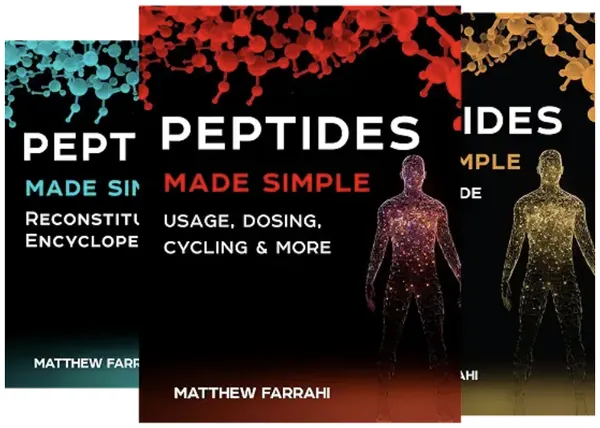
Peptides Made Simple
The three-book series our readers ask about most. Plain-English background for anyone reading peptide research: Kindle and print on Amazon, or all three ebooks together.
See the books →02 · VERIFY
How to Read a Peptide COA
Quick checks that show what a lab report proves, and what it doesn’t.
Read the guide →03 · SOURCE
SCSigma Compounds
The research supplier we point to
Third-party tested. The research supplier we trust.
Disclosure: Peptides Made Simple is written by the team behind After the Scope, and we earn money when you buy it. After the Scope is an affiliate of Sigma Compounds. Sigma Compounds products are sold strictly for laboratory research use, not for human consumption. Nothing on this site is medical advice.
Questions readers ask
- Is there research on combining BPC-157 and TB-500?
- We found no published studies testing BPC-157 and TB-500 together in people. FDA staff also reported finding no human studies of TB-500 on its own.
- Do peptides speed up recovery after arthroscopic surgery?
- We found no published trials of BPC-157, TB-500 or GHK-Cu after arthroscopic surgery. One small BPC-157 study after rotator cuff repair was registered in September 2026 but had not started recruiting.
- Is GHK-Cu studied for injuries?
- Most GHK-Cu research is on skin, in cells, animals and cosmetic products. The FDA notes limited human data for injectable use and flags a possible risk of immune reactions. We found no human studies on tendon or joint injuries.
Sources & references (7)
- FDA Briefing Document: BPC-157, Pharmacy Compounding Advisory Committee, July 23–24, 2026 · U.S. Food and Drug Administration, 2026
- FDA Briefing Document: TB-500, Pharmacy Compounding Advisory Committee, July 23–24, 2026 · U.S. Food and Drug Administration, 2026
- Certain Bulk Drug Substances for Use in Compounding that May Present Significant Safety Risks · U.S. Food and Drug Administration, 2026
- Skin Regenerative and Anti-Cancer Actions of Copper Peptides · Cosmetics, 2018
- Oral Supplementation of Specific Collagen Peptides Combined with Calf-Strengthening Exercises Enhances Function and Reduces Pain in Achilles Tendinopathy Patients · Nutrients, 2019
- FDA PCAC Peptide Vote: What the 503A Recommendations Mean · Frier Levitt, 2026
- Registry record NCT07803250: BPC-157 after rotator cuff repair · ClinicalTrials.gov, 2026
The Series
45 articlesPart 1: Understanding Your Injury (1 to 19)
- After the MRI: How to Read a Rotator Cuff Report Without Getting Sold a Surgery
- Told to “Just Rest It”? Five Questions to Ask Before You Leave
- When Shoulder Pain Keeps Waking You Up
- Meniscus Surgery Recovery: When Can You Return to Your Kind of Work?
- Rotator Cuff Surgery or More Physical Therapy? Questions That Clarify the Decision
- Achilles Tendon Pain: Why This Tendon Is a Different Problem
- Four Months After Rotator Cuff Repair and It Still Hurts: Normal, or a Retear?
- Your Knee Feels Worse After the Meniscus Scope. What Could Be Going On?
- Hip Flexor Pain After Hip Arthroscopy: Why It Shows Up and When It Settles
- Tennis Elbow That Won’t Go Away: Why Rest and Shots Stall, and What Helps
- Knee Swelling After Meniscus Surgery: How Long Is Normal, and When to Call
- Quad Won’t Fire After Knee Surgery? What Quad Shutdown Is and How to Get It Back
- Walking After Meniscus Surgery: When You Can, How Far, and When to Drop the Crutches
- How to Sleep After Rotator Cuff Surgery, and When Nights Get Easier
- Felt a Pop After Knee Surgery? Re-Tear or Setback, and When to Call
- Home After a Microdiscectomy: How Much to Walk and How Long to Sit
- Running After ACL Surgery: When Your First Jog Comes, and What It Tells You About Work
- When Can You Drive After Rotator Cuff Surgery and Get Back in the Work Truck?
- Knee Won’t Straighten After Meniscus Surgery? Why It Happens and What Helps
Part 2: Work and Real Life (20 to 29)
- You Can Still Work. But What Is Your Injury Costing You?
- Self-Employed and Injured: How to Plan for Time Away From Work
- Your Job and Your Workouts Are Loading the Same Injury
- How to Take Time to Recover When Everyone Depends on You
- What Do You Still Want to Be Able to Do in Ten Years?
- Microdiscectomy Recovery: When Can You Go Back to Heavy Work?
- Kneeling After Knee Surgery: Why It Comes Back Last and How to Retrain It
- Rotator Cuff Surgery Recovery: When Can You Go Back to Work?
- When Can You Drive After Knee Surgery and Get Back in the Work Van?
- When Can You Go Back to Physical Work After ACL Surgery?
Part 3: Back to Training (30 to 34)
Part 4: Reading the Evidence (35 to 45)
- Your Watch Says You’re Recovered. Your Shoulder Disagrees.
- Recovery Is Taking Longer Than You Expected. What Counts as Progress?
- Before You Buy Another Recovery Tool, Decide What You Need It to Do
- “It Worked for Me”: How to Evaluate a Recovery Claim
- BPC-157 After an Orthopedic Procedure: What Does the Research Actually Show?
- TB-500 vs. BPC-157: What the Research Actually Compares
- How to Read a Peptide COA: What It Proves and What It Doesn’t
- The Research Stack People Ask About After a Scope, and the Gaps in the Human Data
- What the Tendon Research on BPC-157 Actually Measured
- What’s in the Other 1%? Peptide Impurities, Explained
- Approved, Compounded or “Research Use Only”: What a Peptide’s Label Means in 2026
Free · 60-second recovery check
What’s really holding your recovery back?
Eight quick taps. Find the one thing stalling your recovery, then get the three moves to work on first, picked from 30 guides and 100+ cited sources.
- Your bottleneck, named in 60 seconds
- 3 moves for this week, fitted to your job
- Your Before-You-Leave Card: the questions for your next appointment
What got hurt?
Free. No sign-up to start. Not medical advice.
More in Reading the Evidence

Approved, Compounded or “Research Use Only”: What a Peptide’s Label Means in 2026
Heard FDA “approved” BPC-157? It didn’t. A panel voted in July to let pharmacies compound six peptides, and nothing has legally changed yet. The three lanes a peptide can sit in, and where BPC-157 and TB-500 stand as …
What’s in the Other 1%? Peptide Impurities, Explained
The badge says “99% pure.” That’s one number from one test. What else is in a synthetic peptide, why regulators flag it, and what a complete certificate of analysis should list.

What the Tendon Research on BPC-157 Actually Measured
Seen BPC-157 pitched for tendon pain that won’t quit? More than two decades of rat studies, a 2026 head-to-head with TB-500 and a 2025 review of 36 studies: what was measured, what was found and where the evidence stops.