Pain Is Down. Are You Ready to Train Hard Again?
Jogging never asks the question a sprint does. Why pain-free isn’t ready, how return to sport happens in stages, and a step-by-step ladder back to full effort.
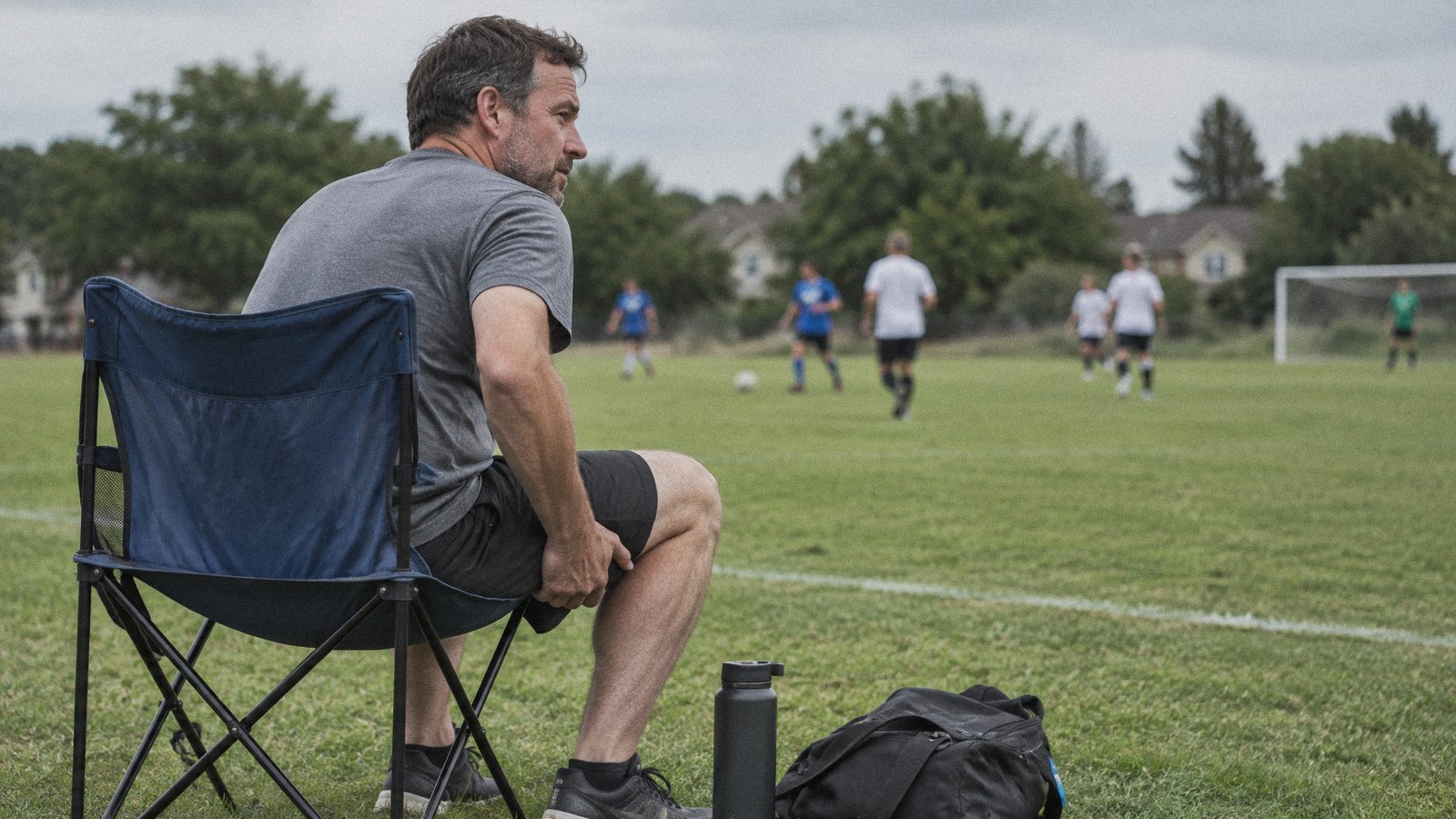
The story below is a composite of real experiences; details changed.
No pain isn’t the same as ready. Ask anyone who found out in minute 63.
Five weeks after he felt his hamstring grab, Alex Moreno, 40, can jog without a twinge. He runs a small accounting firm and plays in a Sunday masters soccer league. He’s missed four games, and the group chat keeps asking.
Wednesday he jogs three easy miles. No pain. Thursday he texts the captain: I’m in for Sunday.
Sunday, minute 63, he sprints for a through ball.
Jogging never asked his hamstring the question a sprint does. Here’s how to ask it before the game does.
Pain-free isn’t the same as ready
Pain dropping is good news. It means things are calming down.
And wanting back in is normal. Four missed games and a buzzing group chat make every pain-free day feel like a green light.
But everyday movement asks very little of a joint or muscle compared with your sport. Walking up stairs and sprinting at minute 63 are different tests. Passing the first doesn’t mean you’ll pass the second.
The National Institutes of Health’s musculoskeletal institute says the same thing. After an injury heals, you may need a rehab program to rebuild strength and range of motion. Then increase intensity gradually before you go back to the activity that hurt you. (NIAMS)
Your sport doesn’t test you at your best. It tests you tired, fast and off-balance.
If your problem is a tendon rather than a muscle, read why the Achilles tendon is a different problem.
Return to sport comes in stages
An international consensus on return to sport describes it as a continuum, not a switch. (Bern Consensus, 2016)
- Return to participation. Training, but modified, or not at full level.
- Return to sport. Playing your sport, but not yet at your old level.
- Return to performance. Playing at or above where you were.
The consensus also says the decision should be shared between you and your clinician, and it weighs physical, psychological and life factors. The authors admit that research behind many return decisions is limited.
So there’s no magic test. There is a smarter process.
The evidence, without the theater
What the research shows
- Return to sport happens in stages.
- Rehab should rebuild strength and range before full return.
- Intensity should climb gradually.
What it doesn’t show
- A pain score that means “ready.”
- A universal timeline or strength percentage for every injury.
- That a pain-free day means tissue is healed.
List what your sport really asks
Write down the hardest things your sport or training demands. Then write down which ones you’ve actually tested since the injury.
| Demand | Alex’s sport | Tested yet? |
|---|---|---|
| Top speed | Sprints for through balls | No |
| Change of direction | Cutting, turning | No |
| Load under fatigue | Minute 60 to 90 | No |
| Explosive force | Kicking, jumping for headers | No |
| Steady running | Jogging | Yes |
One “yes” out of five. That’s not a green light. That’s a to-do list.
Coming back from a hip scope? Read why hip flexor pain shows up after hip arthroscopy.
Build back in steps
Work with your clinician or physical therapist on a ladder like this, adjusted to your injury:
A sample build-back ladder
- Easy jogging, pain-free, next day fine.
- Strides at about 70%, then 80%, then 90% effort.
- Change of direction: gentle cuts, then sharp ones.
- Sport drills at full speed, fresh.
- Sport drills when tired.
- Full practice, then part of a game, then a full game.
The rule: Check the next morning. If you’re worse, drop back a step. If you’re the same or better, move up.
Is fear holding you back, or pushing you too fast? Read how to get back the trust you used to have in your body.
And if you’re not sure whether you’re improving at all, here’s what counts as progress when recovery is slow.
When not to wait
Stop and get checked if:
- You feel a sudden pop, grab or tearing sensation.
- Bruising or swelling appears after a session.
- Pain returns and doesn’t settle within a day or two.
- A joint gives way or locks.
Sunday, rewritten
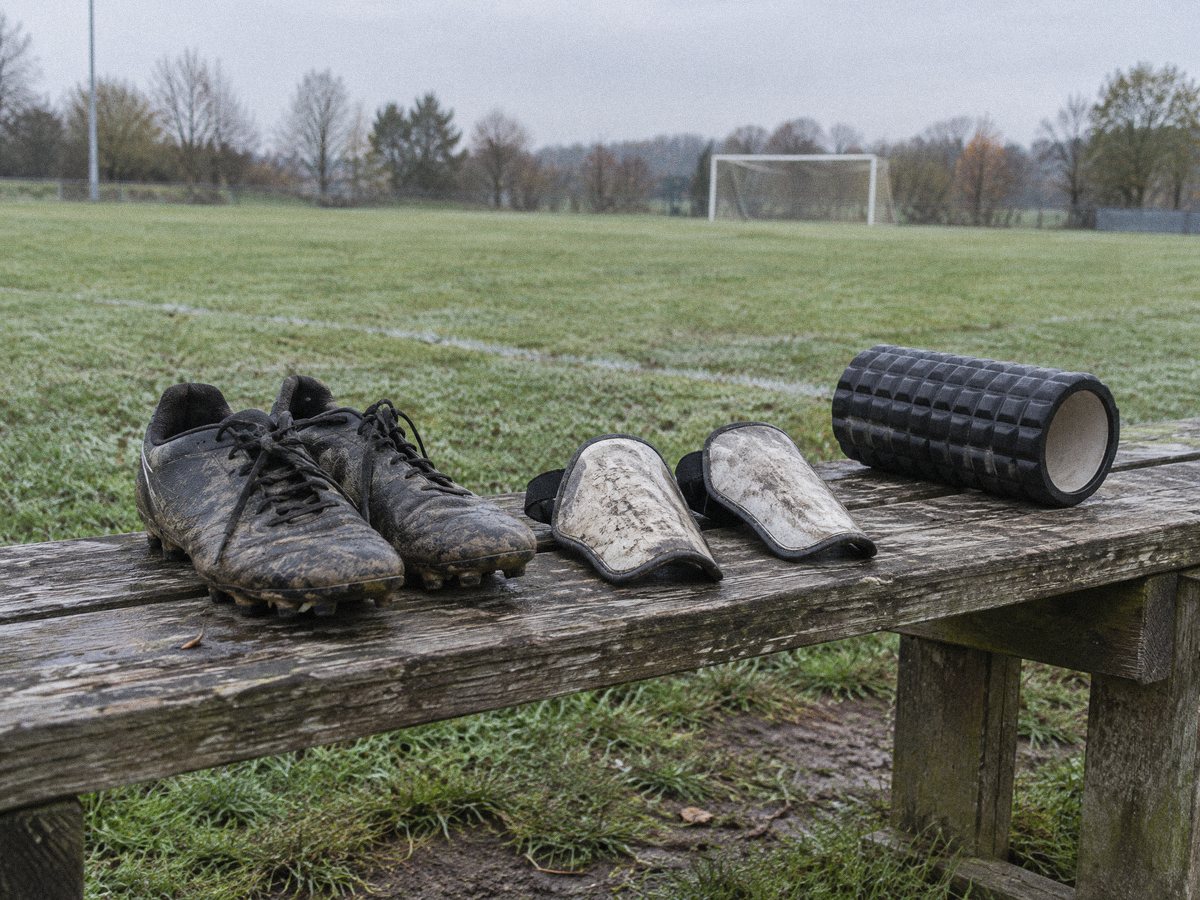
Here’s the version where Alex waits two more weeks.
He runs strides at 70, 80, 90%. He does cutting drills on the practice field. He plays the second half of a scrimmage and checks his hamstring Monday morning. Fine.
Three Sundays later he’s back, subbing in for 30 minutes. The next week, 60. Then the full game.
Two extra weeks of patience. Zero more weeks on the sideline. Tonight, write down your sport’s five hardest demands. Mark the ones you’ve actually tested.
Alex is a composite, drawn from the kinds of stories masters athletes describe. The details are illustrative. The pattern is real.
Free · Your Before-You-Leave Card
Don’t leave your next appointment with “rest it.”
Get the questions for your injury in 8 taps.
Get my card →Questions readers ask
- If my injury doesn’t hurt anymore, can I go back to training hard?
- Not necessarily. Less pain means things are calmer, but everyday movement asks much less than sprinting, cutting or lifting heavy. Test your sport’s hardest demands in steps before returning fully.
- What are the stages of returning to sport?
- A 2016 international consensus describes three stages: return to participation (modified training), return to sport (playing, not yet at your old level) and return to performance (at or above your old level). It recommends a shared decision with your clinician.
- How do I know when to move to the next step?
- Check how you feel the next morning. If you’re worse, drop back a step. If you’re the same or better, move up. Get checked for a pop, new swelling or bruising, or a joint that gives way.
Sources & references (2)
- Sports Injuries: Diagnosis, Treatment, and Steps to Take · NIAMS, 2024
- 2016 Consensus statement on return to sport from the First World Congress in Sports Physical Therapy, Bern · British Journal of Sports Medicine, 2016
The Series
45 articlesPart 1: Understanding Your Injury (1 to 19)
- After the MRI: How to Read a Rotator Cuff Report Without Getting Sold a Surgery
- Told to “Just Rest It”? Five Questions to Ask Before You Leave
- When Shoulder Pain Keeps Waking You Up
- Meniscus Surgery Recovery: When Can You Return to Your Kind of Work?
- Rotator Cuff Surgery or More Physical Therapy? Questions That Clarify the Decision
- Achilles Tendon Pain: Why This Tendon Is a Different Problem
- Four Months After Rotator Cuff Repair and It Still Hurts: Normal, or a Retear?
- Your Knee Feels Worse After the Meniscus Scope. What Could Be Going On?
- Hip Flexor Pain After Hip Arthroscopy: Why It Shows Up and When It Settles
- Tennis Elbow That Won’t Go Away: Why Rest and Shots Stall, and What Helps
- Knee Swelling After Meniscus Surgery: How Long Is Normal, and When to Call
- Quad Won’t Fire After Knee Surgery? What Quad Shutdown Is and How to Get It Back
- Walking After Meniscus Surgery: When You Can, How Far, and When to Drop the Crutches
- How to Sleep After Rotator Cuff Surgery, and When Nights Get Easier
- Felt a Pop After Knee Surgery? Re-Tear or Setback, and When to Call
- Home After a Microdiscectomy: How Much to Walk and How Long to Sit
- Running After ACL Surgery: When Your First Jog Comes, and What It Tells You About Work
- When Can You Drive After Rotator Cuff Surgery and Get Back in the Work Truck?
- Knee Won’t Straighten After Meniscus Surgery? Why It Happens and What Helps
Part 2: Work and Real Life (20 to 29)
- You Can Still Work. But What Is Your Injury Costing You?
- Self-Employed and Injured: How to Plan for Time Away From Work
- Your Job and Your Workouts Are Loading the Same Injury
- How to Take Time to Recover When Everyone Depends on You
- What Do You Still Want to Be Able to Do in Ten Years?
- Microdiscectomy Recovery: When Can You Go Back to Heavy Work?
- Kneeling After Knee Surgery: Why It Comes Back Last and How to Retrain It
- Rotator Cuff Surgery Recovery: When Can You Go Back to Work?
- When Can You Drive After Knee Surgery and Get Back in the Work Van?
- When Can You Go Back to Physical Work After ACL Surgery?
Part 3: Back to Training (30 to 34)
Part 4: Reading the Evidence (35 to 45)
- Your Watch Says You’re Recovered. Your Shoulder Disagrees.
- Recovery Is Taking Longer Than You Expected. What Counts as Progress?
- Before You Buy Another Recovery Tool, Decide What You Need It to Do
- “It Worked for Me”: How to Evaluate a Recovery Claim
- BPC-157 After an Orthopedic Procedure: What Does the Research Actually Show?
- TB-500 vs. BPC-157: What the Research Actually Compares
- How to Read a Peptide COA: What It Proves and What It Doesn’t
- The Research Stack People Ask About After a Scope, and the Gaps in the Human Data
- What the Tendon Research on BPC-157 Actually Measured
- What’s in the Other 1%? Peptide Impurities, Explained
- Approved, Compounded or “Research Use Only”: What a Peptide’s Label Means in 2026
Free · 60-second recovery check
What’s really holding your recovery back?
Eight quick taps. Find the one thing stalling your recovery, then get the three moves to work on first, picked from 30 guides and 100+ cited sources.
- Your bottleneck, named in 60 seconds
- 3 moves for this week, fitted to your job
- Your Before-You-Leave Card: the questions for your next appointment
What got hurt?
Free. No sign-up to start. Not medical advice.
Keep reading
Doing PT but Not Getting Better? Why Tendons Plateau and What to Reassess
You haven’t missed a session, and you’re still stuck. Why tendons adapt slowly, what PT studies actually measure, and a six-point check to get your plan moving again.
You Used to Trust Your Body. How Do You Get That Back?
You were cleared. Your body said yes. Something else said no. Why hesitation after injury is so common, and a step-by-step ladder to rebuild trust.
How to Keep Training When Work Takes Over Your Week
Things don’t calm down, and your rehab can’t wait until they do. How little training it takes to hold on to strength, and how to plan normal, busy and disruption weeks.