Approved, Compounded or “Research Use Only”: What a Peptide’s Label Means in 2026
Heard FDA “approved” BPC-157? It didn’t. A panel voted in July to let pharmacies compound six peptides, and nothing has legally changed yet. The three lanes a peptide can sit in, and where BPC-157 and TB-500 stand as of September 2026.

The story below is a composite of real experiences; details changed.
“FDA just approved BPC-157.”
The rookie holds up his phone across the firehouse breakfast table. Paul Donnelly, 52, a captain with 27 years on the job, has read enough headlines to know that’s probably not what happened.
It isn’t. In July, an FDA advisory panel voted, and that’s not the same thing. If peptide news feels like it changes every few months, that’s because it has.
Paul asks the question nobody at the table can answer: “Approved by who, for what?”
Here’s what each label means, where BPC-157 and TB-500 stand as of September 24, 2026, and how to check the next headline yourself.
Lane 1: FDA-approved
Approval means FDA reviewed the data and found that a drug’s benefits outweigh its known and potential risks for the people it’s meant for. (FDA) The review also checks that manufacturing protects the drug’s “identity, strength, quality, and purity.” (FDA)
Peptides can be approved drugs. Glucagon, liraglutide and teriparatide are examples. (FDA)
BPC-157 isn’t one. FDA’s 2026 review found “no approved product containing BPC-157-related BDSs in any country at this time.” (FDA)
Lane 2: Compounded
Compounding means a licensed pharmacist or physician combines, mixes or alters ingredients to make a medication for one patient. Compounded drugs aren’t FDA-approved. FDA doesn’t review their safety, effectiveness or quality before they’re sold. (FDA)
A pharmacy can compound from a bulk ingredient only if it:
- Meets an official USP or NF quality standard (a monograph), or
- Is part of an FDA-approved drug, or
- Is on FDA’s list of allowed bulk ingredients, called the 503A bulks list.
(FDA)
BPC-157 has no monograph, isn’t part of an approved drug and isn’t on the list. As of September 21, 2026, that list held six substances and no peptides. (eCFR)
| Peptide | July 2026 panel vote | FDA staff | On the bulks list? |
|---|---|---|---|
| BPC-157 | Recommended, 8 to 6 (1 abstention) | Against | No |
| TB-500 | Recommended, 8 to 6 (1 abstention) | Against | No |
| KPV | Recommended, 8 to 6 (1 abstention) | Against | No |
| MOTS-c | Recommended, 7 to 5 (2 abstentions) | Against | No |
| Semax | Recommended, 8 to 5 | Against | No |
| Epitalon | Recommended, 7 to 4 | Against | No |
| Emideltide (DSIP) | Rejected, 6 to 7 | Against | No |
Vote counts come from press and law-firm reports, including PharmExec and STAT. FDA hadn’t posted official minutes when we checked. FDA staff positions are from the FDA briefing.
For what the studies behind the hype actually found, read what the BPC-157 research actually shows.
What the July vote did, and didn’t do
- 2023: BPC-157 and related peptides were placed in FDA’s Category 2, for ingredients with significant safety risks. (Frier Levitt)
- April 2026: FDA took 12 peptides off Category 2 after the people who nominated them withdrew. About BPC-157, FDA’s page still says the agency “lacks sufficient information to know whether the drug would cause harm when administered to humans.” (FDA) Coming off Category 2 “does not render these bulk drug substances eligible for compounding.” (Frier Levitt)
- July 2026: FDA staff proposed that none of the seven peptides be added. The panel recommended six anyway. (NCPA)
- Now: The vote is advisory. As one law firm put it, “Nothing has legally changed yet.” (Mintz) FDA would have to publish a proposed rule, take public comments and then issue a final rule. (Frier Levitt)
How long? Estimates run from 12 to 24 months or longer. (Sheppard Mullin) The last comparable rule took from December 2016 to February 2019. (Buchanan Ingersoll & Rooney) A second panel meeting on five more peptides is expected around February 2027.
The panel said yes. The law hasn’t changed yet.
Lane 3: “Research use only”
The phrase has a history. FDA requires it on lab diagnostic tests that are still in development: “For Research Use Only. Not for use in diagnostic procedures.” (eCFR)
For any product, FDA looks at what it’s really being sold for. That intent can be shown by “labeling claims, advertising matter, or oral or written statements.” (eCFR)
- February 2025: FDA told a peptide seller that its “research use only” and “not for human consumption” labels didn’t matter. Its website showed the products were drugs meant for people. (FDA warning letter)
- August 24, 2026: FDA sent similar warning letters to several online peptide sellers, calling their products unapproved new drugs. (FDA warning letter)
What it means for you: a research-use-only product is sold for lab work. A legitimate research supplier doesn’t hand out dosing advice or human-use claims. That line is what keeps legitimate research supply legal, and it’s why careful suppliers hold it.
If you compete in tested sports, one more fact. BPC-157 is banned at all times under the World Anti-Doping Agency’s “non-approved substances” class. TB-500 is banned too. (USADA)
Quality is a separate question from legal status. For what testing can and can’t show, read what’s in the other 1%.
Three questions for any peptide headline
Before you believe it, ask
- Approved, recommended or proposed? A panel vote isn’t approval. A proposed rule isn’t final.
- Approved by whom, for what? FDA approval covers a specific product and use.
- What’s the date? The rules are moving. Check when the status was last confirmed.
And ask any clinic offering a peptide: is it FDA-approved, compounded from an allowed ingredient, or neither?
Red flags
- Someone calls a peptide “FDA approved” when it isn’t.
- A “research use only” seller gives dosing guidance or human-use claims.
- A compounded drug is sold as a “generic” of an approved one.
- Nobody can tell you which of the three lanes a product is in.
Back at the table
Paul gives the rookie the short version. The panel voted. FDA hasn’t acted. And “approved” is the wrong word.
The rookie shrugs. “So, not yet.”
“Not yet,” Paul says. “And maybe not in the form you’re picturing.”
Before you trust a peptide headline, find out which lane it’s in.
Your next step: the next time a headline says “approved,” run the three questions above before you believe it or pass it on.
Status as of September 24, 2026. We’ll update this article when FDA publishes a proposed or final rule. This is general information, not legal or medical advice. Paul is a composite, drawn from the kinds of questions readers ask after peptide headlines. The details are illustrative. Research compounds are sold for laboratory research only.
Read next: After the MRI: How to Read a Rotator Cuff Report Without Getting Sold a Surgery
Free · Your Before-You-Leave Card
Don’t leave your next appointment with “rest it.”
Get the questions for your injury in 8 taps.
Get my card →THE RESEARCH DESK
Looking into peptides beyond the exam room? Start with these three steps.
01 · READ
Peptides Made Simple
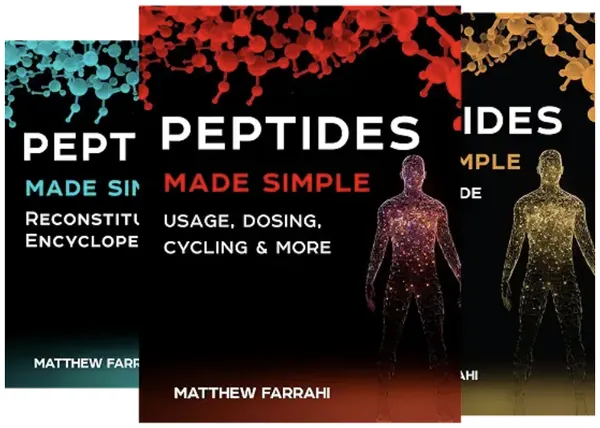
The three-book series our readers ask about most. Plain-English background for anyone reading peptide research: Kindle and print on Amazon, or all three ebooks together.
See the books →02 · VERIFY
How to Read a Peptide COA
Quick checks that show what a lab report proves, and what it doesn’t.
Read the guide →03 · SOURCE
SCSigma Compounds
The research supplier we point to
Third-party tested. The research supplier we trust.
Disclosure: Peptides Made Simple is written by the team behind After the Scope, and we earn money when you buy it. After the Scope is an affiliate of Sigma Compounds. Sigma Compounds products are sold strictly for laboratory research use, not for human consumption. Nothing on this site is medical advice.
Questions readers ask
- Is BPC-157 FDA approved?
- No. FDA’s 2026 review found no approved product containing BPC-157 in any country, and USADA says it is not approved for human clinical use by FDA or any other global health authority.
- Can pharmacies compound BPC-157 after the July 2026 FDA panel vote?
- Not as of September 24, 2026. The panel’s vote was advisory. BPC-157 is not on FDA’s 503A bulks list, and FDA would have to publish a proposed rule and a final rule before it could be added.
- What does “research use only” mean on a peptide?
- It means the product is sold for laboratory research, not for use in people. FDA judges a product by its intended use, shown by labeling and advertising, and has sent warning letters to sellers whose marketing showed human use despite research-only labels.
Sources & references (21)
- Development & Approval Process: Drugs · U.S. Food and Drug Administration, 2022
- New Drug Application (NDA) · U.S. Food and Drug Administration, 2022
- Human Drug Compounding · U.S. Food and Drug Administration, 2026
- Bulk Drug Substances Used in Compounding Under Section 503A of the FD&C Act · U.S. Food and Drug Administration, 2026
- 21 CFR 216.23: Bulk drug substances that can be used to compound drug products · eCFR, 2026
- Certain Bulk Drug Substances for Use in Compounding that May Present Significant Safety Risks · U.S. Food and Drug Administration, 2026
- FDA Briefing Document (Introduction), Pharmacy Compounding Advisory Committee, July 23–24, 2026 · U.S. Food and Drug Administration, 2026
- FDA Briefing Document: BPC-157, Pharmacy Compounding Advisory Committee, July 23–24, 2026 · U.S. Food and Drug Administration, 2026
- FDA advisory committee nominates six peptides for pharmacies to compound · NCPA, 2026
- FDA Panel Votes to Loosen Restrictions for Four Peptides · PharmExec, 2026
- FDA advisory panel narrowly rejects compounding of one peptide, backs two others · STAT, 2026
- FDA to Remove 12 Popular Peptides from the Category 2 “Do Not Compound” List · Frier Levitt, 2026
- FDA Advisory Committee Recommends Six Peptides for 503A Compounding · Frier Levitt, 2026
- FDA’s Advisory Committee Votes on Peptides: What It Does and Doesn’t Do · Mintz, 2026
- What to Watch: Status Update on Peptide Regulation · Sheppard Mullin, 2026
- FDA Advisory Committee Voted Yes on Six Peptides. Now What? · Buchanan Ingersoll & Rooney, 2026
- 21 CFR 809.10: Labeling for in vitro diagnostic products · eCFR, 2026
- 21 CFR 201.128: Meaning of intended uses · eCFR, 2026
- Warning Letter: USApeptide.com · U.S. Food and Drug Administration, 2025
- Warning Letter: Royal Peptides LLC · U.S. Food and Drug Administration, 2026
- BPC-157: What Athletes Should Know About the Prohibited Experimental Peptide · USADA, 2026
The Series
45 articlesPart 1: Understanding Your Injury (1 to 19)
- After the MRI: How to Read a Rotator Cuff Report Without Getting Sold a Surgery
- Told to “Just Rest It”? Five Questions to Ask Before You Leave
- When Shoulder Pain Keeps Waking You Up
- Meniscus Surgery Recovery: When Can You Return to Your Kind of Work?
- Rotator Cuff Surgery or More Physical Therapy? Questions That Clarify the Decision
- Achilles Tendon Pain: Why This Tendon Is a Different Problem
- Four Months After Rotator Cuff Repair and It Still Hurts: Normal, or a Retear?
- Your Knee Feels Worse After the Meniscus Scope. What Could Be Going On?
- Hip Flexor Pain After Hip Arthroscopy: Why It Shows Up and When It Settles
- Tennis Elbow That Won’t Go Away: Why Rest and Shots Stall, and What Helps
- Knee Swelling After Meniscus Surgery: How Long Is Normal, and When to Call
- Quad Won’t Fire After Knee Surgery? What Quad Shutdown Is and How to Get It Back
- Walking After Meniscus Surgery: When You Can, How Far, and When to Drop the Crutches
- How to Sleep After Rotator Cuff Surgery, and When Nights Get Easier
- Felt a Pop After Knee Surgery? Re-Tear or Setback, and When to Call
- Home After a Microdiscectomy: How Much to Walk and How Long to Sit
- Running After ACL Surgery: When Your First Jog Comes, and What It Tells You About Work
- When Can You Drive After Rotator Cuff Surgery and Get Back in the Work Truck?
- Knee Won’t Straighten After Meniscus Surgery? Why It Happens and What Helps
Part 2: Work and Real Life (20 to 29)
- You Can Still Work. But What Is Your Injury Costing You?
- Self-Employed and Injured: How to Plan for Time Away From Work
- Your Job and Your Workouts Are Loading the Same Injury
- How to Take Time to Recover When Everyone Depends on You
- What Do You Still Want to Be Able to Do in Ten Years?
- Microdiscectomy Recovery: When Can You Go Back to Heavy Work?
- Kneeling After Knee Surgery: Why It Comes Back Last and How to Retrain It
- Rotator Cuff Surgery Recovery: When Can You Go Back to Work?
- When Can You Drive After Knee Surgery and Get Back in the Work Van?
- When Can You Go Back to Physical Work After ACL Surgery?
Part 3: Back to Training (30 to 34)
Part 4: Reading the Evidence (35 to 45)
- Your Watch Says You’re Recovered. Your Shoulder Disagrees.
- Recovery Is Taking Longer Than You Expected. What Counts as Progress?
- Before You Buy Another Recovery Tool, Decide What You Need It to Do
- “It Worked for Me”: How to Evaluate a Recovery Claim
- BPC-157 After an Orthopedic Procedure: What Does the Research Actually Show?
- TB-500 vs. BPC-157: What the Research Actually Compares
- How to Read a Peptide COA: What It Proves and What It Doesn’t
- The Research Stack People Ask About After a Scope, and the Gaps in the Human Data
- What the Tendon Research on BPC-157 Actually Measured
- What’s in the Other 1%? Peptide Impurities, Explained
- Approved, Compounded or “Research Use Only”: What a Peptide’s Label Means in 2026
Free · 60-second recovery check
What’s really holding your recovery back?
Eight quick taps. Find the one thing stalling your recovery, then get the three moves to work on first, picked from 30 guides and 100+ cited sources.
- Your bottleneck, named in 60 seconds
- 3 moves for this week, fitted to your job
- Your Before-You-Leave Card: the questions for your next appointment
What got hurt?
Free. No sign-up to start. Not medical advice.
More in Reading the Evidence

What’s in the Other 1%? Peptide Impurities, Explained
The badge says “99% pure.” That’s one number from one test. What else is in a synthetic peptide, why regulators flag it, and what a complete certificate of analysis should list.

What the Tendon Research on BPC-157 Actually Measured
Seen BPC-157 pitched for tendon pain that won’t quit? More than two decades of rat studies, a 2026 head-to-head with TB-500 and a 2025 review of 36 studies: what was measured, what was found and where the evidence stops.

The Research Stack People Ask About After a Scope, and the Gaps in the Human Data
BPC-157, TB-500, GHK-Cu, collagen: the group chat is sure. Here’s what’s actually been studied in people, what hasn’t, and what to ask at your next post-op visit.