Worried About Losing Muscle While Injured? Start With a Plan
It feels like years of work are disappearing. Some loss is real, and most is manageable. What disuse does, why training the other side helps, and a cleared-activity list.
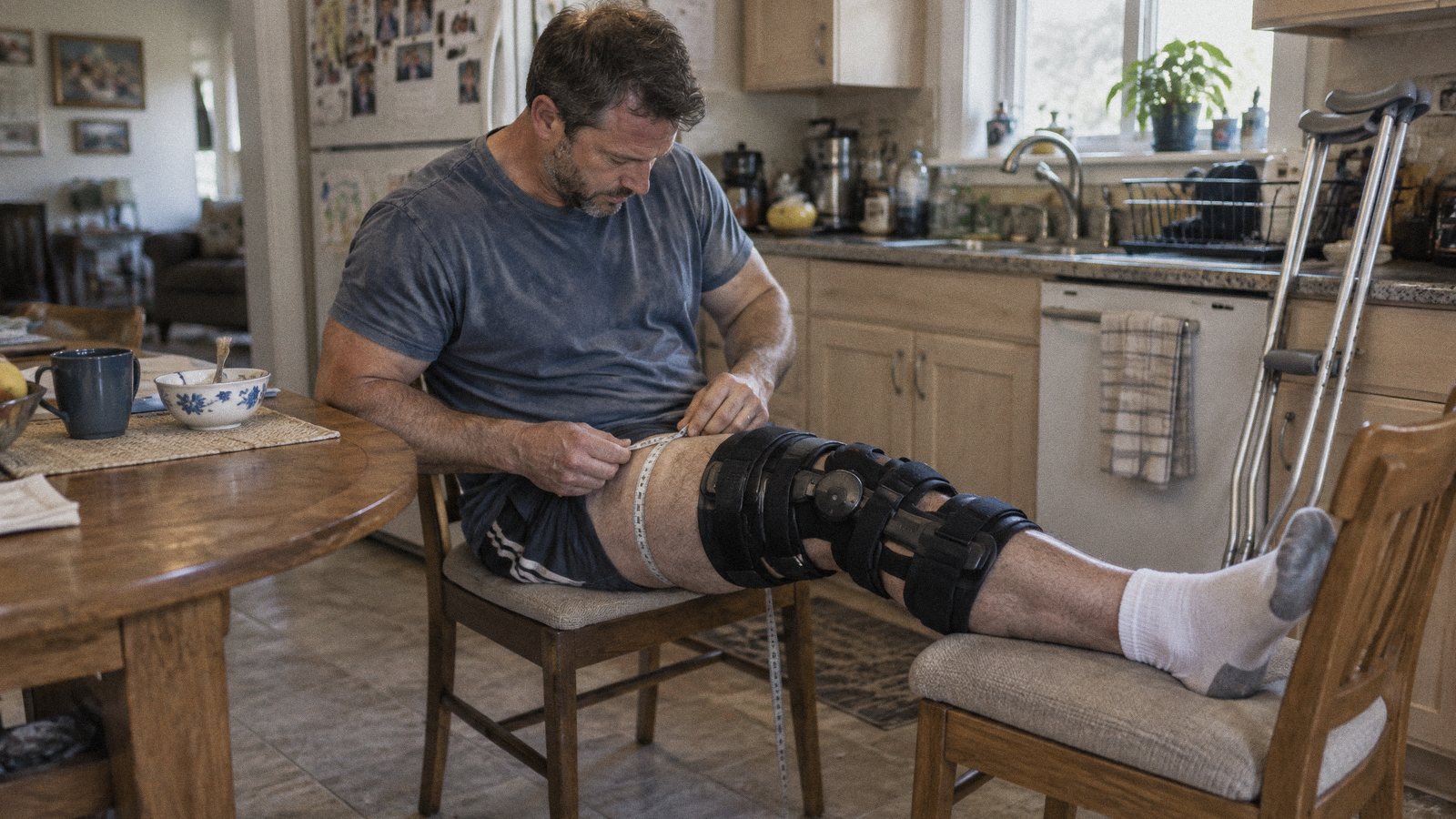
The story below is a composite of real experiences; details changed.
Twenty-five years of training. Six weeks on crutches. That’s the math keeping Derek Hayes up at night.
Derek has lifted since he was sixteen, and his legs have always been his thing. He’s 42. Two weeks ago a surgeon repaired the meniscus in his left knee. Now he’s in a brace locked straight, watching his quad go soft.
He measures his thigh every morning. He swears it’s smaller every day.
“Twenty-five years,” he tells his wife. “Gone in six weeks.”
It feels that way. It isn’t quite true. You’ll lose some muscle, but how much is more in your control than it feels right now.
What really happens when you stop
Muscle loss during full disuse is real, and it’s fast.
In one study, healthy young men had one leg in a cast for just five days. Their thigh muscle shrank about 3.5%. Their strength dropped about 9%. (Wall et al., 2014)
That’s the worst case: complete immobilization. Skipping the gym for a week isn’t the same thing, and you still have the rest of your body to train.
The better news is that strength is much easier to keep than to build. In a study of healthy adults, one short session a week kept most of the strength built over four months of training. (Bickel et al., 2011)
Younger adults kept their muscle size, too. Older adults needed more to hold on to size.
You won’t lose 25 years in six weeks. You’ll lose some. You can win most of it back, and you can protect more than you think.
Train the other side
This one surprises people. Training your healthy limb can help your injured one.
Researchers call it cross-education. A 2026 review pooled 8 studies and 189 people with one limb immobilized. Training the opposite limb meaningfully reduced strength loss in the immobilized one. It had a smaller effect on muscle size. (Journal of Applied Physiology, 2026)
The authors say the studies varied in quality, so treat it as promising, not proven. And always check with your surgeon first. But “I can’t train at all” is rarely true.
The evidence, without the theater
What the research shows
- Full immobilization causes fast muscle and strength loss.
- Strength can be kept on a small, steady dose.
- Training the opposite limb can slow strength loss in the immobilized one.
What it doesn’t show
- That you can avoid all muscle loss after surgery.
- A universal protein or calorie number for injured lifters.
- What’s safe for your repair. That’s your surgeon’s call.
Build your cleared-activity list
Don’t guess what’s allowed. Get it written down.
Ask your surgeon or PT
- Injured limb: What can it do now? Isometric holds? Range-of-motion work? When does that change?
- Other limb: Can I train it hard? Any exercises to avoid because of balance or crutches?
- Upper body or lower body: What’s off-limits for now? Seated work? Machines?
- Cardio: Arm bike? Swimming with a pull buoy? When?
- Review date: When do we update this list?
Derek’s list, after his follow-up, looked like this: upper body at full effort, seated. Right leg on machines. Left leg: quad sets and straight-leg raises as prescribed. Arm bike for cardio. Update at week six.
That’s four training days a week, not zero.
Don’t starve the repair
A lot of lifters cut calories hard after surgery, because they’re “not training.” That can backfire. Healing takes energy and protein.
There’s no single protein number for everyone, and your needs depend on your size, age, health and surgery. Ask your surgeon or a registered dietitian what makes sense for you. Then keep it steady. This isn’t the season for an aggressive cut.
If you’re worried about what time off does to your routine long term, here’s how to keep training when work takes over your week. The same “minimum floor” idea works during rehab.
When not to wait
Call your surgeon if:
- Calf pain, swelling or warmth appears in the leg (this can signal a blood clot).
- You have chest pain or shortness of breath. Call 911.
- The incision is red, hot or draining, or you have a fever.
- Pain suddenly spikes after a slip or twist.
The muscle you keep now is part of a longer plan. Start with what you still want to be able to do in ten years.
Week six
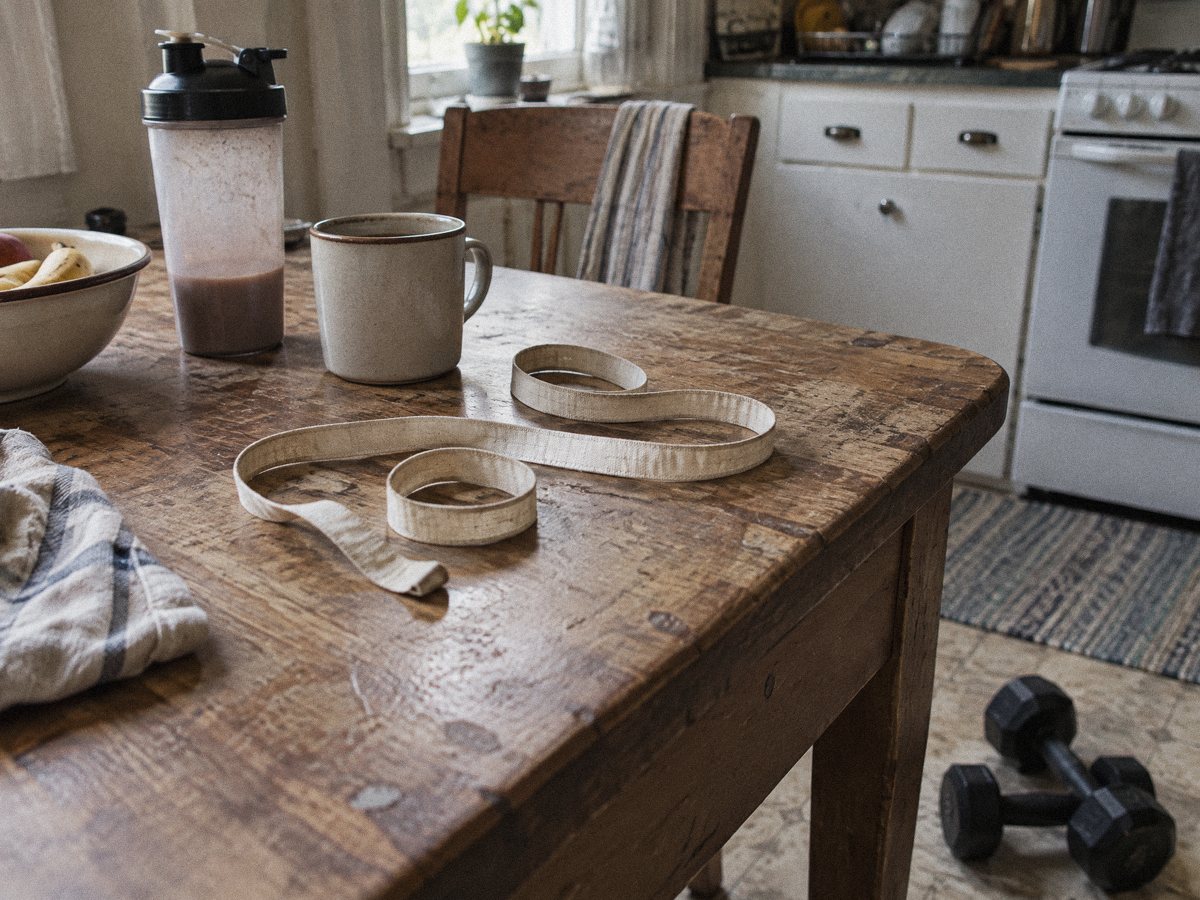
At his six-week visit, Derek’s left thigh is smaller. That part was real.
But his right leg is stronger than it’s been in years. His upper body is untouched. And his surgeon unlocks the brace and hands him a progression.
He stops measuring his thigh every morning. He starts logging lifts instead.
The plan didn’t stop the loss. It shrank it, and it kept him in the game. Tonight, write down every muscle you’re still allowed to train. The list is longer than you think.
Derek is a composite, drawn from the kinds of stories lifters describe after surgery. The details are illustrative. The pattern is real.
Free · Your Before-You-Leave Card
Don’t leave your next appointment with “rest it.”
Get the questions for your injury in 8 taps.
Get my card →Questions readers ask
- How fast do you lose muscle when injured?
- Complete immobilization causes fast loss. In one study, five days in a leg cast reduced thigh muscle size by about 3.5% and strength by about 9% in healthy young men. Missing workouts while staying active is not the same as full immobilization.
- Does training the uninjured limb help the injured one?
- It can. A 2026 review of 8 studies found that training the opposite limb reduced strength loss in an immobilized limb, with a smaller effect on muscle size. Study quality varied, so ask your surgeon what’s safe.
- Should I cut calories after surgery since I’m not training?
- Aggressive dieting during recovery can work against healing, which takes energy and protein. Ask your surgeon or a registered dietitian what intake makes sense for you.
Sources & references (3)
- Substantial skeletal muscle loss occurs during only 5 days of disuse · Acta Physiologica, 2014
- Exercise dosing to retain resistance training adaptations in young and older adults · Medicine & Science in Sports & Exercise, 2011
- Cross-education of unilateral resistance training as a strategy to mitigate immobilization-induced neuromuscular decline: a systematic review and meta-analysis · Journal of Applied Physiology, 2026
The Series
45 articlesPart 1: Understanding Your Injury (1 to 19)
- After the MRI: How to Read a Rotator Cuff Report Without Getting Sold a Surgery
- Told to “Just Rest It”? Five Questions to Ask Before You Leave
- When Shoulder Pain Keeps Waking You Up
- Meniscus Surgery Recovery: When Can You Return to Your Kind of Work?
- Rotator Cuff Surgery or More Physical Therapy? Questions That Clarify the Decision
- Achilles Tendon Pain: Why This Tendon Is a Different Problem
- Four Months After Rotator Cuff Repair and It Still Hurts: Normal, or a Retear?
- Your Knee Feels Worse After the Meniscus Scope. What Could Be Going On?
- Hip Flexor Pain After Hip Arthroscopy: Why It Shows Up and When It Settles
- Tennis Elbow That Won’t Go Away: Why Rest and Shots Stall, and What Helps
- Knee Swelling After Meniscus Surgery: How Long Is Normal, and When to Call
- Quad Won’t Fire After Knee Surgery? What Quad Shutdown Is and How to Get It Back
- Walking After Meniscus Surgery: When You Can, How Far, and When to Drop the Crutches
- How to Sleep After Rotator Cuff Surgery, and When Nights Get Easier
- Felt a Pop After Knee Surgery? Re-Tear or Setback, and When to Call
- Home After a Microdiscectomy: How Much to Walk and How Long to Sit
- Running After ACL Surgery: When Your First Jog Comes, and What It Tells You About Work
- When Can You Drive After Rotator Cuff Surgery and Get Back in the Work Truck?
- Knee Won’t Straighten After Meniscus Surgery? Why It Happens and What Helps
Part 2: Work and Real Life (20 to 29)
- You Can Still Work. But What Is Your Injury Costing You?
- Self-Employed and Injured: How to Plan for Time Away From Work
- Your Job and Your Workouts Are Loading the Same Injury
- How to Take Time to Recover When Everyone Depends on You
- What Do You Still Want to Be Able to Do in Ten Years?
- Microdiscectomy Recovery: When Can You Go Back to Heavy Work?
- Kneeling After Knee Surgery: Why It Comes Back Last and How to Retrain It
- Rotator Cuff Surgery Recovery: When Can You Go Back to Work?
- When Can You Drive After Knee Surgery and Get Back in the Work Van?
- When Can You Go Back to Physical Work After ACL Surgery?
Part 3: Back to Training (30 to 34)
- Doing PT but Not Getting Better? Why Tendons Plateau and What to Reassess
- You Used to Trust Your Body. How Do You Get That Back?
- How to Keep Training When Work Takes Over Your Week
- Worried About Losing Muscle While Injured? Start With a Plan
- Pain Is Down. Are You Ready to Train Hard Again?
Part 4: Reading the Evidence (35 to 45)
- Your Watch Says You’re Recovered. Your Shoulder Disagrees.
- Recovery Is Taking Longer Than You Expected. What Counts as Progress?
- Before You Buy Another Recovery Tool, Decide What You Need It to Do
- “It Worked for Me”: How to Evaluate a Recovery Claim
- BPC-157 After an Orthopedic Procedure: What Does the Research Actually Show?
- TB-500 vs. BPC-157: What the Research Actually Compares
- How to Read a Peptide COA: What It Proves and What It Doesn’t
- The Research Stack People Ask About After a Scope, and the Gaps in the Human Data
- What the Tendon Research on BPC-157 Actually Measured
- What’s in the Other 1%? Peptide Impurities, Explained
- Approved, Compounded or “Research Use Only”: What a Peptide’s Label Means in 2026
Free · 60-second recovery check
What’s really holding your recovery back?
Eight quick taps. Find the one thing stalling your recovery, then get the three moves to work on first, picked from 30 guides and 100+ cited sources.
- Your bottleneck, named in 60 seconds
- 3 moves for this week, fitted to your job
- Your Before-You-Leave Card: the questions for your next appointment
What got hurt?
Free. No sign-up to start. Not medical advice.
Keep reading
Doing PT but Not Getting Better? Why Tendons Plateau and What to Reassess
You haven’t missed a session, and you’re still stuck. Why tendons adapt slowly, what PT studies actually measure, and a six-point check to get your plan moving again.

You Used to Trust Your Body. How Do You Get That Back?
You were cleared. Your body said yes. Something else said no. Why hesitation after injury is so common, and a step-by-step ladder to rebuild trust.

How to Keep Training When Work Takes Over Your Week
Things don’t calm down, and your rehab can’t wait until they do. How little training it takes to hold on to strength, and how to plan normal, busy and disruption weeks.