You Can Still Work. But What Is Your Injury Costing You?
The invoices still go out. But an injury that doesn’t stop you still sends a bill: in sleep, patience and the things you’ve quietly stopped doing. Here’s how to count it.

The story below is a composite of real experiences; details changed.
You can still work. That’s the problem.
As long as the invoices go out, the injury looks cheap. The real bill shows up somewhere else.
At 9:40 on a Tuesday night, Marcus Hale is still in his truck, sending the last invoice of the day: an $18,400 paver patio. On paper, the day paid for itself.
He reaches for his coffee and stops halfway, the way he’s learned to. Back in April, a retaining-wall block hung up on the trailer and he yanked it free. His right shoulder hasn’t been right since.
Inside, Jen asks how it is. He gives the answer he’s given all summer: “I’m managing.”
What he doesn’t mention is Saturday at the ball field. His daughter Nora held her arms up for a shoulder ride. He said, “Next time, bug.”
She didn’t ask on Sunday.
That’s the cost nobody invoices. Here’s how to count it.
The second set of books
If you run things, you’re good at one kind of accounting. Money in. Money out. Did the day pay for itself?
An injury that doesn’t stop you keeps a second set of books. It never sends a statement.
- Minutes: ten extra to get a work shirt on.
- Sleep: the 2 a.m. wake-up when you roll onto the wrong side.
- Patience: it used to last until ten at night. Now it runs out at seven.
- The small yeses: the pickup game, the fishing trip, the kid on your shoulders.
None of that shows up as an invoice, so none of it makes the total. That’s how capable people end up six months deep in a debt they never agreed to.
You’re not being dramatic. You’re being expensive to yourself.
What “I’m managing” really costs
You’re not the only one keeping quiet books.
In a 2023 national survey, about one in four U.S. adults (24.3%) had pain most days. About one in twelve (8.5%) said pain limited their life or work most days. (CDC, 2024) That’s self-reported survey data. It shows how common this is, not what’s going on with you.
The bigger surprise is where the cost lands. A study of 28,902 U.S. workers looked at work time lost to common pain. About three-quarters of it came from working at less than full, not from missed days. (Stewart et al., JAMA, 2003)
That data is two decades old, and it covered things like back pain and arthritis. The lesson still holds. The biggest bill isn’t the day you call in. It’s the day you show up hurting and push through.
If the real reason you haven’t dealt with it is that the business can’t spare you, that deserves its own plan. Here’s how to plan for time away from work without the wheels coming off.
The night shift makes it worse
Sleep and pain feed each other.
In a 2019 UC Berkeley study, one night without sleep made 25 healthy adults feel pain sooner. In a second group of 60 people living with pain, worse sleep one night meant more pain the next day. (Krause et al., 2019)
Those were small studies. Still, the loop is familiar. Pain breaks the night, and the broken night turns up the pain. If that sounds like yours, start with what to do when shoulder pain keeps waking you up.
Hurting and costing are two different questions
When someone asks about your injury, they ask how much it hurts. “Maybe a three today.”
But a three that costs you your sleep, your Sunday game and your kid’s shoulder rides is a bigger problem than the number suggests.
Researchers measure these separately. PROMIS, an NIH-supported measurement system, tracks pain intensity and pain interference as different things. (HealthMeasures)
The evidence, without the theater
What the research shows
- Pain that limits life or work is common.
- Most pain-related lost work time happens on the job, not at home sick.
- Poor sleep and next-day pain travel together.
- How much it hurts and how much it disrupts are measured separately.
What it doesn’t show
- What your specific injury is costing you. Only you can count that.
- That every workaround means something is getting worse.
- A pain score that tells you when to worry.
If you can’t step back because the crew or the family runs through you, read how to recover when everyone depends on you.
The seven-day cost audit
You don’t need an app. You need seven days and one honest page. Each night, write one line under each heading.
Your seven-day cost audit
- Time. What took longer today?
- Workarounds. What did you do differently to dodge the pain? Was it a choice or a habit?
- Help. What did someone else have to do for you?
- Sleep. When did you wake up, and was it the injury?
- Said no. What did you skip or turn down? Most people leave this blank. It matters most.
Here’s three days of Marcus’s page:
| Day | Time | Workarounds | Help | Sleep | Said no |
|---|---|---|---|---|---|
| Wed | Two tries to get the shirt on | Loaded the trailer left-handed | Foreman lifted the compactor | Up at 2:10 and 4 | The gym |
| Thu | Estimate took an extra hour | Typed one-handed | None | Up at 3 | Pickup game, third week |
| Fri | Normal | Drove left-handed | Jen carried groceries | Slept through | Shoulder ride |
This isn’t a diagnostic test. One rough week doesn’t mean something is getting worse. It’s a translation device. It turns “I’m managing” into something another person can work with.
Turn the ledger into one sentence
At the end of the week, boil the page down to one sentence. Compare:
“My shoulder still hurts.”
“I can run my business, but I wake up twice a night, I’ve stopped playing basketball, and I can’t lift my daughter onto my shoulders.”
The first is a complaint. The second is a problem to solve, with a goal to measure against.
Bring a short list, not a diary:
- The three activities most affected.
- What you can do now, and what it costs you after.
- What’s better, the same or worse.
- The one thing you most want back.
If your last visit ended with “just rest it” and no plan for Monday, here are five questions to ask before you leave next time.
Then run the audit again in a month. Two honest weeks side by side tell you more than any single good or bad day. That’s how you know what counts as progress when recovery is slow.
When not to wait
The audit is for slow, grinding costs. Get these checked soon:
- Sudden, major weakness, like suddenly being unable to lift your arm, especially after a fall or jolt.
- Severe swelling, a joint that looks deformed, or you can’t put weight on a leg.
- Numbness, tingling or weakness spreading down an arm or leg.
- Pain with a fever, or a joint that’s hot and red.
- Night pain that keeps getting worse.
The ledger looks backward. To look forward, ask what you still want to be able to do in ten years.
Back at the kitchen table

Thursday night, Marcus doesn’t open the laptop in the truck. He opens a notes app and starts the second set of books.
Shirt: two tries. Up at 2:10. Pickup game: third week.
At the bottom, he types the line he’s been avoiding.
Shoulder rides. Nora. She stopped asking.
It’s the smallest entry and the most expensive one. Next week, when the PA asks how he’s doing, he won’t say “managing.” He’ll read her the page.
You’re allowed to put it on the books, too. Tonight, write down the one thing you’ve quietly stopped doing. Then say it to someone who can help you get it back.
Marcus is a composite, drawn from the kinds of stories people describe during recovery. The details are illustrative. The pattern is real.
Free · Your Before-You-Leave Card
Don’t leave your next appointment with “rest it.”
Get the questions for your injury in 8 taps.
Get my card →Questions readers ask
- How do I know if my injury is costing me more than I think?
- Track five things for one week: extra time tasks take, workarounds you use, help you need, sleep interruptions and the things you decline or skip. The things you’ve stopped doing are usually the biggest cost, and the easiest to overlook.
- Can poor sleep make injury pain worse?
- Research suggests sleep and pain feed each other. In a 2019 study, one night of sleep loss lowered pain thresholds in healthy adults, and among people living with pain, worse sleep quality was followed by more pain the next day. The studies were small, but the pattern is worth raising with your clinician.
- What should I tell my doctor besides a pain score?
- Describe what the injury is costing you: the three activities most affected, what you can do and what it costs you afterward, whether things are improving, and the one activity you most want back.
Sources & references (6)
- Chronic Pain and High-impact Chronic Pain in U.S. Adults, 2023 (NCHS Data Brief No. 518) · CDC National Center for Health Statistics, 2024
- Lost productive time and cost due to common pain conditions in the US workforce · JAMA, 2003
- The Pain of Sleep Loss: A Brain Characterization in Humans · Journal of Neuroscience, 2019
- PROMIS Adult Domains · HealthMeasures
- Sports Injuries: Diagnosis, Treatment, and Steps to Take · NIAMS, 2024
- Rotator Cuff Tears · AAOS OrthoInfo
The Series
45 articlesPart 1: Understanding Your Injury (1 to 19)
- After the MRI: How to Read a Rotator Cuff Report Without Getting Sold a Surgery
- Told to “Just Rest It”? Five Questions to Ask Before You Leave
- When Shoulder Pain Keeps Waking You Up
- Meniscus Surgery Recovery: When Can You Return to Your Kind of Work?
- Rotator Cuff Surgery or More Physical Therapy? Questions That Clarify the Decision
- Achilles Tendon Pain: Why This Tendon Is a Different Problem
- Four Months After Rotator Cuff Repair and It Still Hurts: Normal, or a Retear?
- Your Knee Feels Worse After the Meniscus Scope. What Could Be Going On?
- Hip Flexor Pain After Hip Arthroscopy: Why It Shows Up and When It Settles
- Tennis Elbow That Won’t Go Away: Why Rest and Shots Stall, and What Helps
- Knee Swelling After Meniscus Surgery: How Long Is Normal, and When to Call
- Quad Won’t Fire After Knee Surgery? What Quad Shutdown Is and How to Get It Back
- Walking After Meniscus Surgery: When You Can, How Far, and When to Drop the Crutches
- How to Sleep After Rotator Cuff Surgery, and When Nights Get Easier
- Felt a Pop After Knee Surgery? Re-Tear or Setback, and When to Call
- Home After a Microdiscectomy: How Much to Walk and How Long to Sit
- Running After ACL Surgery: When Your First Jog Comes, and What It Tells You About Work
- When Can You Drive After Rotator Cuff Surgery and Get Back in the Work Truck?
- Knee Won’t Straighten After Meniscus Surgery? Why It Happens and What Helps
Part 2: Work and Real Life (20 to 29)
- You Can Still Work. But What Is Your Injury Costing You?
- Self-Employed and Injured: How to Plan for Time Away From Work
- Your Job and Your Workouts Are Loading the Same Injury
- How to Take Time to Recover When Everyone Depends on You
- What Do You Still Want to Be Able to Do in Ten Years?
- Microdiscectomy Recovery: When Can You Go Back to Heavy Work?
- Kneeling After Knee Surgery: Why It Comes Back Last and How to Retrain It
- Rotator Cuff Surgery Recovery: When Can You Go Back to Work?
- When Can You Drive After Knee Surgery and Get Back in the Work Van?
- When Can You Go Back to Physical Work After ACL Surgery?
Part 3: Back to Training (30 to 34)
Part 4: Reading the Evidence (35 to 45)
- Your Watch Says You’re Recovered. Your Shoulder Disagrees.
- Recovery Is Taking Longer Than You Expected. What Counts as Progress?
- Before You Buy Another Recovery Tool, Decide What You Need It to Do
- “It Worked for Me”: How to Evaluate a Recovery Claim
- BPC-157 After an Orthopedic Procedure: What Does the Research Actually Show?
- TB-500 vs. BPC-157: What the Research Actually Compares
- How to Read a Peptide COA: What It Proves and What It Doesn’t
- The Research Stack People Ask About After a Scope, and the Gaps in the Human Data
- What the Tendon Research on BPC-157 Actually Measured
- What’s in the Other 1%? Peptide Impurities, Explained
- Approved, Compounded or “Research Use Only”: What a Peptide’s Label Means in 2026
Free · 60-second recovery check
What’s really holding your recovery back?
Eight quick taps. Find the one thing stalling your recovery, then get the three moves to work on first, picked from 30 guides and 100+ cited sources.
- Your bottleneck, named in 60 seconds
- 3 moves for this week, fitted to your job
- Your Before-You-Leave Card: the questions for your next appointment
What got hurt?
Free. No sign-up to start. Not medical advice.
Keep reading
When Can You Go Back to Physical Work After ACL Surgery?
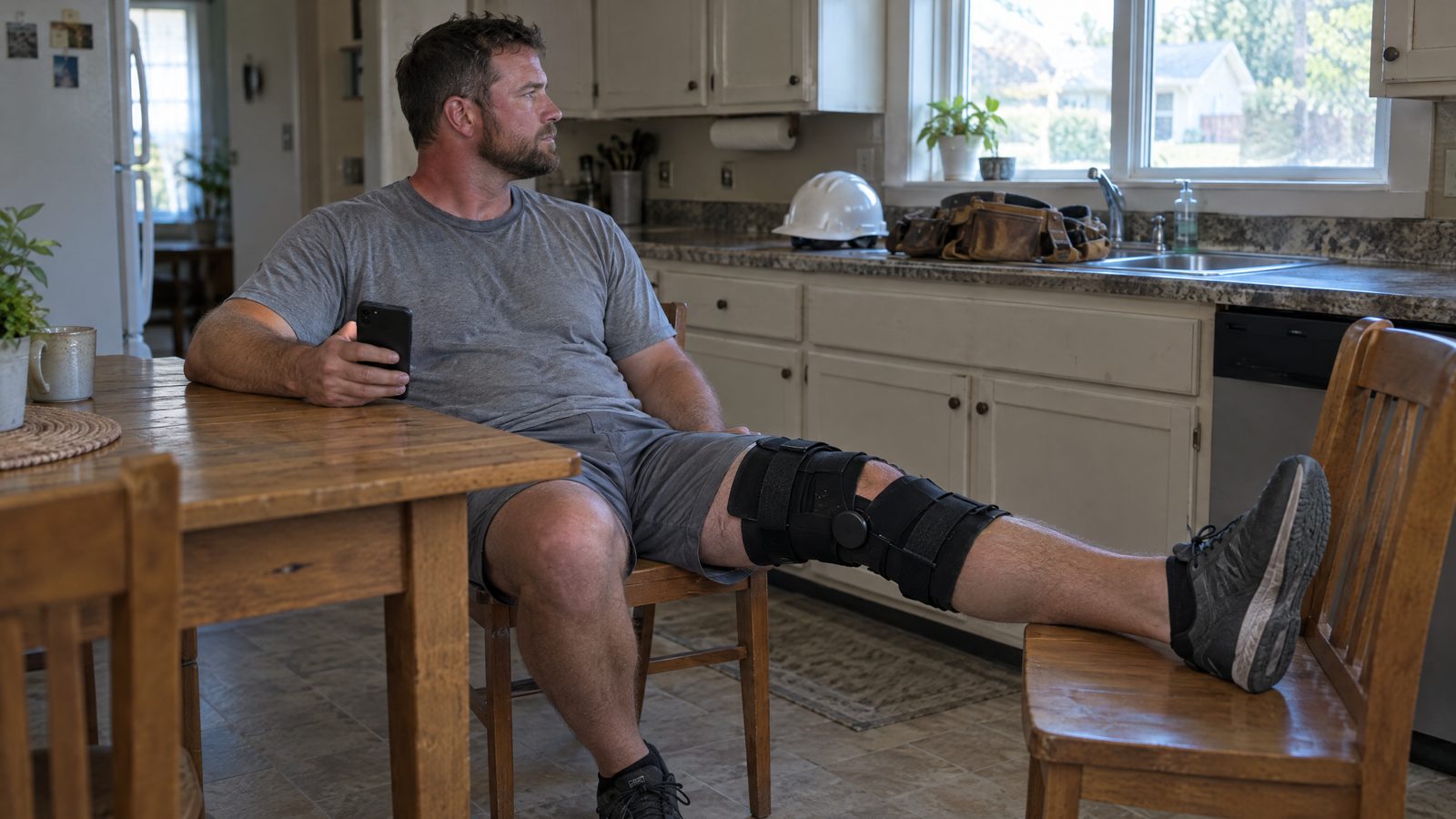
Your foreman wants a date, and you can’t even jog yet. How long physical jobs take after ACL reconstruction, why ladders and heavy loads come later, and a plan he can schedule around.
When Can You Drive After Knee Surgery and Get Back in the Work Van?
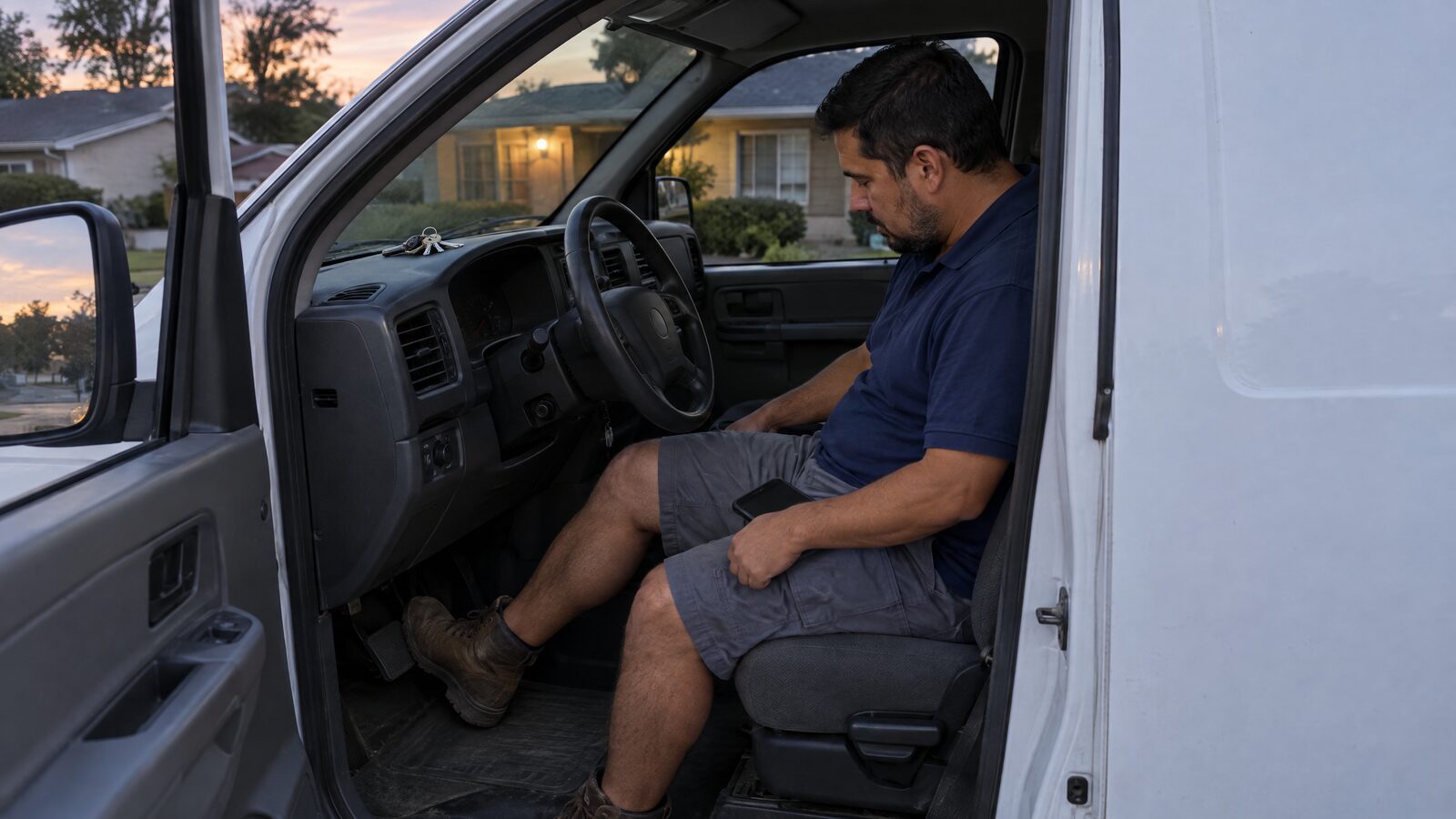
Dispatch wants a date, and your right knee isn’t ready to give one. When people drive again after a knee scope or ACL surgery, why the right knee takes longer, and a brake check to run first.

Rotator Cuff Surgery Recovery: When Can You Go Back to Work?
Your foreman wants a date, and your job is overhead. Typical return times after a rotator cuff repair, why heavy and overhead work come last, and a plan he can schedule around.