Your Job and Your Workouts Are Loading the Same Injury
You cut the gym work and it still flares. Your shoulder counts every rep, including the ones you get paid for. How to map a whole day and change the biggest load first.

The story below is a composite of real experiences; details changed.
You cut the lifts. The shoulder still hurts. Maybe the gym was never the problem.
Ray Castillo, 47, dropped bench press in June. Then overhead press. Then pull-ups. His right shoulder still flares every Thursday.
Ray owns an HVAC company, and since his best tech quit in spring, he runs installs himself three days a week. Attic installs mean hours with his arms overhead, holding ductwork against a rafter in 120-degree heat.
His workouts got easier. His shoulder didn’t notice.
He gave up the lifts he loves and got nothing back. Now the only thing left to cut is the work, and the work pays the bills.
Your job loads your body, too. Here’s how to see the whole week, find the biggest load and change it without walking off the job.
Your shoulder keeps one tally
Tissue doesn’t care where the load comes from. An hour of overhead ductwork and three sets of presses both land on the same tendons.
The American Academy of Orthopaedic Surgeons says it plainly in its patient guide. Repeating the same shoulder motions again and again can stress the rotator cuff. (AAOS OrthoInfo)
NIOSH, the federal workplace-safety agency, lists what makes a task hard on joints (NIOSH):
- Force: how heavy.
- Repetition: how often.
- Awkward posture: arms overhead, reaching, twisting.
- Duration: how long, without a break.
Look at Ray’s attic day through that lens. Moderate force. High repetition. Arms overhead. Hours at a time. That one day may out-load a month of gym sessions.
If you only cut the load you can see in the gym, you haven’t cut the load. You’ve moved it.
Map a whole day
Pick your hardest typical day. Write down everything that loads the injured joint, from waking up to bed.
| Task | Force | Reps | Posture | Time |
|---|---|---|---|---|
| Attic duct install | Medium | High | Overhead | 4 hrs |
| Loading the van | High | Medium | Reaching | 30 min |
| Driving | Low | Low | Arm forward | 2 hrs |
| Gym (modified) | Medium | Medium | Neutral | 45 min |
| Kids’ bath time | Low | Low | Reaching down | 15 min |
Ray’s map made it obvious. The biggest load wasn’t the gym. It was four hours overhead in the attic.
This map isn’t a diagnosis, and no formula turns a work shift into gym sets. It’s a way to see where the load really is, so you can talk about it with your clinician.
To see what the injury is really costing you, run a seven-day cost audit.
Change the biggest load first
You don’t have to quit your job. You have to change the heaviest part of it. Ideas to discuss with your clinician and your crew:
- Split the overhead time. Two hours in the attic, then ground work, then back up.
- Use a lift or support. A duct jack or a prop takes the hold off your shoulder.
- Swap roles. Let a tech hold, while you fasten at chest height.
- Move your gym days. Don’t train the same tissue the night of a heavy work day.
- Take micro-breaks. Arms down every 20 to 30 minutes, even for one minute.
Then add it back up. If work is most of the load, the gym plan has to account for it. For weeks when work takes over, here’s how to keep training when work takes over your week.
The evidence, without the theater
What the research shows
- Repeating the same shoulder motions can stress the rotator cuff.
- Force, repetition, posture and duration drive work-related joint strain.
- Work can be redesigned around what a worker can do.
What it doesn’t show
- A safe number of overhead reps for your shoulder.
- A way to convert work hours into gym sets.
- That all loading is bad. Tissue needs load to heal.
When not to wait
Get checked soon if:
- You suddenly can’t lift your arm, especially after a jolt or heavy lift.
- Numbness or tingling runs into your hand.
- The pain now wakes you every night.
- Your grip or strength is fading week to week.
Handing off the heavy part is its own skill. Here’s how to recover when everyone depends on you.
Thursday, rearranged
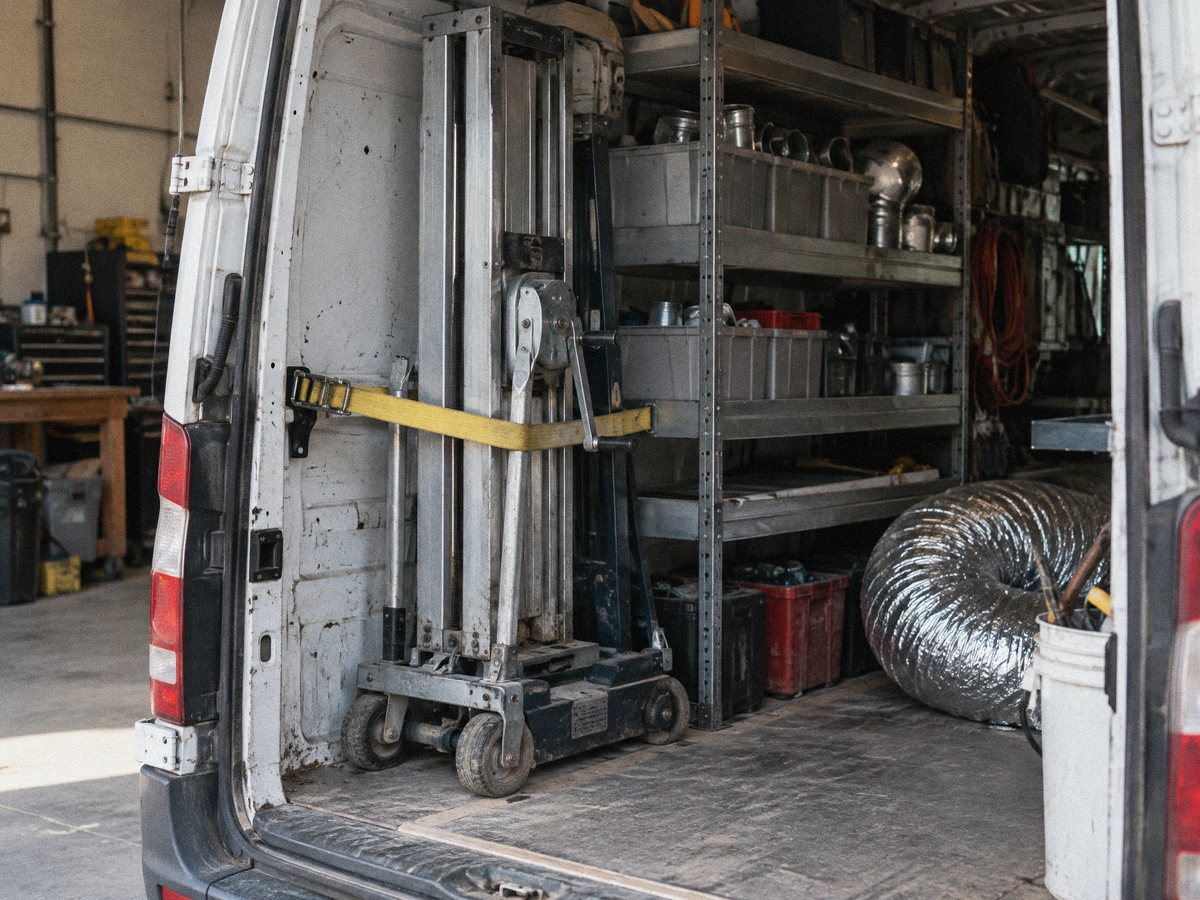
Ray moves the attic installs to Monday and Wednesday. His tech takes the overhead holds. Ray fastens.
He buys a duct jack for $180. It pays for itself in one week.
Thursdays are now shop days: estimates, ordering, training the new hire. His shoulder notices before he does.
The fix wasn’t doing less. It was doing the heavy part differently. Tonight, map your hardest day. Circle the biggest load. That’s where your plan starts.
Ray is a composite, drawn from the kinds of stories tradespeople describe during recovery. The details are illustrative. The pattern is real.
Free · Your Before-You-Leave Card
Don’t leave your next appointment with “rest it.”
Get the questions for your injury in 8 taps.
Get my card →Questions readers ask
- Why does my shoulder still hurt after I cut back at the gym?
- Your joint counts all load, not just gym reps. If your job involves overhead work, repetition or heavy lifting, that may be the bigger load. Map a whole day to find where most of it comes from.
- What makes a work task hard on a joint?
- NIOSH lists force, repetition, awkward postures and task duration as key factors in work-related musculoskeletal strain.
- Do I have to stop working to recover?
- Not necessarily. Changing the heaviest part of the job, such as splitting overhead time, using lifts or supports, swapping roles and adding micro-breaks, can reduce load. Discuss specific limits with your clinician.
Sources & references (2)
- Rotator Cuff Tears · AAOS OrthoInfo
- Ergonomics and Work-Related Musculoskeletal Disorders · NIOSH / CDC, 2024
The Series
45 articlesPart 1: Understanding Your Injury (1 to 19)
- After the MRI: How to Read a Rotator Cuff Report Without Getting Sold a Surgery
- Told to “Just Rest It”? Five Questions to Ask Before You Leave
- When Shoulder Pain Keeps Waking You Up
- Meniscus Surgery Recovery: When Can You Return to Your Kind of Work?
- Rotator Cuff Surgery or More Physical Therapy? Questions That Clarify the Decision
- Achilles Tendon Pain: Why This Tendon Is a Different Problem
- Four Months After Rotator Cuff Repair and It Still Hurts: Normal, or a Retear?
- Your Knee Feels Worse After the Meniscus Scope. What Could Be Going On?
- Hip Flexor Pain After Hip Arthroscopy: Why It Shows Up and When It Settles
- Tennis Elbow That Won’t Go Away: Why Rest and Shots Stall, and What Helps
- Knee Swelling After Meniscus Surgery: How Long Is Normal, and When to Call
- Quad Won’t Fire After Knee Surgery? What Quad Shutdown Is and How to Get It Back
- Walking After Meniscus Surgery: When You Can, How Far, and When to Drop the Crutches
- How to Sleep After Rotator Cuff Surgery, and When Nights Get Easier
- Felt a Pop After Knee Surgery? Re-Tear or Setback, and When to Call
- Home After a Microdiscectomy: How Much to Walk and How Long to Sit
- Running After ACL Surgery: When Your First Jog Comes, and What It Tells You About Work
- When Can You Drive After Rotator Cuff Surgery and Get Back in the Work Truck?
- Knee Won’t Straighten After Meniscus Surgery? Why It Happens and What Helps
Part 2: Work and Real Life (20 to 29)
- You Can Still Work. But What Is Your Injury Costing You?
- Self-Employed and Injured: How to Plan for Time Away From Work
- Your Job and Your Workouts Are Loading the Same Injury
- How to Take Time to Recover When Everyone Depends on You
- What Do You Still Want to Be Able to Do in Ten Years?
- Microdiscectomy Recovery: When Can You Go Back to Heavy Work?
- Kneeling After Knee Surgery: Why It Comes Back Last and How to Retrain It
- Rotator Cuff Surgery Recovery: When Can You Go Back to Work?
- When Can You Drive After Knee Surgery and Get Back in the Work Van?
- When Can You Go Back to Physical Work After ACL Surgery?
Part 3: Back to Training (30 to 34)
Part 4: Reading the Evidence (35 to 45)
- Your Watch Says You’re Recovered. Your Shoulder Disagrees.
- Recovery Is Taking Longer Than You Expected. What Counts as Progress?
- Before You Buy Another Recovery Tool, Decide What You Need It to Do
- “It Worked for Me”: How to Evaluate a Recovery Claim
- BPC-157 After an Orthopedic Procedure: What Does the Research Actually Show?
- TB-500 vs. BPC-157: What the Research Actually Compares
- How to Read a Peptide COA: What It Proves and What It Doesn’t
- The Research Stack People Ask About After a Scope, and the Gaps in the Human Data
- What the Tendon Research on BPC-157 Actually Measured
- What’s in the Other 1%? Peptide Impurities, Explained
- Approved, Compounded or “Research Use Only”: What a Peptide’s Label Means in 2026
Free · 60-second recovery check
What’s really holding your recovery back?
Eight quick taps. Find the one thing stalling your recovery, then get the three moves to work on first, picked from 30 guides and 100+ cited sources.
- Your bottleneck, named in 60 seconds
- 3 moves for this week, fitted to your job
- Your Before-You-Leave Card: the questions for your next appointment
What got hurt?
Free. No sign-up to start. Not medical advice.
Keep reading
When Can You Go Back to Physical Work After ACL Surgery?
Your foreman wants a date, and you can’t even jog yet. How long physical jobs take after ACL reconstruction, why ladders and heavy loads come later, and a plan he can schedule around.

When Can You Drive After Knee Surgery and Get Back in the Work Van?
Dispatch wants a date, and your right knee isn’t ready to give one. When people drive again after a knee scope or ACL surgery, why the right knee takes longer, and a brake check to run first.

Rotator Cuff Surgery Recovery: When Can You Go Back to Work?
Your foreman wants a date, and your job is overhead. Typical return times after a rotator cuff repair, why heavy and overhead work come last, and a plan he can schedule around.