Doing PT but Not Getting Better? Why Tendons Plateau and What to Reassess
You haven’t missed a session, and you’re still stuck. Why tendons adapt slowly, what PT studies actually measure, and a six-point check to get your plan moving again.
The story below is a composite of real experiences; details changed.
The exercises got easy. The shoulder didn’t.
That’s the moment a lot of people quietly give up on physical therapy, right when the plan needs to change.
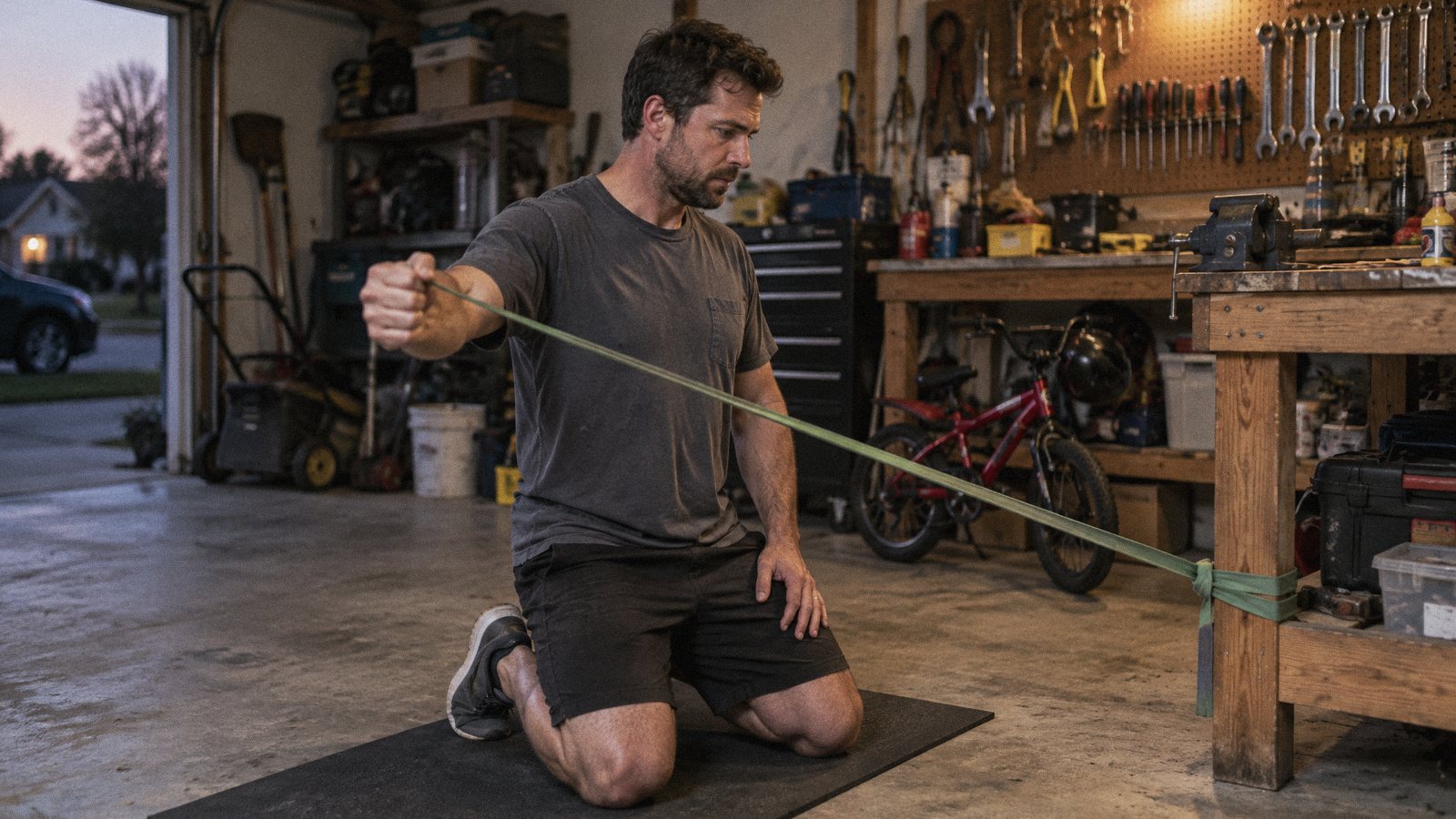
Luis Ortega, 39, runs a general contracting company and is ten weeks into PT for his right shoulder. He hasn’t missed a session. He does the band work every night on the garage floor while his kids brush their teeth.
It’s the same green band he got in week two.
He still can’t press a sheet of drywall overhead without that sharp catch. “I’m doing everything they told me,” he says. “Why am I still stuck?”
It’s the right question. It deserves a better answer than “give it time.”
Why tendons are slow learners
Muscle responds to training in weeks. Tendons take longer, and there are real reasons why.
Less blood supply. As we age, blood supply to the rotator cuff tendons decreases. (AAOS OrthoInfo) Less blood flow means slower repair.
Slow rebuilding. After loading, a tendon ramps up collagen production for about three days. But breakdown rises first. For the first day or so, the tendon runs at a net loss. The gain comes after. (Magnusson et al., Nature Reviews Rheumatology, 2010)
A very old core. Researchers used carbon-14 left over from Cold War nuclear tests to date human Achilles tendons. The core tissue barely renews, if at all, once we stop growing. (Heinemeier et al., 2013) That study was on the Achilles, not the shoulder. But it shows how slowly tendon tissue changes.
So tendons do adapt. They just need the right load, enough recovery between sessions, and more time than muscle does.
A plateau isn’t proof you failed the plan. It’s often proof the plan stopped changing.
The Achilles is the extreme case. Here’s why the Achilles tendon is a different problem.
What the PT research actually studies
It helps to know what “PT works” means in the papers.
Most studies measure symptoms and function scores. They rarely measure whether a tendon structurally healed.
The MOON study followed 452 people with painful full-thickness rotator cuff tears who started with 6 to 12 weeks of PT. After ten years, roughly one in four had chosen surgery. The rest kept their improvement on patient-reported scores. (MOON Shoulder Group, 2024)
The catch: “success” meant not having surgery. It doesn’t prove the tendons healed.
A large UK trial called GRASP split 708 people with rotator cuff problems into groups. Over a year, up to six sessions of progressive exercise did no better on average than one session of best-practice advice plus a home program. (Hopewell et al., The Lancet, 2021)
That doesn’t mean PT is useless. It means the home work, and whether the load progresses, may matter more than how many visits you log. GRASP also excluded people who needed surgery, so it can’t speak to every shoulder.
The evidence, without the theater
What the research shows
- Tendons adapt more slowly than muscle.
- After loading, tendons need recovery time to come out ahead.
- Many people with rotator cuff tears improve with therapy and never need surgery.
- More supervised visits don’t automatically beat a good home program.
What it doesn’t show
- That therapy heals the tendon itself. Most studies measure symptoms.
- The right load or timeline for your tendon.
- That a plateau means you need surgery, or that it doesn’t.
The six-point PT check
Before your next session, run through this. Be honest. Nobody’s grading you.
Is the plan still working?
- Is the load going up? Same band, same weight, same reps for weeks is the classic plateau.
- Are you doing the home dose? Write down what you actually did last week, not what you meant to do.
- What’s being measured? Pain alone is a noisy signal. Ask for strength, range of motion or a task test.
- Is the work matching the goal? If your life needs overhead strength, the plan needs overhead work at some point.
- Is your job loading the same tissue? Eight hours of overhead work can erase an hour of rehab.
- Is the diagnosis still right? Pain that doesn’t fit the pattern deserves a second look.
Number five trips up a lot of people. If your job and your rehab are hitting the same shoulder, read why your job and your workouts are loading the same injury.
Rehabbing after a hip scope? Read why hip flexor pain shows up after hip arthroscopy.
How to ask for a real reassessment
Don’t just say “it’s not getting better.” Bring specifics.
Before-and-after tasks work best. Pick two or three things you can test the same way each week:
- How many overhead reaches before the catch?
- Can you sleep on that side? For how long?
- What weight can you press or carry without pain?
Then ask three questions:
- “What’s the next change to the plan, and why?”
- “What result should I see, and by when?”
- “If I don’t see it, what’s the next step? Imaging, a specialist or a different approach?”
A good plan has a date and a decision attached. “Keep doing what you’re doing” doesn’t count.
If you already have imaging, learn how to read your MRI report like a contract before the next visit.
When not to wait
Tell your clinician right away if:
- You’re getting weaker, not just staying the same.
- You suddenly can’t lift your arm the way you could.
- Night pain keeps getting worse.
- Numbness or tingling spreads down the arm.
- You had a new fall or injury during rehab.
The heavier band
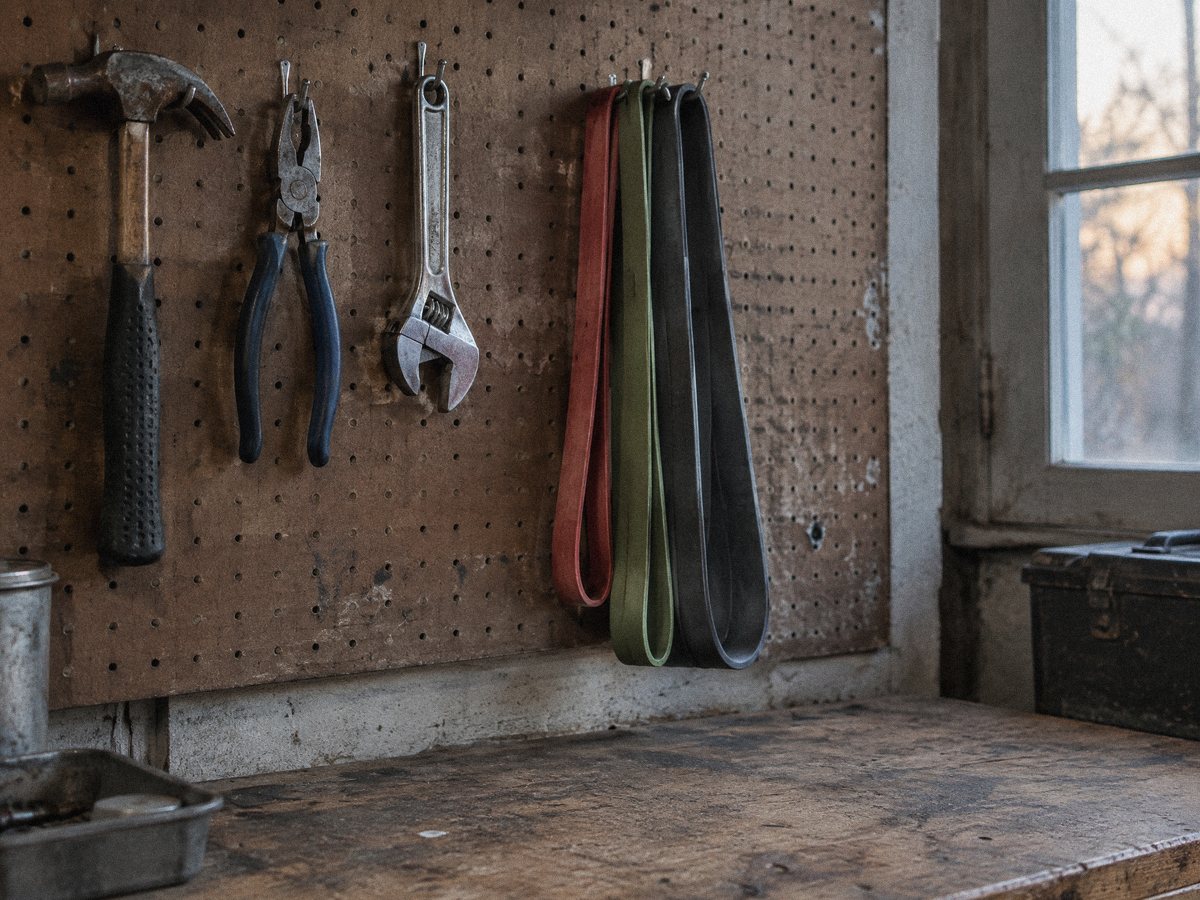
At week eleven, Luis brings a page to therapy. Same band since week two. Overhead: 6 reaches before the catch. Sleep on right side: no.
His therapist reads it and nods. They change the plan that day: heavier resistance, a new overhead progression and a check-in date three weeks out.
It isn’t a miracle. It’s a plan that moves again.
You did the work. Now make sure the work is still doing something. Tonight, write down what you actually did last week. Bring it to your next session.
Luis is a composite, drawn from the kinds of stories people describe during rehab. The details are illustrative. The pattern is real.
Free · Your Before-You-Leave Card
Don’t leave your next appointment with “rest it.”
Get the questions for your injury in 8 taps.
Get my card →Questions readers ask
- Why is my physical therapy not working?
- Common reasons include load that stopped progressing, a home program that isn’t being done at the planned dose, daily work that loads the same tissue, and a goal the plan doesn’t train for. Sometimes the diagnosis needs a second look. Ask for a reassessment with specific measures and a decision date.
- Why do tendons heal so slowly?
- Tendons have less blood supply than muscle, and that supply declines with age in the rotator cuff. After loading, tendon collagen breakdown rises before rebuilding, so recovery time between sessions matters. Research on the Achilles also suggests the tendon core renews very little in adulthood.
- Is more PT better than a home exercise program?
- Not necessarily. In the GRASP trial of 708 people with rotator cuff disorders, up to six sessions of progressive exercise did not outperform a single best-practice advice session with a home program over 12 months, on average.
Sources & references (5)
- Rotator Cuff Tears · AAOS OrthoInfo
- The pathogenesis of tendinopathy: balancing the response to loading · Nature Reviews Rheumatology, 2010
- Lack of tissue renewal in human adult Achilles tendon is revealed by nuclear bomb 14C · The FASEB Journal, 2013
- Ten-Year Outcomes of the MOON Shoulder Prospective Cohort · MOON Shoulder Group, 2024
- Progressive exercise compared with best-practice advice for rotator cuff disorders (GRASP) · The Lancet, 2021
The Series
45 articlesPart 1: Understanding Your Injury (1 to 19)
- After the MRI: How to Read a Rotator Cuff Report Without Getting Sold a Surgery
- Told to “Just Rest It”? Five Questions to Ask Before You Leave
- When Shoulder Pain Keeps Waking You Up
- Meniscus Surgery Recovery: When Can You Return to Your Kind of Work?
- Rotator Cuff Surgery or More Physical Therapy? Questions That Clarify the Decision
- Achilles Tendon Pain: Why This Tendon Is a Different Problem
- Four Months After Rotator Cuff Repair and It Still Hurts: Normal, or a Retear?
- Your Knee Feels Worse After the Meniscus Scope. What Could Be Going On?
- Hip Flexor Pain After Hip Arthroscopy: Why It Shows Up and When It Settles
- Tennis Elbow That Won’t Go Away: Why Rest and Shots Stall, and What Helps
- Knee Swelling After Meniscus Surgery: How Long Is Normal, and When to Call
- Quad Won’t Fire After Knee Surgery? What Quad Shutdown Is and How to Get It Back
- Walking After Meniscus Surgery: When You Can, How Far, and When to Drop the Crutches
- How to Sleep After Rotator Cuff Surgery, and When Nights Get Easier
- Felt a Pop After Knee Surgery? Re-Tear or Setback, and When to Call
- Home After a Microdiscectomy: How Much to Walk and How Long to Sit
- Running After ACL Surgery: When Your First Jog Comes, and What It Tells You About Work
- When Can You Drive After Rotator Cuff Surgery and Get Back in the Work Truck?
- Knee Won’t Straighten After Meniscus Surgery? Why It Happens and What Helps
Part 2: Work and Real Life (20 to 29)
- You Can Still Work. But What Is Your Injury Costing You?
- Self-Employed and Injured: How to Plan for Time Away From Work
- Your Job and Your Workouts Are Loading the Same Injury
- How to Take Time to Recover When Everyone Depends on You
- What Do You Still Want to Be Able to Do in Ten Years?
- Microdiscectomy Recovery: When Can You Go Back to Heavy Work?
- Kneeling After Knee Surgery: Why It Comes Back Last and How to Retrain It
- Rotator Cuff Surgery Recovery: When Can You Go Back to Work?
- When Can You Drive After Knee Surgery and Get Back in the Work Van?
- When Can You Go Back to Physical Work After ACL Surgery?
Part 3: Back to Training (30 to 34)
- Doing PT but Not Getting Better? Why Tendons Plateau and What to Reassess
- You Used to Trust Your Body. How Do You Get That Back?
- How to Keep Training When Work Takes Over Your Week
- Worried About Losing Muscle While Injured? Start With a Plan
- Pain Is Down. Are You Ready to Train Hard Again?
Part 4: Reading the Evidence (35 to 45)
- Your Watch Says You’re Recovered. Your Shoulder Disagrees.
- Recovery Is Taking Longer Than You Expected. What Counts as Progress?
- Before You Buy Another Recovery Tool, Decide What You Need It to Do
- “It Worked for Me”: How to Evaluate a Recovery Claim
- BPC-157 After an Orthopedic Procedure: What Does the Research Actually Show?
- TB-500 vs. BPC-157: What the Research Actually Compares
- How to Read a Peptide COA: What It Proves and What It Doesn’t
- The Research Stack People Ask About After a Scope, and the Gaps in the Human Data
- What the Tendon Research on BPC-157 Actually Measured
- What’s in the Other 1%? Peptide Impurities, Explained
- Approved, Compounded or “Research Use Only”: What a Peptide’s Label Means in 2026
Free · 60-second recovery check
What’s really holding your recovery back?
Eight quick taps. Find the one thing stalling your recovery, then get the three moves to work on first, picked from 30 guides and 100+ cited sources.
- Your bottleneck, named in 60 seconds
- 3 moves for this week, fitted to your job
- Your Before-You-Leave Card: the questions for your next appointment
What got hurt?
Free. No sign-up to start. Not medical advice.
Keep reading

You Used to Trust Your Body. How Do You Get That Back?
You were cleared. Your body said yes. Something else said no. Why hesitation after injury is so common, and a step-by-step ladder to rebuild trust.
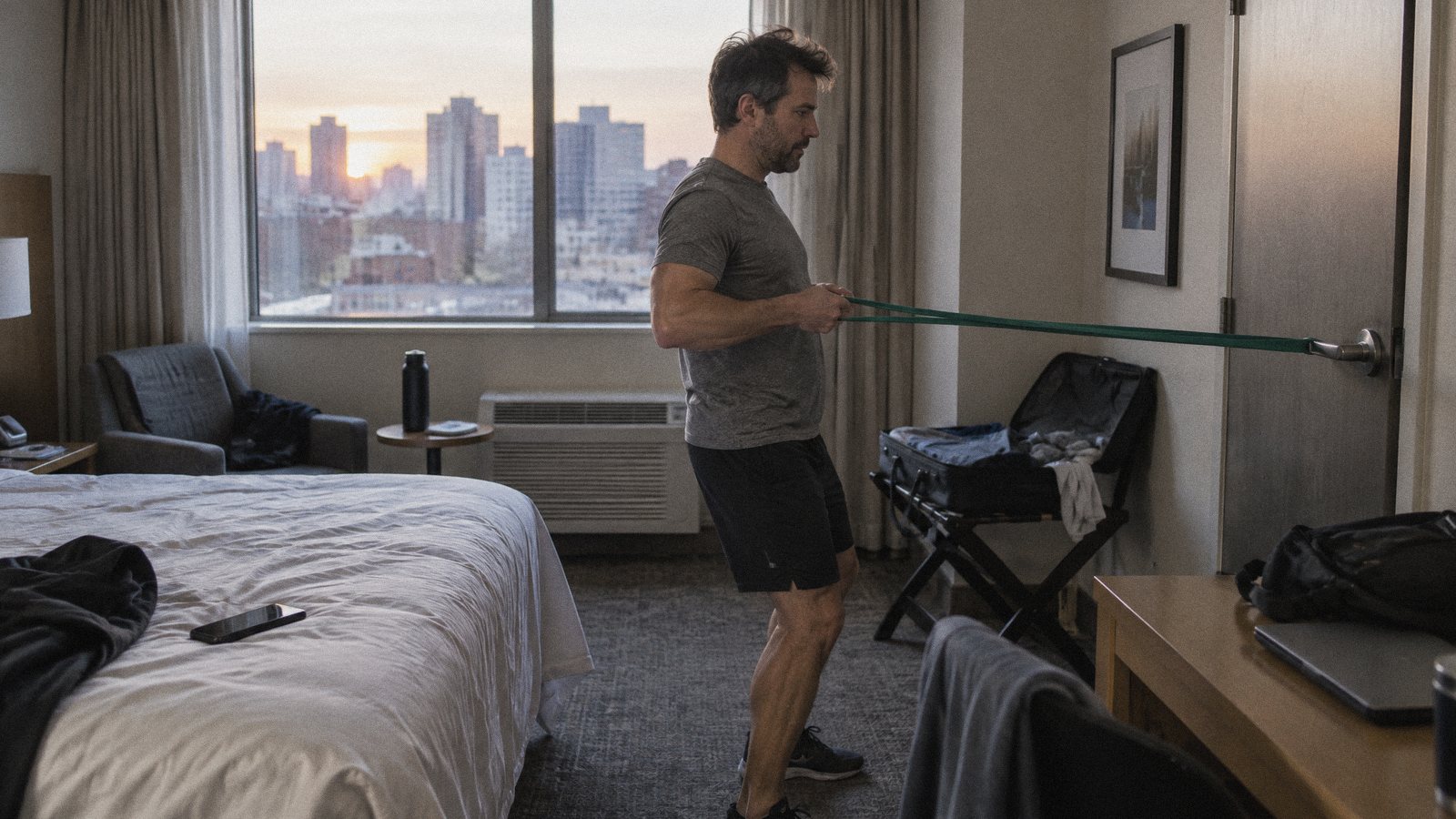
How to Keep Training When Work Takes Over Your Week
Things don’t calm down, and your rehab can’t wait until they do. How little training it takes to hold on to strength, and how to plan normal, busy and disruption weeks.
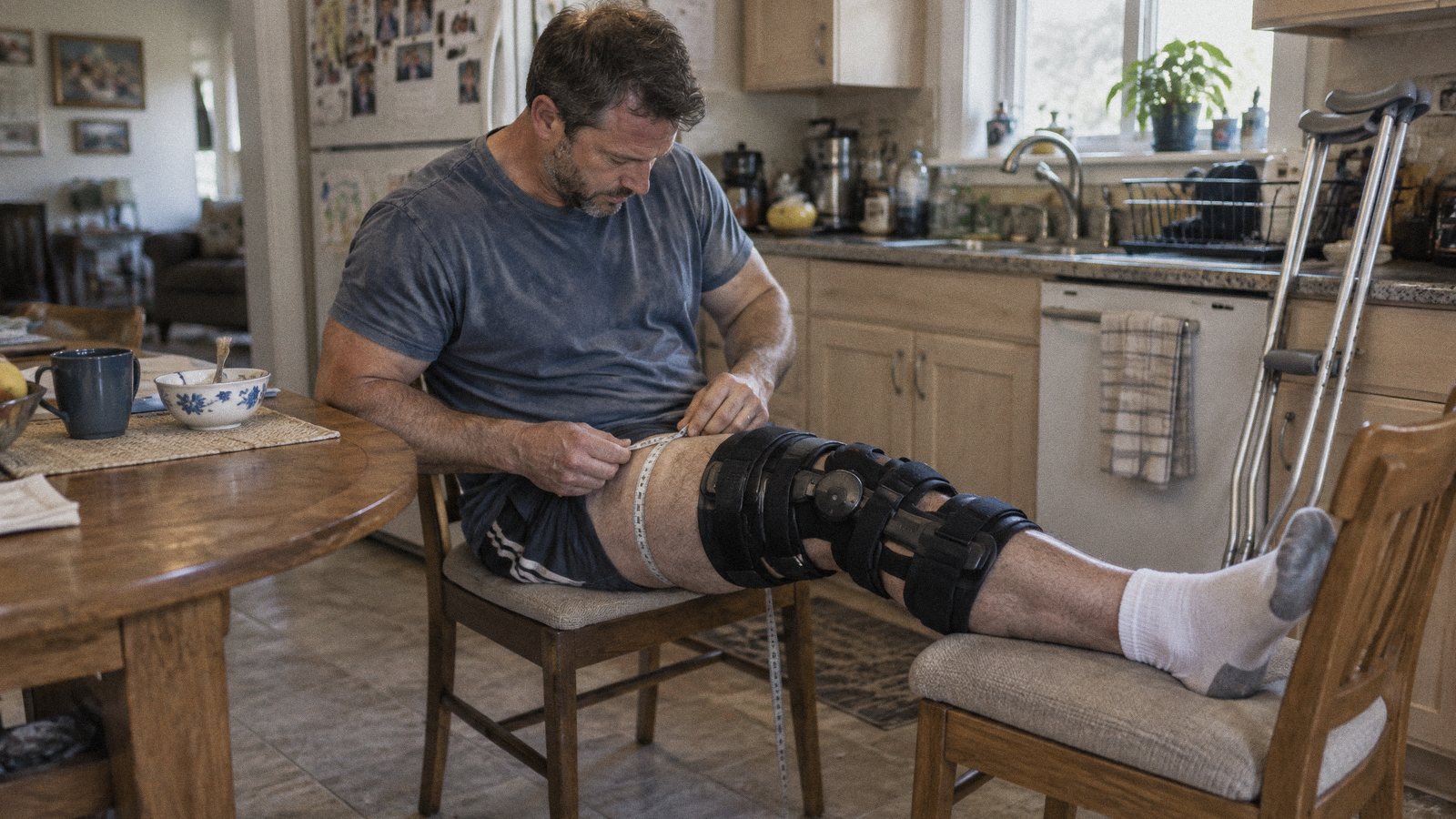
Worried About Losing Muscle While Injured? Start With a Plan
It feels like years of work are disappearing. Some loss is real, and most is manageable. What disuse does, why training the other side helps, and a cleared-activity list.